Tokyo 특집호
Walking Tokyo's Tsukiji from the egg stalls to the river
The wholesale trade moved to Toyosu in 2018, but Tsukiji still opens at 05:00. Where to eat standing up, which days everything shuts, and what to see once the stalls close.
글: Lukas BrandtTokyo on foot, timed to the temple gates
Tsukiji Marutake's cooks start folding egg into copper pans at 04:00, and the outer market's shophouses open from 05:00. The inner wholesale market moved to Toyosu in 2018. The outer market stayed where it was.
The outer market before 09:00
Tsukiji Outer Market, or Tsukiji Jogai Shijo, is narrow lanes of low shophouses under corrugated awnings, red-and-white noren in the doorways. Styrofoam crates of ice and tuna loins stand at the kerb. Charcoal grills smoke over scallop shells and electric turret trucks nose through the crowd.
Shops open from 05:00 to 06:00. Trade buyers get priority until 09:00, and half the best stalls are shut by 11:00. Arrive by 07:00 to see the market trading.
Most snacks cost ¥200 to ¥1,000 and the stalls are standing-room. The market closes on Sundays and most Wednesdays, so build the morning on another day.
Tokyo 여행 계획하기
예약 파트너의 실시간 가격입니다.
많은 객실이 무료 취소 가능합니다. 예약 시 당사가 수수료를 받을 수 있습니다.
Breakfast counters in the lanes
Kitsuneya, in the outer market, keeps a blackened cauldron at the pavement edge: pork offal bubbling in dark Hatcho miso, simmered for hours and ladled over rice. A dozen stools run along a plank counter, steam and condensation on the plastic sheeting. Horumon-don is ¥900. Eat it standing at 07:00.
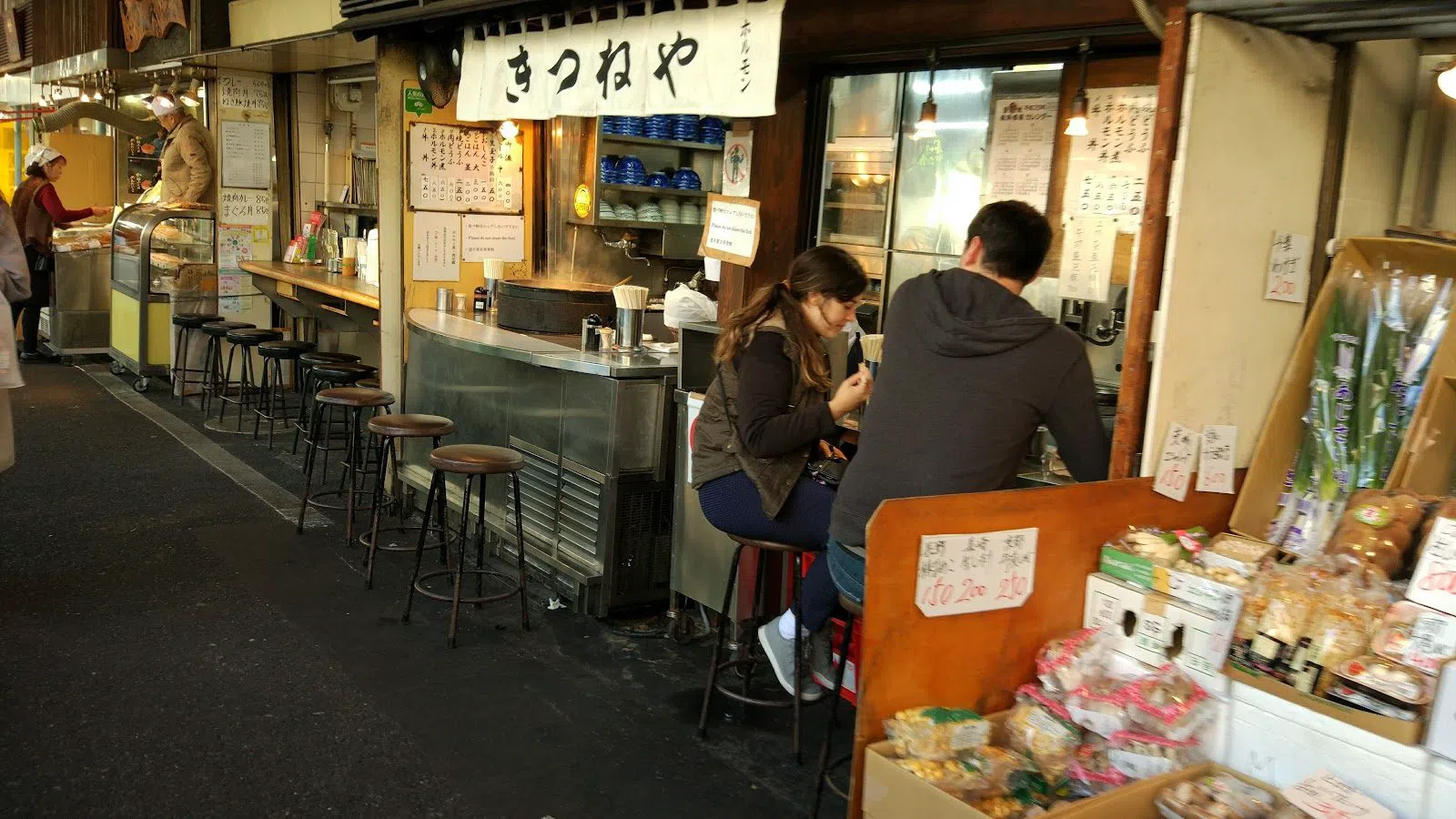
Queues form by 08:00 and the counter holds about a dozen people, so a party of more than four will be split or will wait. Hours are 06:30 to 13:30, closed Sundays, holidays and some Wednesdays. The stall has traded here since 1947.
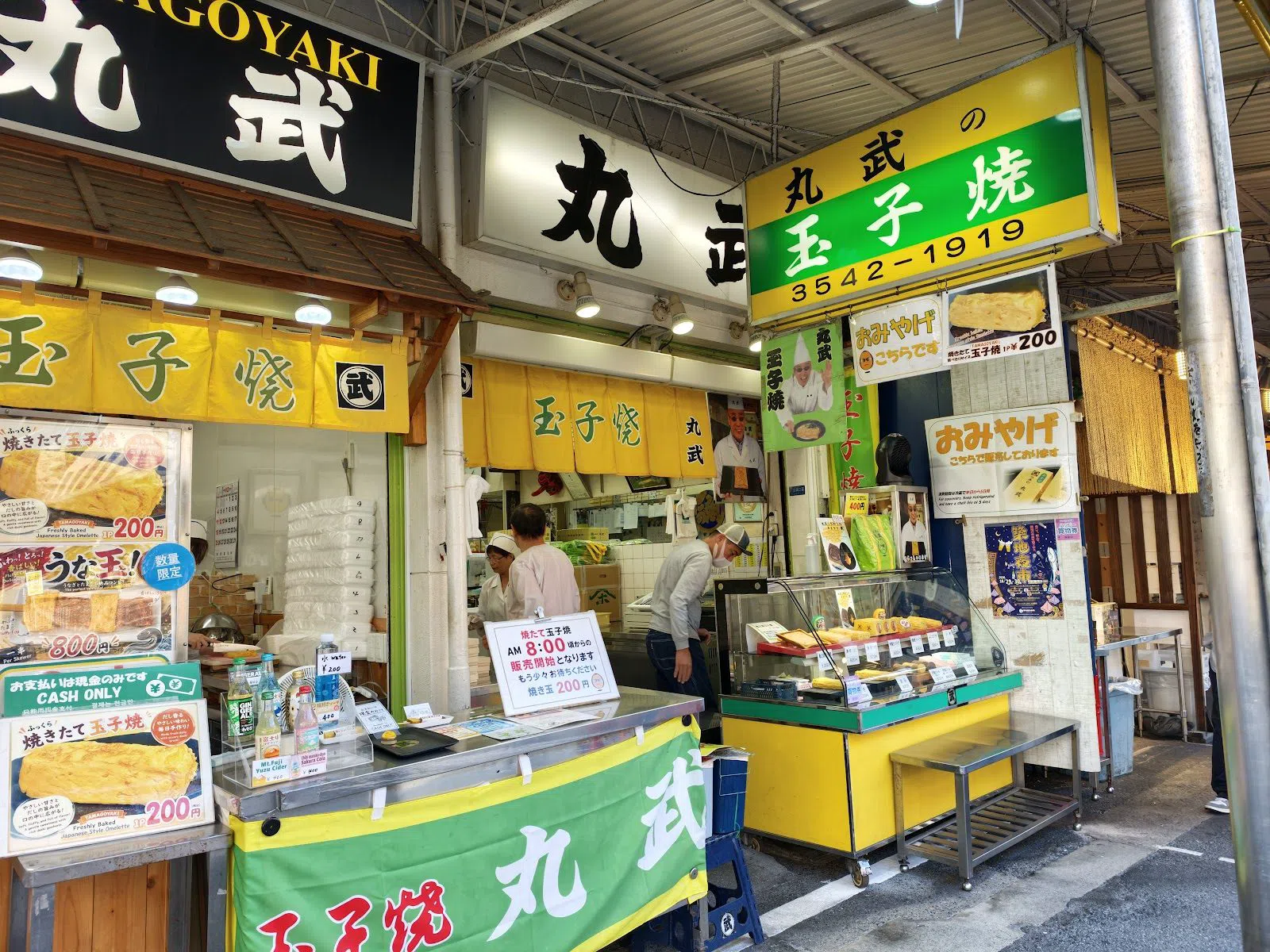
Tsukiji Marutake, a few doors along, works a row of rectangular copper pans, folding sheets of egg into fat golden logs. A skewer hot off the pan costs ¥100 to ¥200. Whole rolls start at ¥700, and eel and other versions are boxed for takeaway from the second of its two adjacent shopfronts.
There are no seats at either window. The queue moves fast, and a large group only slows itself down. Marutake has specialised in this one thing for 80 years, and it opens from 04:00 to 14:30, closed some Sundays, holidays and Wednesdays.
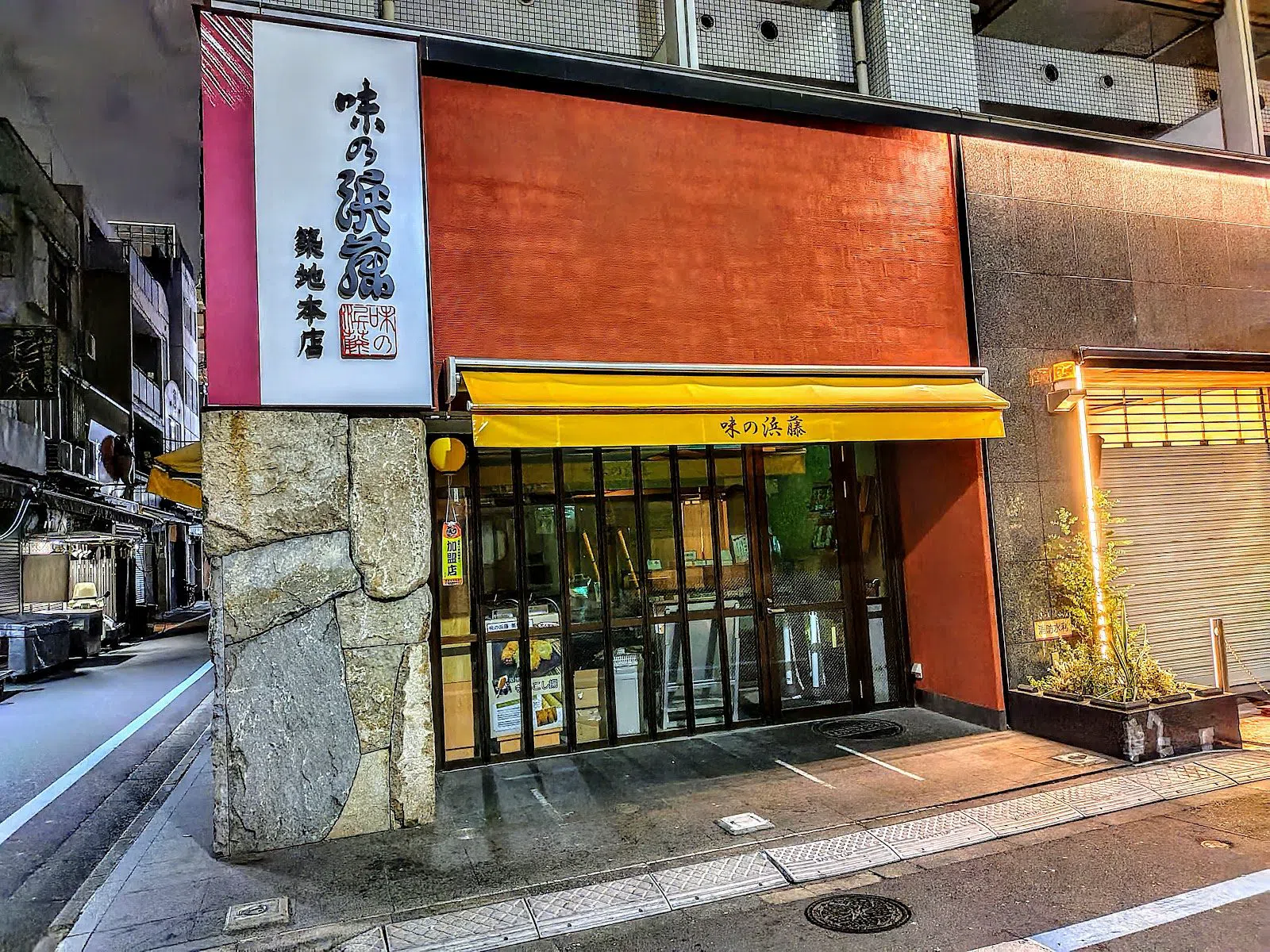
Aji no Hamato Tsukiji Honten, also in the outer market, sets out glass cases of saikyo-miso-marinated fish fillets and fries satsuma-age fish cakes to eat on the spot. Staff in white coats and caps bag orders in front of stacked lacquer-style gift boxes. A marinated fillet costs ¥700 to ¥1,500. The shop was founded in 1925, opens from 08:00 to 15:00, and closes irregularly.
Coffee and strawberries
Turret Coffee, in the market lanes, has a real flatbed turret truck bolted into the floor as bench seating, concrete and plywood around it. One barista pulls doubles on a single machine, and that barista is usually the owner, Kiyoshi Kawasaki. The Turret Latte is a strong double shot at ¥500 to ¥700.
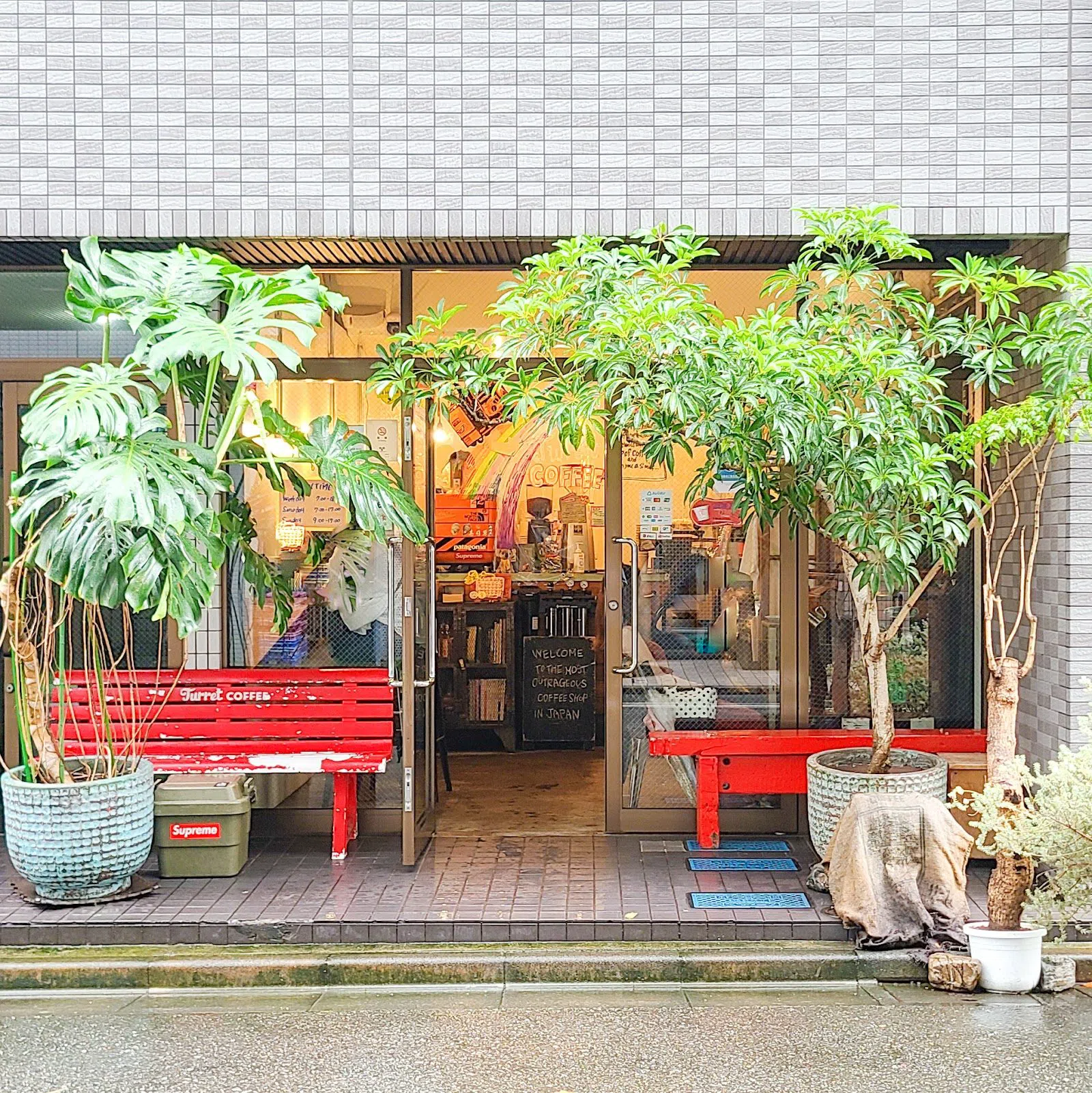
The room seats six. It opens at 07:00 most days and at noon on Sundays, the one time in Tsukiji a late start helps you. The café opened in 2013 and took its name from the trucks that hauled fish through these lanes.
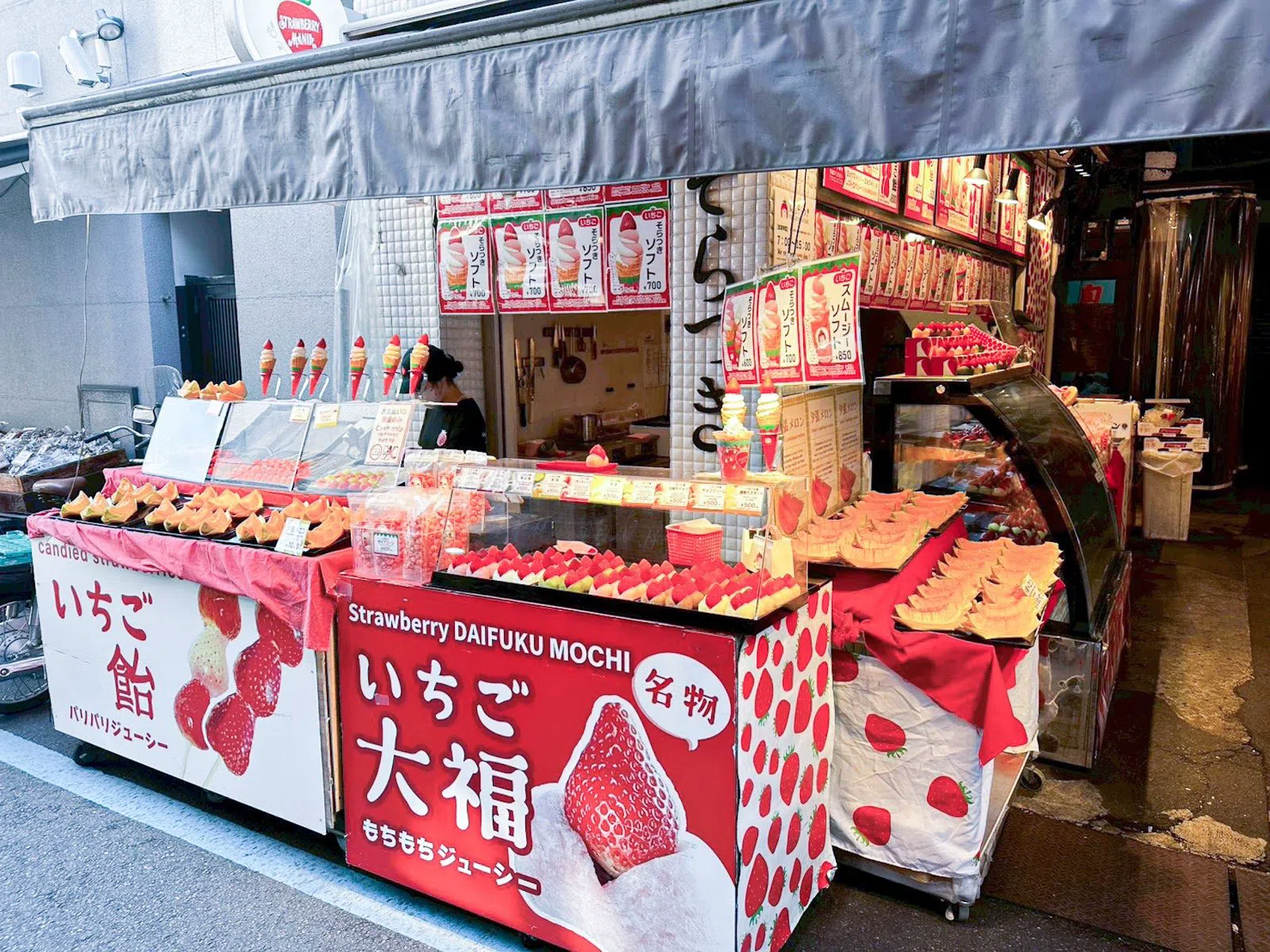
Tsukiji Soratsuki is a small pink-and-white shopfront. The trays hold halved strawberry daifuku, each showing a single 3L-grade berry cut into white mochi and pale bean paste, with parfaits in plastic cups alongside. A daifuku is ¥300. Hours are 07:00 to 15:00, and the best berries sell out early in that window. There are a handful of seats, but most of the trade is takeaway and people eat in the lane.
Tsukiji Uogashi and the wholesalers
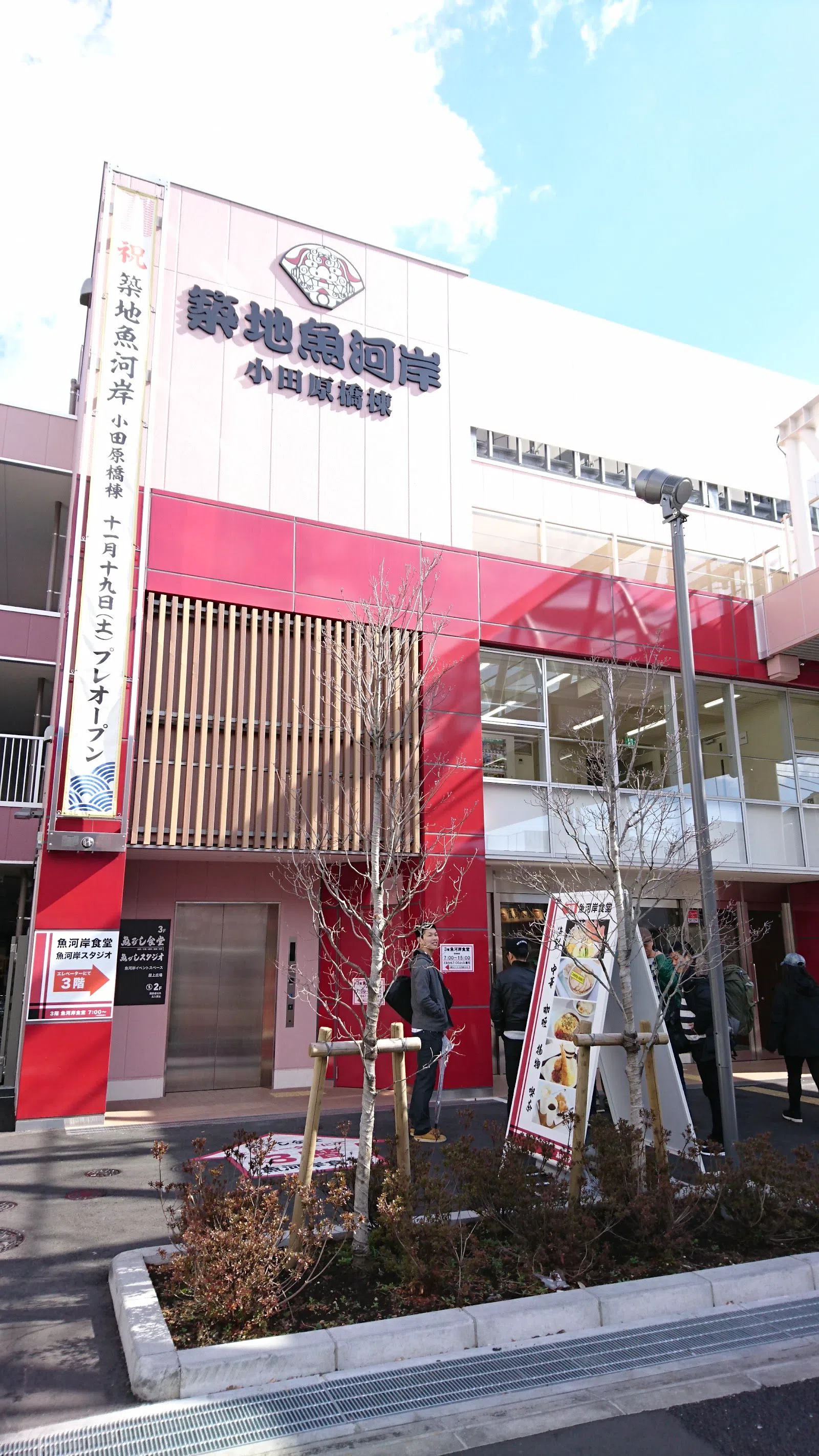
Tsukiji Uogashi, the Tsukiji Fish Market Building, is the ward-built replacement for the lost inner market: two modern blocks named Odawarabashi and Kaikobashi, with ground-floor stalls of iced fish and vegetables under bright strip lighting. About 60 fish, seafood and produce wholesalers sell to the public from mid-morning. Come here when the outer market's early stalls have already closed.
The third-floor food court runs from 07:00 to 19:00, with dishes at ¥1,000 to ¥2,500. Above it is an open roof terrace of 1,350 m² with benches, parasols and a view over the cleared site of the old market, and groups can charter it for barbecues. There are lifts. The building closes on Wednesdays and Sundays.
Sushi at 03:00
Sushizanmai Honten, on a Tsukiji corner, is blue and yellow and loud about it: a life-size photo of the beaming owner in a happi coat with his arms thrown wide, whole tuna imagery on every surface, counter and table seats behind glass. Nigiri sets are ¥2,000 to ¥5,000.
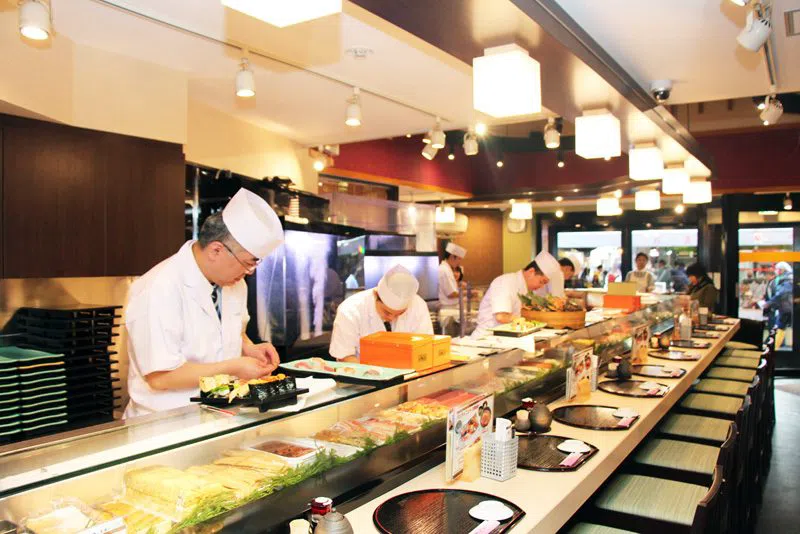
It opens 24 hours, 365 days, across several floors, and takes no reservations because it does not need them. The sushi is not the finest in the neighbourhood, but it is the answer when it is 03:00, you are six people, and everything else in Tsukiji is shut.
This was Japan's first round-the-clock sushi restaurant, opened in 2001 by the tuna-auction showman Kiyoshi Kimura.
Knives on the market lanes
Tsukiji Masamoto, in the outer market, lays carbon-steel yanagiba and deba in ranks on cloth, with wooden handles in bundles, a whetstone, and an engraving bench at the back for cutting names into blades. Serious single knives start at ¥15,000.
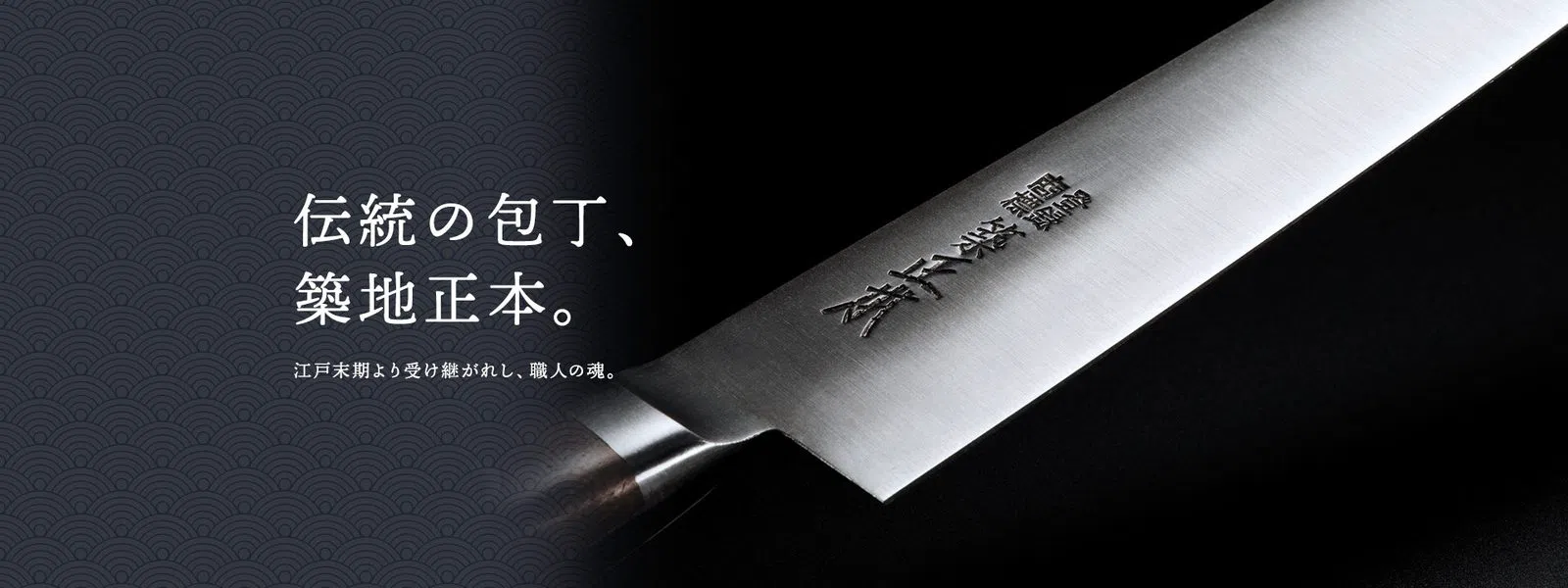
The family has made knives since 1845 and is now in its seventh generation, selling mostly to working chefs and butchers. In Japan you can buy them here or from the shop's own site. The shop is cramped, so browse in pairs, and allow an hour if names are going on the blades.
Hours are 06:00 to 15:00, closed Sundays, holidays and some Wednesdays. Tsukiji Aritsugu, Sugimoto and Tojiro sit on the same lanes if you want to handle three more makers before deciding.
Hongwanji and the market's shrine
Tsukiji Hongwanji is a huge grey granite temple in ancient Indian style, with a central stupa dome, rounded arches and twin flanking towers. Inside: stained glass, a pipe organ, and carved lion, ox, elephant and peacock beasts along the stairway. Itō Chūta designed the 1934 rebuild, and it has been an Important Cultural Property since 2014.
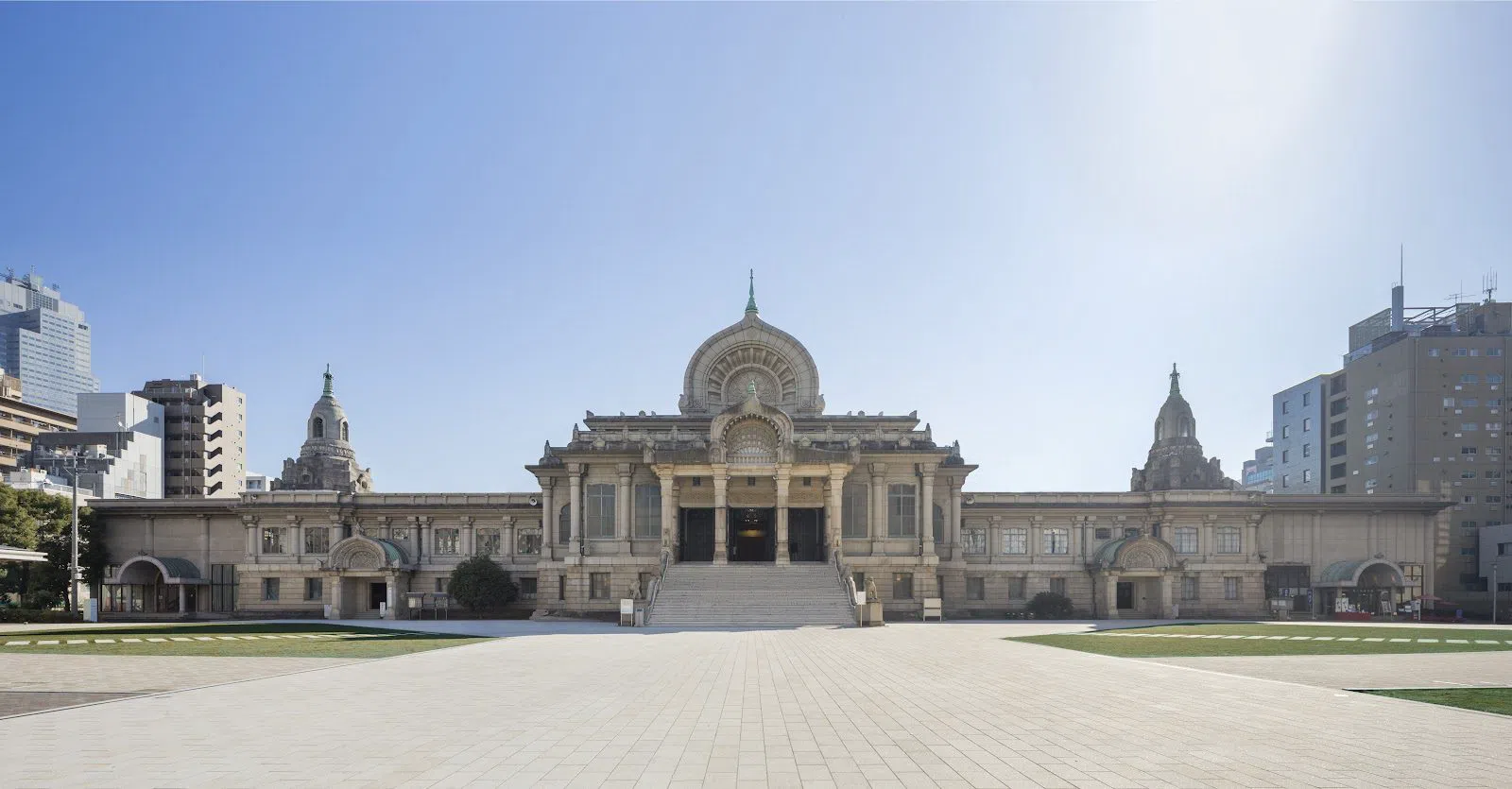
Entry to the main hall is free, and the hall opens from 06:00 to 16:00, the grounds from 06:00 to 21:00. Keep a group quiet in the hall and nobody will mind.
Cafe Tsumugi, on the temple grounds, serves an 18-dish breakfast until 11:00 at ¥2,640, one dish for each of the 18th of Amida's vows. It is capped at 110 a day and takes reservations, so book before you travel.
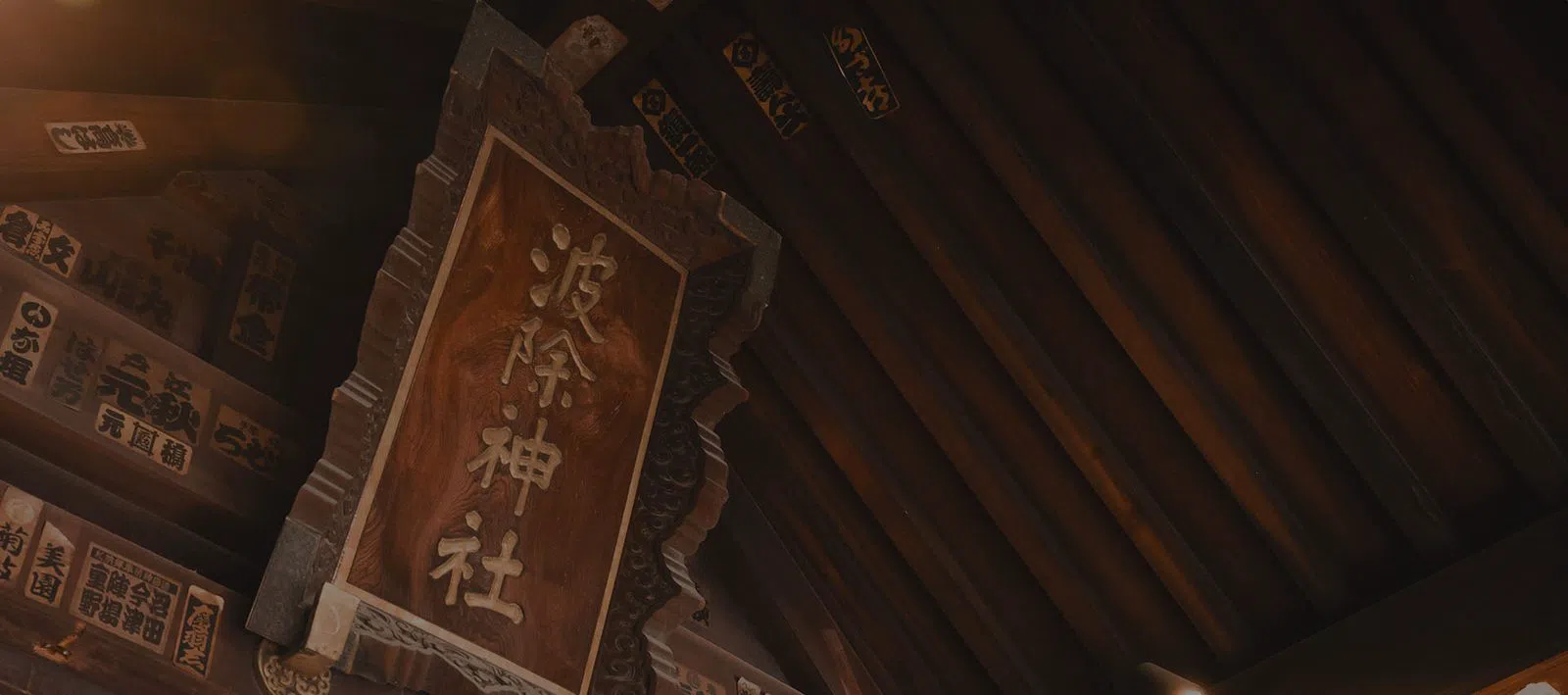
Namiyoke Inari Shrine sits wedged at the market's seaward edge behind a vermilion gate, with a pair of giant festival lion heads, one black and one gold, in glass cases. The courtyard is studded with stone memorial slabs for sushi, shrimp, clams, kelp and eggs, donated by the trade guilds. It was founded after the Great Fire of 1657, when all of this was new landfill. Entry is free and the gate is always open, though the forecourt is tiny and the prayer hall smaller.
North-east to Minato-cho and Akashi-cho
Teppozu Inari Shrine, in Minato-cho, is 10 minutes north-east of the market. In the shrine yard stands a miniature Mount Fuji built of black lava rock, stone steps winding to a tiny Sengen sub-shrine at the summit, office towers rising directly behind it.
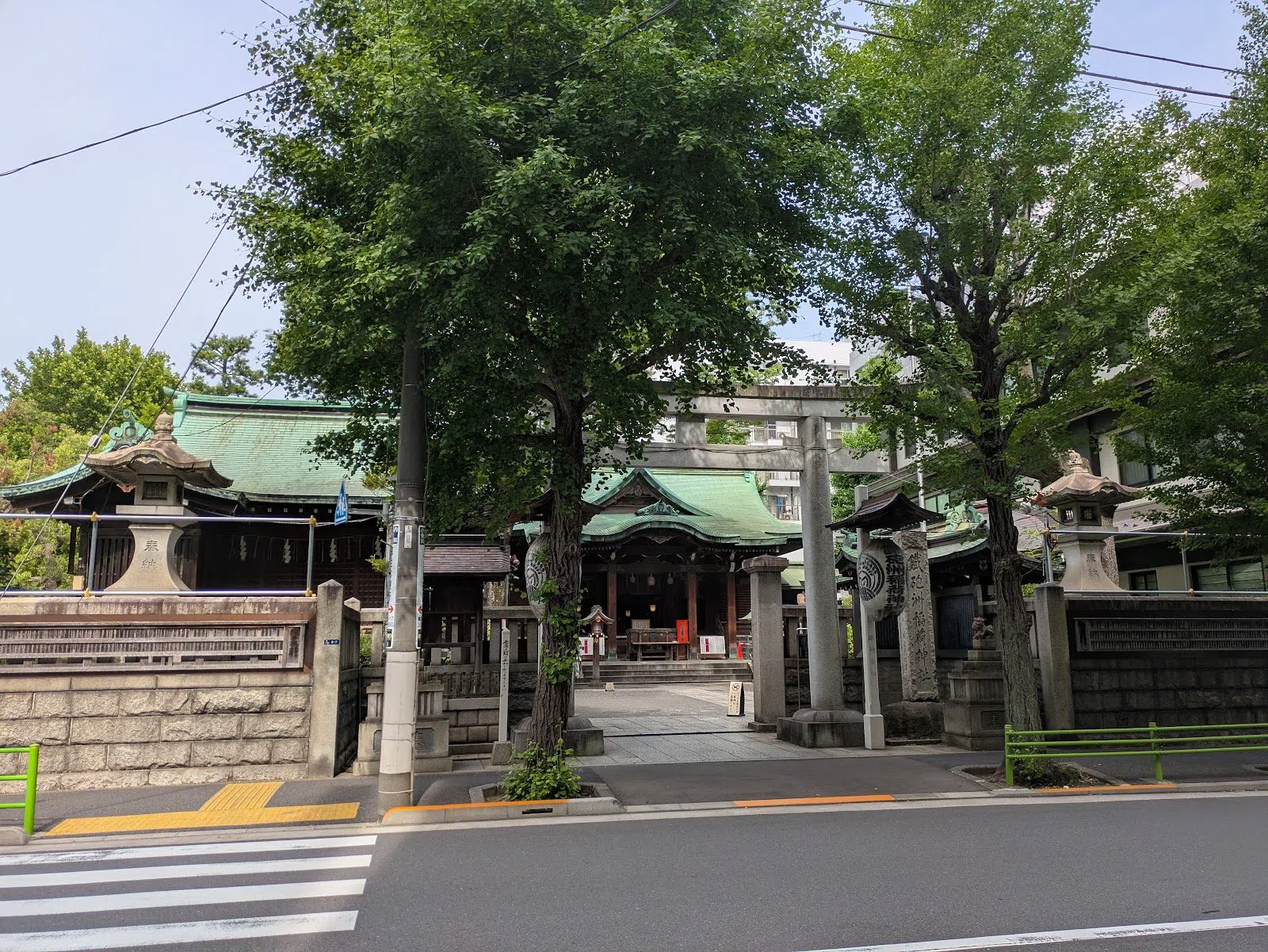
This is Chuo ward's only surviving fujizuka, the 1790 Teppozu Fuji that Hiroshige drew, rebuilt in 1932 after the Great Kanto Earthquake burned the district out. Entry is free and the shrine is unstaffed most of the day. The lava path is single file, so a group climbs it one at a time.
Tsukiji Catholic Church, in Akashi-cho, has a white neo-classical temple front with fluted columns and a pediment, built of wood and plaster. It is Tokyo's oldest Catholic parish, founded in 1874 where the Meiji foreign settlement stood, and the present 1927 chapel is a listed Chuo ward cultural property that marked its 150th year in 2024. The walk from Tsukiji Station takes eight minutes.
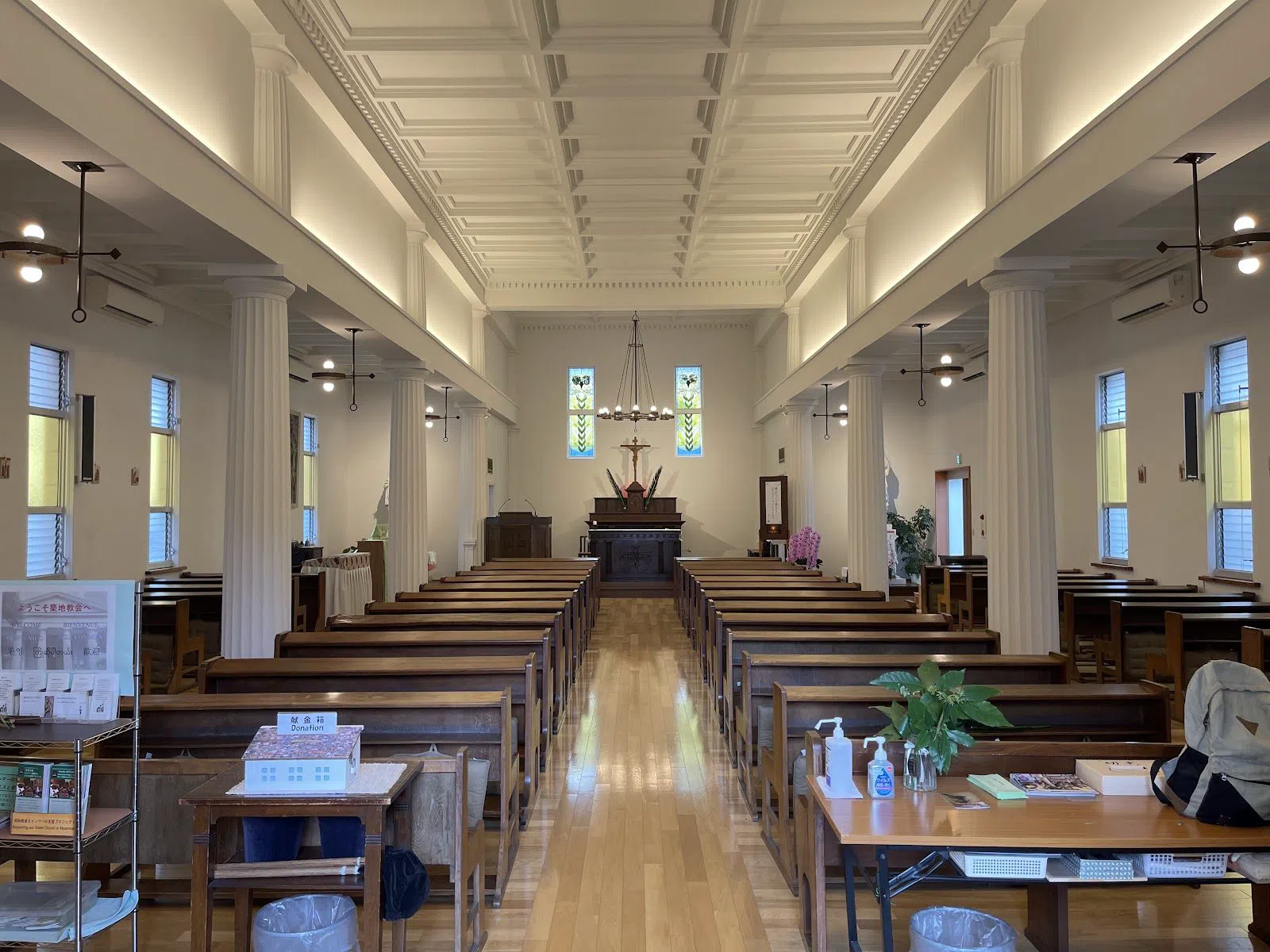
It is a working parish. Visit outside Mass times and ask at the office before going inside.
The Sumida bridge and Hama-rikyu
Kachidoki Bridge carries you across the Sumida on a 1940 steel double-leaf bascule structure, riveted lattice arches above and a visible split down the centre. Its leaves were raised for shipping until 1970. The walkway takes a group of any size.
The Kachidoki Bridge Museum occupies the bridge's old transformer house: green-painted generators and switchboards, the machinery that lifted the leaves. Entry is free. It opens Tuesday and Thursday to Saturday, 09:30 to 16:30, with shorter hours from December to February, and the rooms are small.
Hama-rikyu Gardens is 10 minutes' walk south-west of the outer market, across the canal, and the nearest real green space. A tidal saltwater pond fills the middle of it, crossed by a long wooden bridge on stilts that leads to a low teahouse built out over the water. A 300-year-old black pine stands on props, and the Shiodome skyscrapers are walled up behind the treeline. The pond rises and falls with Tokyo Bay.
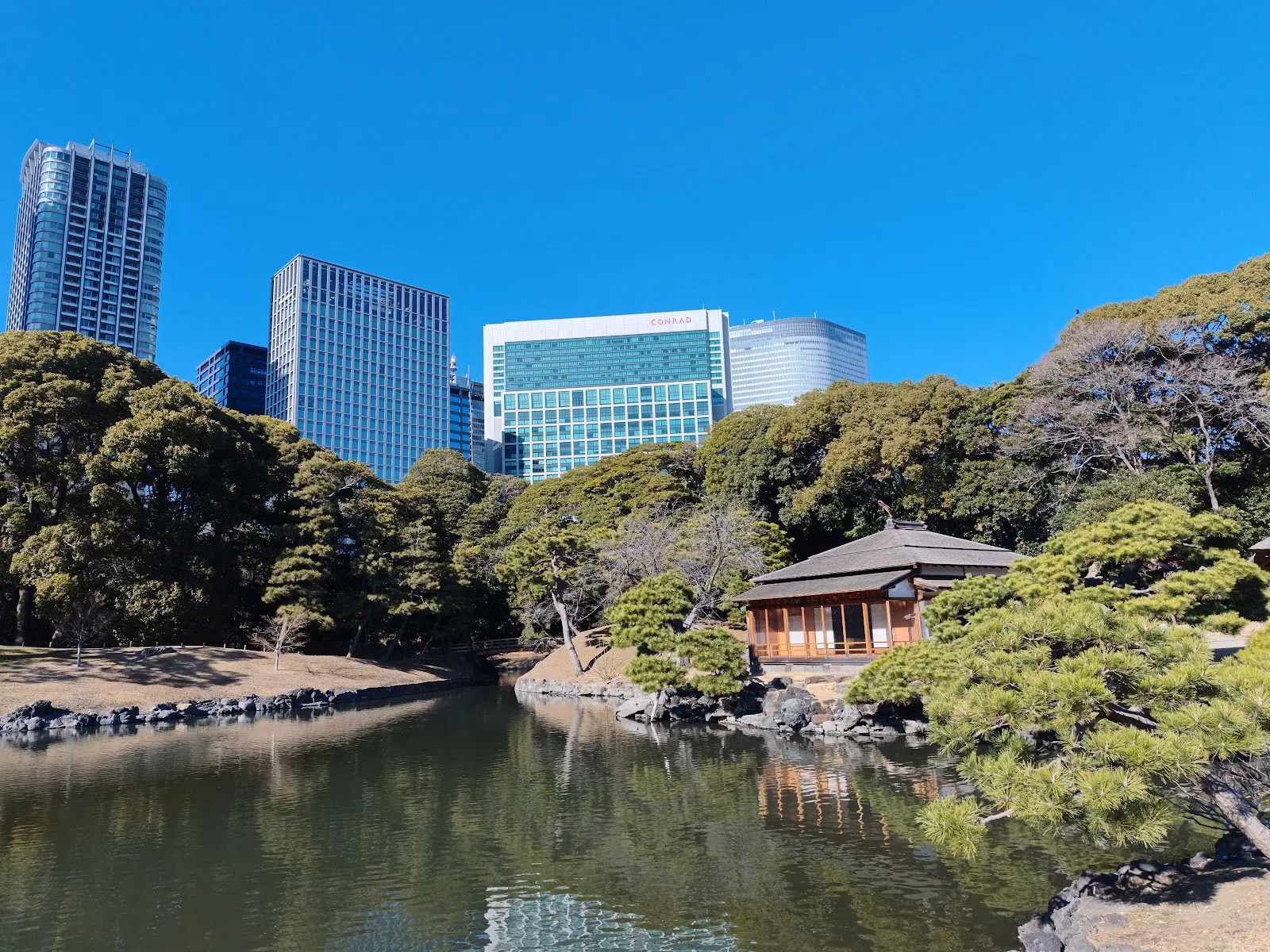
Entry is ¥300, ¥150 for over-65s, and children go free. The garden opens 09:00 to 17:00, last entry 16:30, and no booking is needed. The Nakajima teahouse is walk-in and small, with matcha and a sweet at ¥800 to ¥1,000.
Where to stay
Mitsui Garden Hotel Ginza Tsukiji, at 4-7-1 Tsukiji, puts you at the market gates for 07:00, minutes from both Tsukiji and Higashi-Ginza stations. The lobby is a contemporary tower space in pale wood and dark stone with a wall of greenery, and the breakfast room looks over the Tsukiji streets.
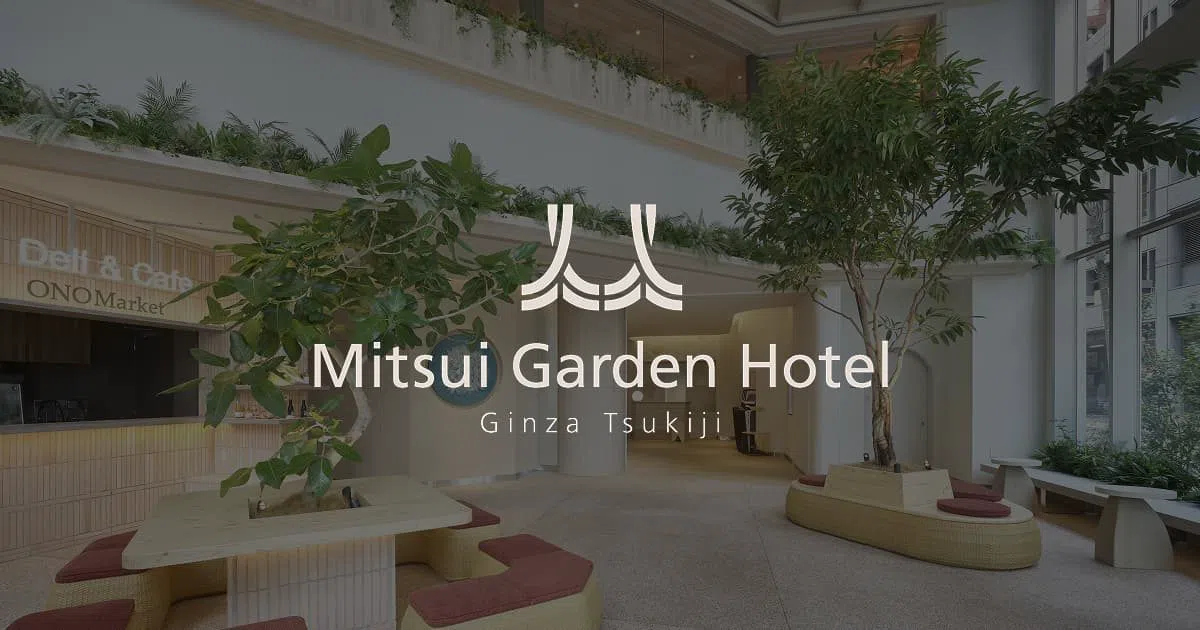
Rooms are compact and each one has a washer-dryer and a microwave, which earns its keep on a long trip. Doubles start at ¥20,000 a night. There are 187 rooms, all non-smoking, family rooms included; book direct for a block.
Days, hours and bookings
Wednesdays and Sundays close the outer market, Tsukiji Uogashi, Marutake, Masamoto and Kitsuneya, so treat either day as the wrong day to come. Reserve Cafe Tsumugi's breakfast before you travel, and check the museum's winter hours if you are here between December and February.
See the Tokyo guide and the Tokyo hotel search.
떠나기 전에
Is the Tsukiji fish market still open after the move to Toyosu?
The inner wholesale market moved to Toyosu in 2018. The outer market, Tsukiji Jogai Shijo, stayed where it was, and it is what you come for. Chuo ward also built Tsukiji Uogashi on the site, where about 60 fish, seafood and produce wholesalers sell to the public from mid-morning.
What days is Tsukiji closed?
The outer market closes on Sundays and most Wednesdays, Tsukiji Uogashi on Wednesdays and Sundays. Kitsuneya, Tsukiji Marutake and Tsukiji Masamoto shut on Sundays, holidays and some Wednesdays. The Kachidoki Bridge Museum opens only on Tuesday and Thursday to Saturday.
What time should I arrive at Tsukiji Outer Market?
Shops open from 05:00 to 06:00 and trade buyers get priority until 09:00, so arrive by 07:00 to see the market working. Half the best stalls are shut by 11:00.
Where can a group of six eat in Tsukiji?
Sushizanmai Honten is open 24 hours a day, 365 days a year, with counter and table seats over several floors and no reservations. Nigiri sets run ¥2,000 to ¥5,000. The third-floor food court at Tsukiji Uogashi opens 07:00 to 19:00, has seating and lifts, and serves dishes at ¥1,000 to ¥2,500.
Can you eat breakfast at Tsukiji Hongwanji?
Cafe Tsumugi, on the temple grounds, serves an 18-dish breakfast until 11:00 for ¥2,640, the number taken from the 18th of Amida's vows. They cap it at 110 a day and take reservations, so book one.