The Tokyo issue
Basement Feasts: Tokyo's Depachika Food Halls and the Art of Eating Underground
How to descend beneath Tokyo's grand department stores and build a world-class dinner from four counters for under ¥2,000.
By Emi Sato-DoyleOne dish, one counter, from Toyosu to the back streets
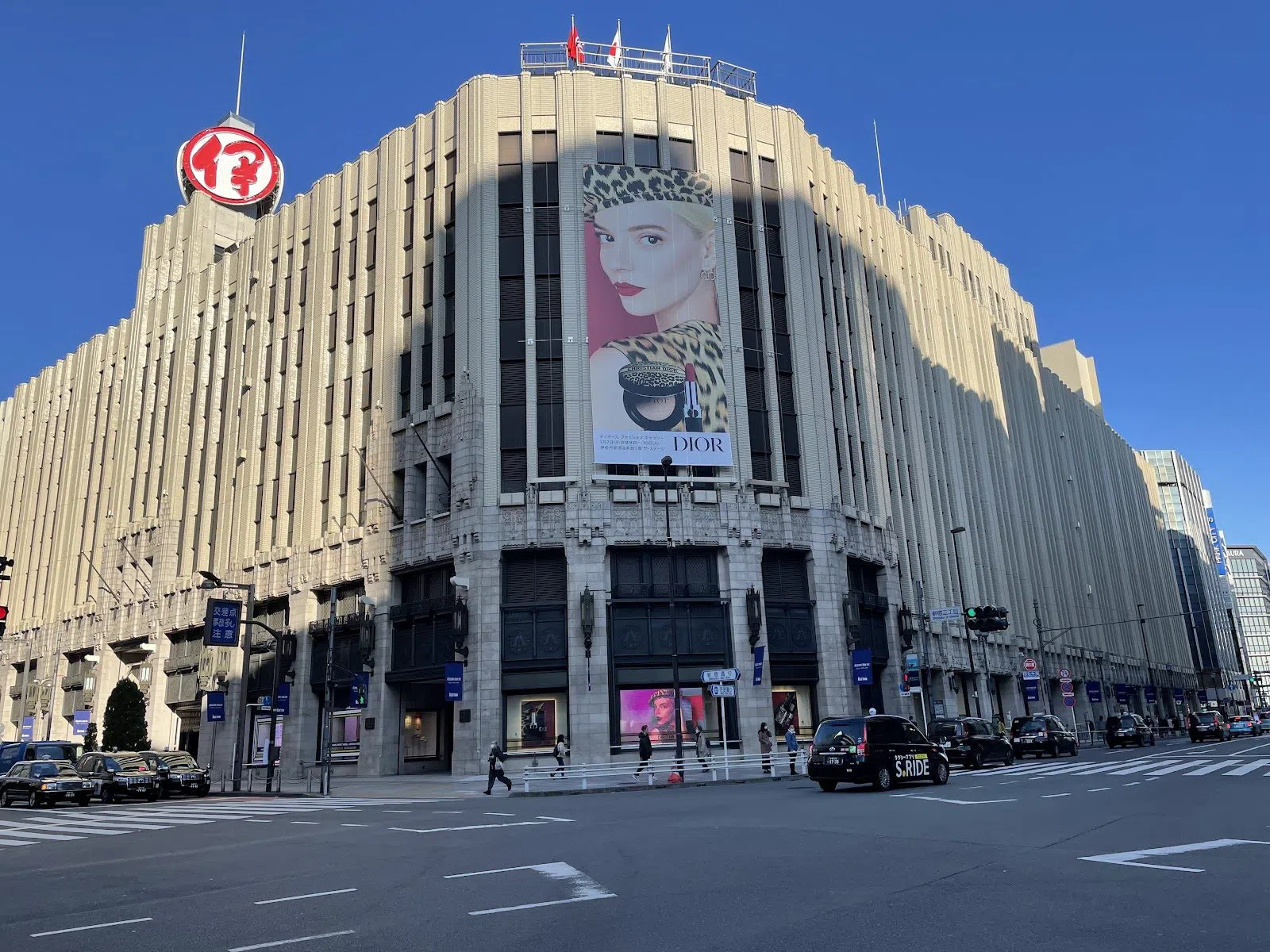
Descend the escalator beneath any grand Tokyo department store and the air changes before the light does — dashi and warm sugar, the green snap of just-cut herbs, the iron note of eel over coals. Then the floor opens: a single grilled unagi boxed like a jewel, a woman in white gloves offering a cube of melon on a toothpick with a small bow. This is the depachika, the food basement, and it is the most quietly astonishing eating in the city.
What a depachika actually is
The word is a contraction — depaato (department store) plus chika (basement) — but it undersells the thing. A depachika is not a food court and not a supermarket. It is a subterranean market where every bento is a composition, every strawberry is graded, and every counter is run like a small, proud restaurant that happens to have no tables. Nobody is selling you a meal. They are selling you a hundred perfect fragments, and the art is learning to assemble them.
Most of these halls keep department-store hours, roughly 10:00 to 20:00, with the sweets and prepared-food counters winding down in the last hour; a few Ginza and station basements run a little later. Almost none have a full English menu, and you rarely need one — everything is displayed, individually priced, and staff are unfailingly patient with a pointed finger. If you want to plan the wider trip around these descents, the Tokyo guide sets out neighbourhoods and timing; below is where to go underground and exactly what to eat when you get there.
Plan your Tokyo trip
Live prices from our booking partners.
Free cancellation on many rooms. We may earn a commission when you book.
Start in Shinjuku: the benchmark basement
If you visit one depachika, make it Isetan Shinjuku (Shinjuku, Main Building B1). It is widely rated Tokyo's finest food hall, and standing in it you understand why: the density of counters, the seasonality, the sheer choreography of presentation set the bar every other store is measured against. It is an open retail hall with no door policy, so a group can simply walk in and browse — but at peak the aisles go shoulder-to-shoulder, and the honest move is to split up and regroup rather than shuffle through as a clot of six. Individual items run ¥300 to ¥2,500, and you can assemble a genuine dinner for around ¥2,000.
Go straight to one counter first: Tonkatsu Maisen (Isetan Shinjuku B1). Maisen's hire-katsu sando — a fillet of pork cutlet, breaded, fried, laid on soft milk bread with a dark, sweet-savoury sauce and nothing else — is the single most quotable bite in any Tokyo basement. It is counter service with no seating, which makes it ideal for a group: order several boxes of the sando at roughly ¥600 to ¥900 each, or a full katsu bento at ¥1,000 to ¥2,000, and carry them off to eat elsewhere. The bread is trimmed of its crusts, the cut is clean, the sauce soaks just far enough into the crumb and no further.
A short walk south, Shinjuku Takashimaya (Shinjuku, Times Square B1) is the best all-rounder on the south side. The aisles are roomier than Isetan's, which suits a group, and weekends bring out the most free samples of any hall I know — genuinely sample-rich, not just a token cube here and there. Items sit at ¥350 to ¥2,500, dinner build around ¥2,000, and there is a floor of playful souvenir sweets upstairs to fold into the same outing. This is the calmer Shinjuku option; Isetan is the spectacle.
Old Tokyo underground: Nihonbashi's heritage halls
Cross to Nihonbashi to pair the food with architecture. Mitsukoshi Nihonbashi (Nihonbashi, Main Store B1) sits beneath Japan's oldest department store, with origins in 1673, and the building alone rewards the trip — the great hall, the bronze lions at the central entrance. The basement is warren-like, a genuine maze, so agree the lions as your meeting point before anyone wanders. It is strongest on high-end regional wagashi, the seasonal sweets that are as much sculpture as confection; look for the ones shaped and coloured to the exact week of the year. Items run ¥400 to ¥3,000, dinner build around ¥2,000, and large groups are fine as long as you accept you will lose each other at least once.
A few minutes away, Takashimaya Nihonbashi (Nihonbashi, Main Building B1) is the most atmospheric depachika experience in the city, and the one I send couples and small groups to for the full ritual. Buy a bento in the basement — ¥400 to ¥2,800 per item, a full dinner around ¥2,000 — then take the manned, white-glove elevator up to the rooftop garden and eat it together in the open air. The heritage building, the uniformed attendant calling the floors, the rooftop payoff: it turns a food run into an afternoon. Free samples throughout, as at every hall on this list.
Ginza, slowly: gourmet, cheese and the sweets aristocracy
Ginza rewards a slower browse. Ginza Mitsukoshi (Ginza, B2–B3) is the deepest in the district — two full basement floors — and it holds the strongest Western-gourmet and cheese selection of the majors, which makes it the place to build a dinner that leans European rather than Japanese. Groups are fine; the escalators between B2 and B3 keep the crowd moving, and the 4-chome crossing entrance is the obvious meeting point. Items run ¥400 to ¥3,000, dinner around ¥2,000.
A block away, Matsuya Ginza (Ginza, B1) is the composed alternative — smaller, but tightly curated, with noticeably quieter aisles than Mitsukoshi. It suits small-to-mid groups and works best as a second stop when Mitsukoshi is overrun on a weekend afternoon. Items ¥400 to ¥3,000, dinner build around ¥2,000.
For sweets, go to Toraya Ginza (Ginza). Toraya is the aristocrat of Japanese confection, and its counters anchor the finest sweets floors in the city. There is a boutique counter and reservable counter seating for made-to-order namagashi — the soft, seasonal sweets served with tea — at ¥500 to ¥800 each. Small groups can sit; larger groups should buy boxed yokan, the dense sweet-bean jelly, at ¥1,500 to ¥3,000 and up, to carry away. A single slice of yokan on a plain wooden board, eaten slowly with green tea, is one of the quietest pleasures the city offers.
Shibuya, on the move
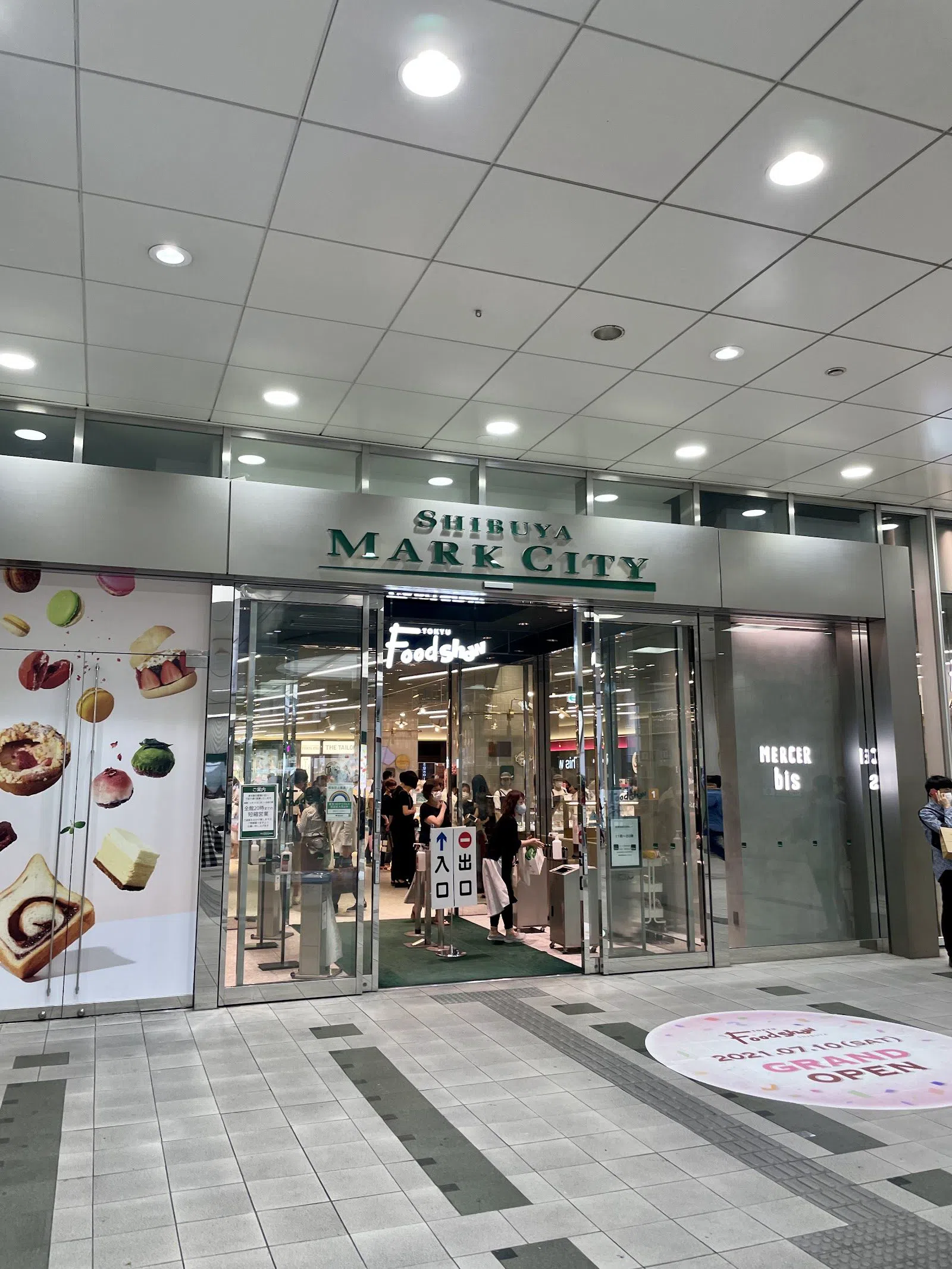
Shibuya Tokyu Food Show (Shibuya) is the youthful, convenient pick, wired directly into the station. It is the easiest of the majors for a group to actually eat on-site, thanks to a standing eat-in space, rather than carrying everything out — though be warned it is a fast-moving commuter crush, and you will be eating with a tide of people flowing past. Items run ¥300 to ¥2,000 and you can build a grab-and-go dinner for under ¥2,000. If your day is running on train times rather than leisure, this is the hall that bends to your schedule.
Ikebukuro: scale, and the best-value dinner in town
Ikebukuro is where you send a hungry group loose. Tobu Department Store Ikebukuro (Ikebukuro) runs to 200-plus shops with the biggest event space of any Tokyo store, and the scale simply absorbs a large group. It is also where the numbers get interesting: aggressive after-7pm sushi discounts make this, honestly, the best-value group dinner in the city, with a full build sitting well under ¥2,000 late in the evening. Items ¥300 to ¥2,500 before the markdowns start.
Next door, Seibu Ikebukuro (Ikebukuro, Main Store) is the timeliest pick on the whole list. A full reopening in January 2026 added 41 shops and widened the layout, so it is bright, uncrowded by comparison, and the least veteran-fatigued basement in the city right now. It connects straight to Ikebukuro Station, groups are welcome, items run ¥350 to ¥2,800, and dinner builds around ¥2,000. Do Seibu for the calm and the newness; cross to Tobu for the scale and the late-night bargains.
For travellers with a train to catch
Daimaru Tokyo (Tokyo Station, Bento Street) is the traveller's depachika, and it is honest about what it is: transactional, packed, and purpose-built for provisioning a journey rather than for a leisurely browse. If you are catching a bullet train, this is unbeatable — the deepest ekiben (station bento) selection in the city, boxed and ready to eat at speed, plus hard end-of-day markdowns. Bento run ¥600 to ¥2,500, and a train-lunch build comes in under ¥2,000. Do not come here to graze and admire; come here with a departure time and a plan.
The two rituals: samples as research, and the afternoon markdown
Two customs make the depachika worth understanding rather than just walking through. The first is the free sample. It is offered — a sliver of ham, a cube of fruit, a spoon of miso — with a small bow, and it is not grazing. Treat it as research: taste before you commit, ask what is seasonal, let a good sample steer your dinner. Take one, taste it properly, and either buy or move on with a nod; working the samples for a free meal is the one thing that reads as rude.
The second is the late-afternoon markdown. As closing nears, prepared foods that cannot be held overnight get discounted, then discounted again — the sushi, the tempura, the fried counters. Staff move through with sticker guns; you will see regulars circling. Tobu's after-7pm sushi and Daimaru's end-of-day bento are the sharpest examples, but every hall does it. Arrive in the last ninety minutes and the same dinner costs noticeably less.
Which brings us to the game worth playing: build a world-class dinner from four counters for under ¥2,000. It is entirely doable. Take a Maisen katsu sando to anchor it. Add a couple of pieces of tamagoyaki — the sweet, layered rolled omelette, sold plain or folded around eel or dashi, in dozens of varieties across a single hall, each stall guarding its own ratio of egg to stock. Add one exquisite prepared side — a marinated vegetable, a slice of simmered fish — chosen off a sample. Finish with a single namagashi or a slice of yokan from a sweets counter. Four counters, four fragments, one composed meal, and change from a ¥2,000 note if you time the markdowns. That is the art of eating underground.
Planning your descent
Transport. Every hall on this list sits on or beside a major station — Shinjuku, Shibuya, Ikebukuro, Ginza, Nihonbashi, Tokyo Station — so a rechargeable IC card (Suica or Pasmo, buyable at any station) is all you need to hop between them. Two depachika in an afternoon is comfortable; three is a lot of standing.
Cash. Cards and IC payment work at nearly every counter now, but keep some yen for the smallest independent stalls and for the discount scrums, where speed matters more than tapping.
Timing. For spectacle and the fullest counters, arrive early afternoon. For samples, go on a weekend, when Shinjuku Takashimaya in particular puts out the most. For value, come in the last ninety minutes before the 20:00 close and follow the sticker guns. Weekend lunchtimes at Isetan and Ginza Mitsukoshi are the true crush points — beautiful, but shoulder-to-shoulder.
Budget. Individual items run from about ¥300 to ¥3,000 depending on the counter, and a composed dinner sits around ¥2,000 at almost every hall — less at Tobu and Daimaru late in the day, less again if you work the markdowns. Book a base near one of the big stations to make evening runs easy: start with a Tokyo hotel search around Shinjuku, Ginza or Ikebukuro and the whole underground map opens up beneath you.
Before you go
What is a depachika, exactly?
A depachika is the food basement beneath a Japanese department store — a contraction of depaato (department store) and chika (basement). Unlike a food court, it is a market of individual, restaurant-grade counters selling bento, prepared dishes, sweets and produce, with no seating at most stalls. You browse, buy fragments from several counters, and assemble your own meal.
When is the best time to go for discounts?
Arrive in the last ninety minutes before closing, which is typically around 20:00. Prepared foods that cannot be held overnight — sushi, tempura, fried counters — get marked down, then marked down again. Tobu Ikebukuro's after-7pm sushi and Daimaru Tokyo's end-of-day bento are the sharpest examples, but every hall does it.
Do depachika counters have English menus?
Rarely a full one, and you seldom need it. Everything is displayed and individually priced, so pointing works, and staff are patient. Prices are in yen; a composed dinner runs around ¥2,000 at most halls, with individual items from roughly ¥300 to ¥3,000.
Which depachika is best for a group versus a couple?
For a group, Tobu Ikebukuro absorbs big numbers and has the best late discounts, while Shibuya Tokyu Food Show has standing space to eat on-site. For a couple or small group, Takashimaya Nihonbashi is the most atmospheric — buy a bento and ride the white-glove elevator to the rooftop garden to eat it.
Is it rude to take the free samples?
No — samples are offered deliberately and are best treated as research: taste before you commit, and ask what is seasonal. The one thing that reads as rude is working the sample counters for a free meal with no intention of buying. Take one, taste it properly, then buy or move on with a nod.