The Tokyo issue
Why the World Drives to Tokyo's Expressway Car Parks at Midnight
Where Tokyo's JDM crowd gathers after dark, when the lots shut, and how to see it without a Japanese licence.
By Lukas BrandtTokyo on foot, timed to the temple gates
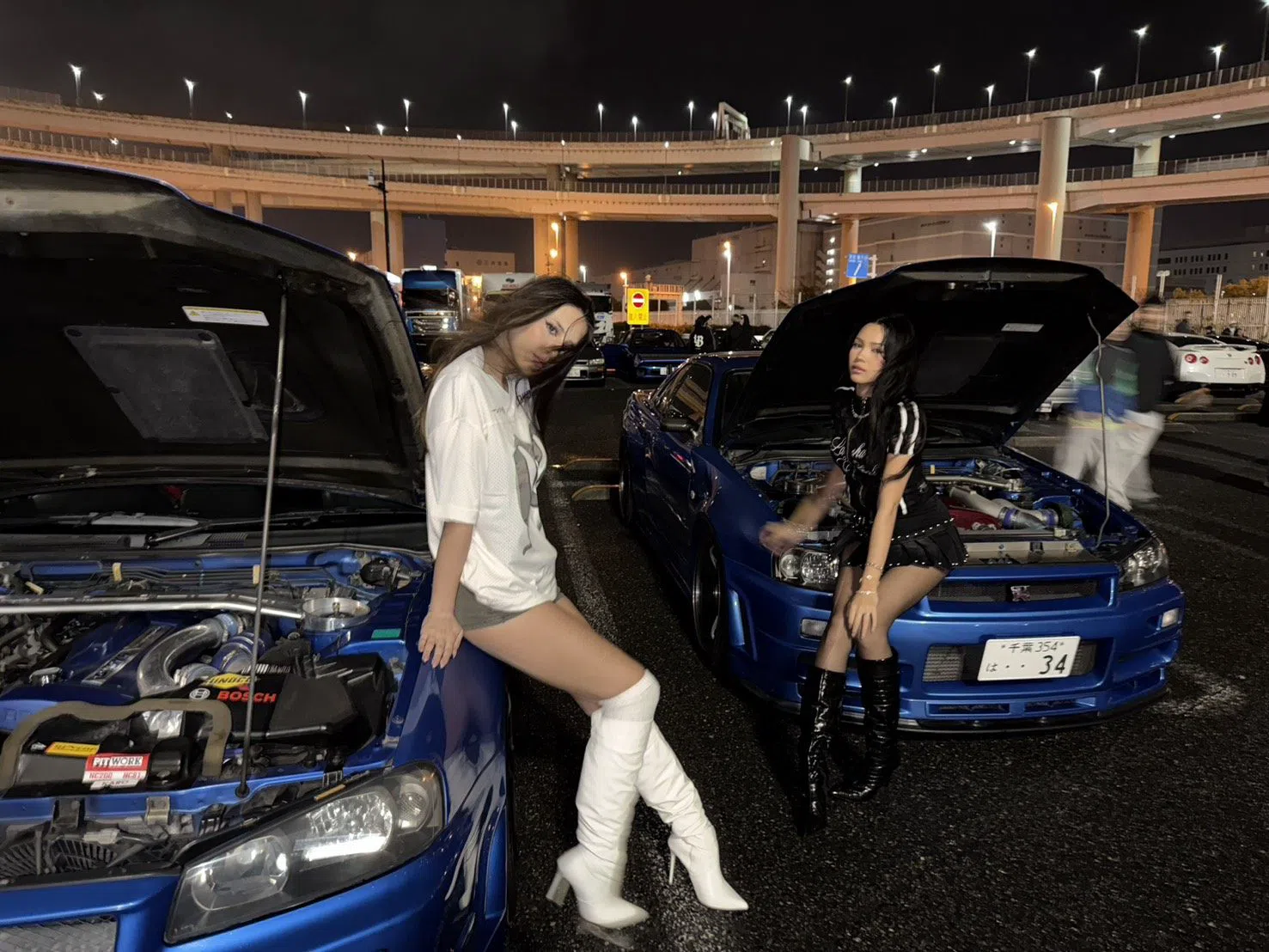
The queue for Daikoku starts on the loop ramp, and you hear it before you see anything: a 2JZ holding second gear through a 270-degree curve, then silence, then another one behind it. Inside the lot an R34 GT-R with 280,000 kilometres on the clock is parked nose-out next to a Lamborghini and a Chaser wearing a two-metre exhaust, and nobody is racing anybody. It is a free car park off an expressway, and people fly in from six continents to stand in it.
The lot everyone means when they say Daikoku
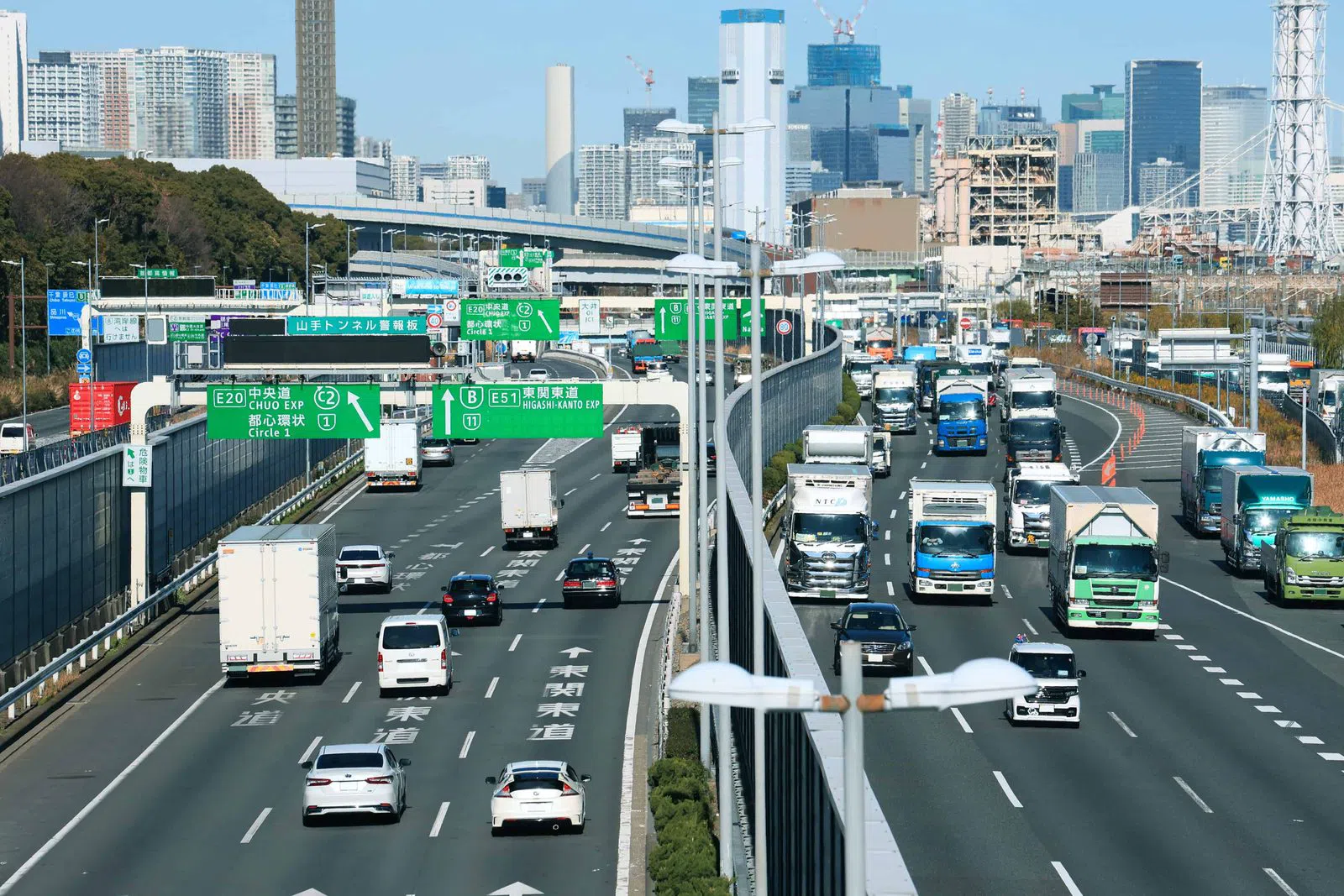
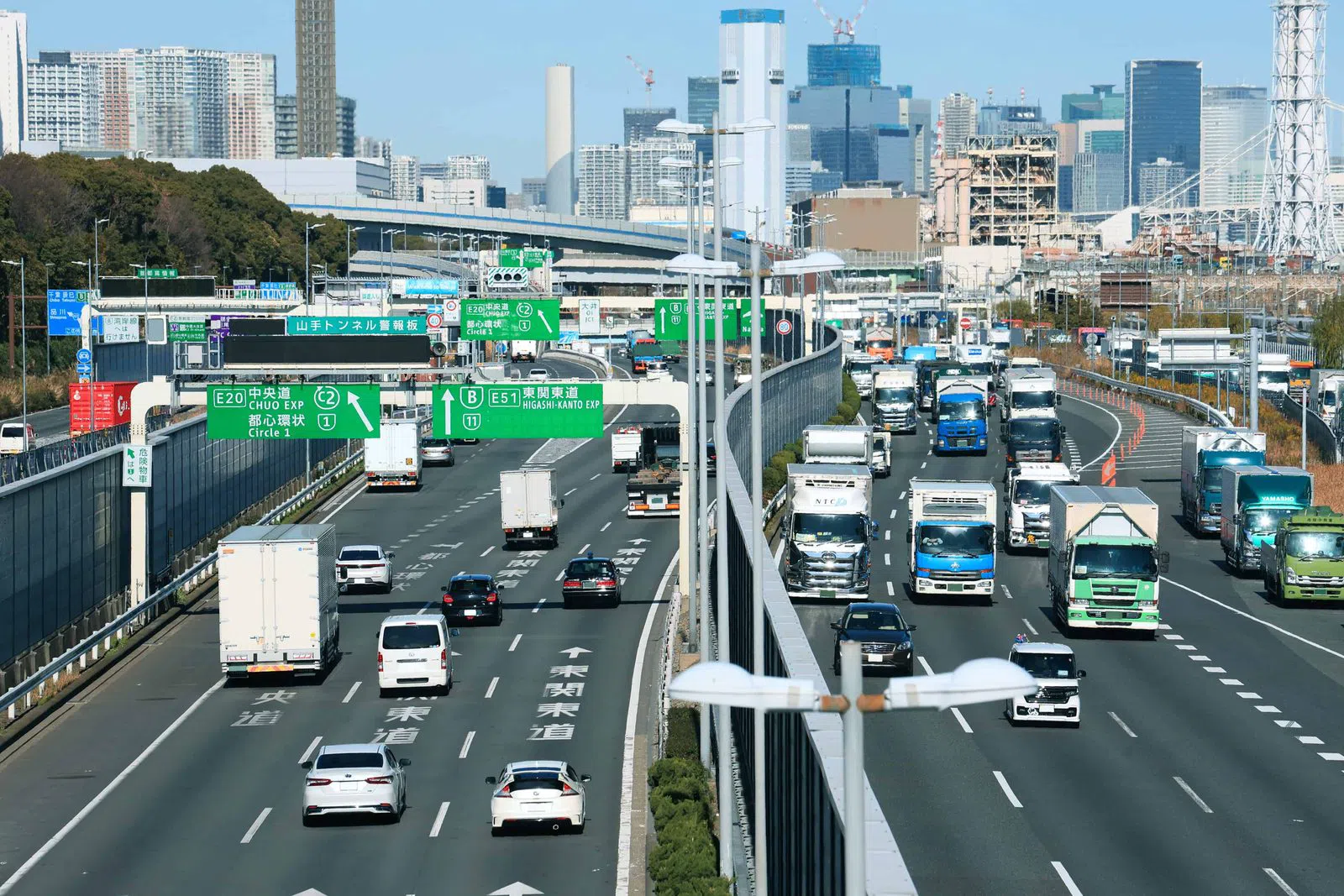
Daikoku Futo Parking Area (大黒パーキングエリア), on the reclaimed container-port island at the bay end of the Shuto Expressway, sits inside a spiral ramp that doubles as its own grandstand. It is a public expressway facility, so there is no door policy, no guest list and nothing to book. That is why an R34 GT-R, a bōsōzoku-styled Chaser, a VIP sedan on air suspension and a supercar end up in the same row with their owners talking to each other.
Two facts decide whether your trip works. First, pedestrians, bicycles and mopeds are banned from entering. There is no footpath in, and walking the ramp is both illegal and the kind of stupid that ends a holiday. You arrive in a vehicle, or you arrive with someone who is driving. Second, the gate is shut to incoming traffic once the lot fills, and on most Friday and Saturday nights the police and the expressway operator close it from around 21:00 whether it is full or not. The videos you have watched were filmed on the good nights; plan around the average one.
Entry is free; you pay Shuto Expressway tolls, roughly ¥1,000 to ¥1,900 round trip from central Tokyo depending on route and whether the car has an ETC transponder. The realistic plan is a Tuesday, Wednesday or Thursday between 22:00 and 01:00, or a Sunday from about 07:00, when a quieter, older crowd brings out the restored cars and you can see paint properly. Group size does not matter, because the lot swallows coaches, but the number of cars you turn up in does: every space you take is one a local who drove two hours cannot.
Plan your Tokyo trip
Live prices from our booking partners.
Free cancellation on many rooms. We may earn a commission when you book.
Tatsumi rewards a weeknight and nothing else
Tatsumi No.1 Parking Area (辰巳第一パーキングエリア), in Koto-ku on the bayside stretch of the Shuto network, is the one that looks like the manga. Sodium light, a tunnel mouth, the Rainbow Bridge stacked in the background, and a strip of tarmac narrow enough that six cars feel like a crowd. For night car photography it is the best-composed spot in the country, and photographers who know it shoot from one position and leave.
There is no booking, no staff, no walk-in and no train access. Entry is from the expressway only, in a car, the same rule as Daikoku. Tolls are distance-based, roughly ¥300 to ¥1,950. The hard rule is the closure: the Shuto Expressway shuts Tatsumi every Friday and Saturday from 21:00 to 04:00 as an anti-street-racing measure, so the weekend plan does not exist. Go on a weeknight after 22:00.
This is a couple-or-two-cars venue. Space is extremely tight, and rolling in with more than two or three cars together is antisocial in a way locals will read instantly. If your party is six people, take one car here and do the group thing somewhere with a food court.
Umihotaru is where the night goes when the gates shut
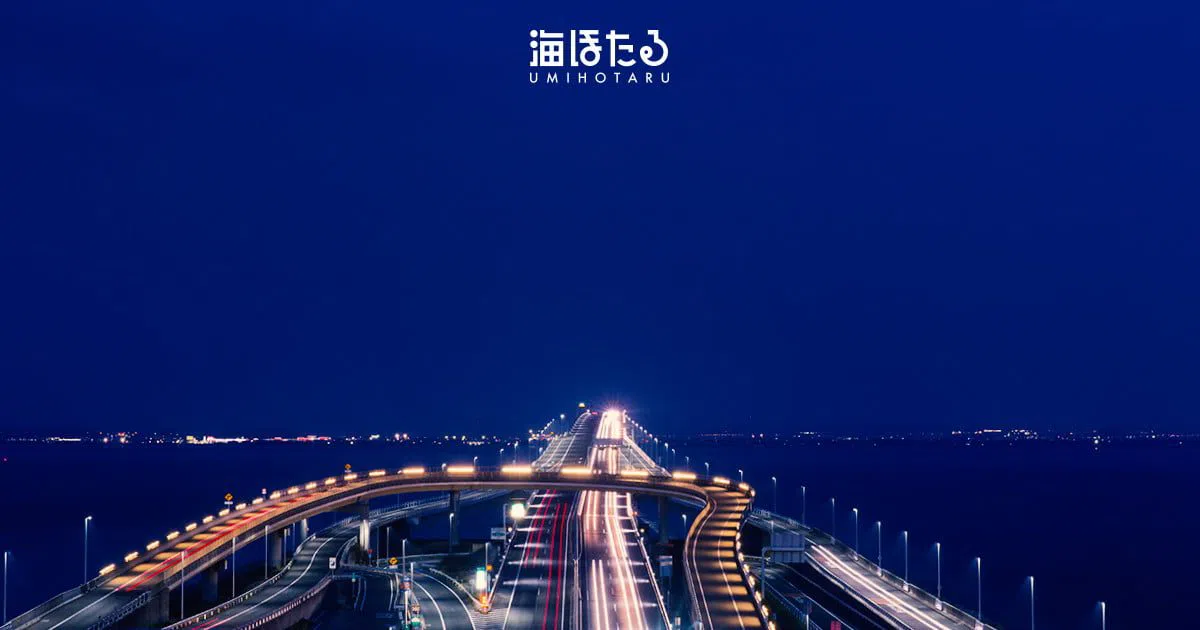
Umihotaru Parking Area (海ほたるパーキングエリア) is an artificial island in the middle of the bay, the surfacing point of the Aqua-Line tunnel, with open-deck parking on the roof and indoor food courts underneath. It is open 24 hours, needs no reservation and has no door policy, and it is the only meet venue on this list you can reach by highway bus, which makes it the fallback when Daikoku's gate is closed and the fix for a group of six or more who want to sit down and eat at 01:00.
The toll is the cost. By ETC the Aqua-Line runs ¥800 to ¥1,600 with time-of-day pricing, cheapest late at night; in cash it is ¥3,140 each way, which is the single most expensive mistake you can make in a rental without an ETC card. The scene here leans supercar and photo-meet rather than street-tuned builds, and it is genuinely unpredictable. Some nights the deck is three-deep in Skylines, some nights it is families buying soft-serve.
Being driven is the right answer for a first night
Most international readers have no car, no ETC card and no Japanese licence, and for them the honest route in is a chauffeured run. C1 Experience Tokyo, meeting in Harajuku, runs roughly three-hour night drives on the C1 inner loop and the Wangan bayshore route with a Daikoku stop when the gate is open. The shared 'Random JDM' run takes up to four passengers from about ¥25,000 per person; a VIP car is ¥45,000 to ¥65,000 and seats three, or four in the JZX100 Chaser, with central Tokyo hotel pickup included. Several cars can be booked together if your party is larger.
Choose an operator that drives you rather than one that rents you a hero car for your first night on the Shuto. The C1 is a two-lane elevated loop with blind merges, 50 km/h signed limits and no hard shoulder, and it is not a place to learn where the indicator stalk is. Book the pickup against where you are actually sleeping, too. The VIP pickup radius covers central wards, so if you are still choosing, run a Tokyo hotel search around Shibuya, Shinjuku or the Ginza side rather than the far suburbs.
Driving it yourself and what the excess really costs
Omoshiro Rent-a-Car (オモシロレンタカー) is the only realistic way a visitor legally drives a 1990s JDM legend on the Wangan. Booking is online in English, per car, with WhatsApp support; the minimum age is 23 and you need an International Driving Permit, which you must obtain in your own country before you fly, because it cannot be issued in Japan. The Yutenji branch in Meguro is the in-Tokyo pickup, open 08:00 to 20:00, with a European and STI-leaning fleet. The JDM icons live at the Noda main branch out in Chiba, which is about an hour and a half each way on the Tobu line, so a day with a 1990s car starts earlier than you think.
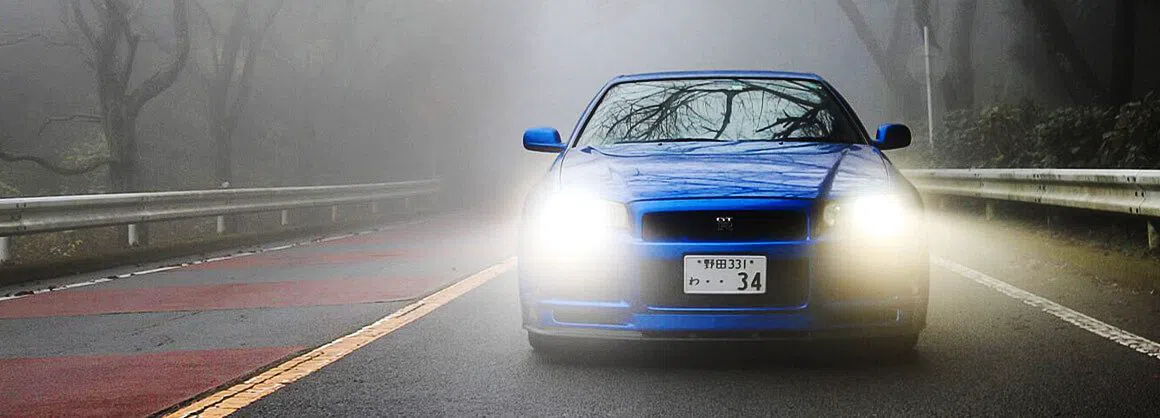
Rates run roughly ¥17,000 to ¥25,000 per 24 hours, with 6, 9 and 12-hour rates available. There is no group discount, but multi-car convoy bookings are routine and are the civilised way to move four friends who all want to drive.
The insurance terms are the real price of entry, so read them. These are irreplaceable thirty-year-old cars on a Japanese excess structure, and a kerbed wheel or a scraped arch on a car with no replacement panels available is not a ¥20,000 problem. Confirm the excess figure, the non-operation charge and what happens on a gravel scrape before you accept the keys, and photograph every panel at handover.
The parts shops are the actual culture
If you want to understand the scene rather than photograph it, go shopping. A PIT AUTOBACS Shinonome, in Shinonome in Koto-ku, is one minute from Shinonome Station on the Rinkai Line and open 09:00 to 21:00, which makes it the best train-accessible car stop in the city. Free to walk in, 24-hour on-site parking, and a tax-free counter for overseas visitors, so bring your passport. Prices run from a few hundred yen for a cabin filter to seven figures for a full brake package, and the floor layout makes plain what the mythology leaves out, which is that this is a retail industry with aisles, promotions and staff on commission.


Up Garage Yokohama Machida Main Store (アップガレージ横浜町田総本店), in suburban Machida, is the used end and the chain's largest site. Free entry, 10:00 to 20:00 daily year-round except New Year, and a sprawling building that absorbs a group easily. Used wheels and seats typically sit between ¥5,000 and ¥80,000, and the stock changes weekly, so it is a genuine treasure hunt rather than a catalogue. Machida is 35 to 40 minutes from Shinjuku by express on the Odakyu line, but the store is not at the station. It sits out on the ring road with a car park sized to tell you how they expect you to arrive, so budget a taxi at the far end or fold it into a rental day.
Wheels, bucket seats and manifolds need a freight forwarder, not a carry-on. Price the shipping before you buy the set.
Where you are legally allowed to go fast
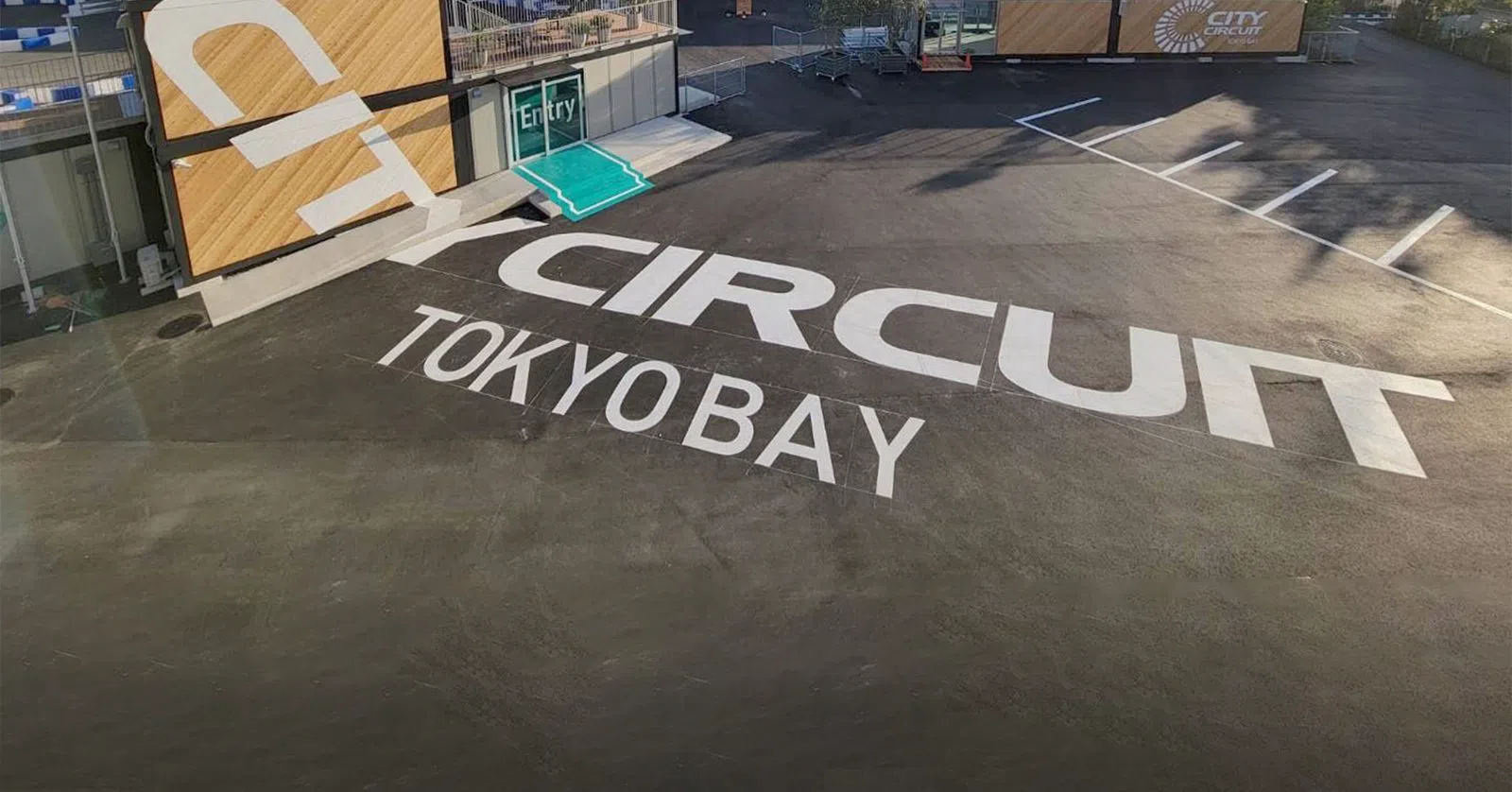
CITY CIRCUIT TOKYO BAY, in Aomi on the bay reclamation, is an outdoor circuit inside the 23 wards, nearest station Aomi. Sessions on the outdoor single-seaters are ¥3,500 to ¥7,000 per driver, walk-up or online, with no driving licence required and a 150cm height minimum. The indoor kids' kart is ¥2,000, and there is a two-seater EV kart so a passenger who cannot drive still gets laps. Because sessions are sold per driver, a group just books consecutive slots.
It opened in December 2023 and now hosts rounds of the All Japan Kart Championship EV division, so treat it as a real circuit with real grip and a real flag marshal, not a theme-park ride. It is also the correct place to put any competitive urge you brought with you, rather than the Wangan.
The weekend that explains the rest of the year
Everything parked at Daikoku the rest of the year is explained at TOKYO AUTO SALON, held at Makuhari Messe on 15 to 17 January 2027, with public days from Friday afternoon through Sunday. Advance general admission runs roughly ¥3,000 to ¥4,500 and tickets are timed and sold online; advance sales for 2027 opened on 1 October 2026. For an international enthusiast it is the best-value trip on this list by a wide margin, because every builder, wheel brand and demo car in the country is in one hall.
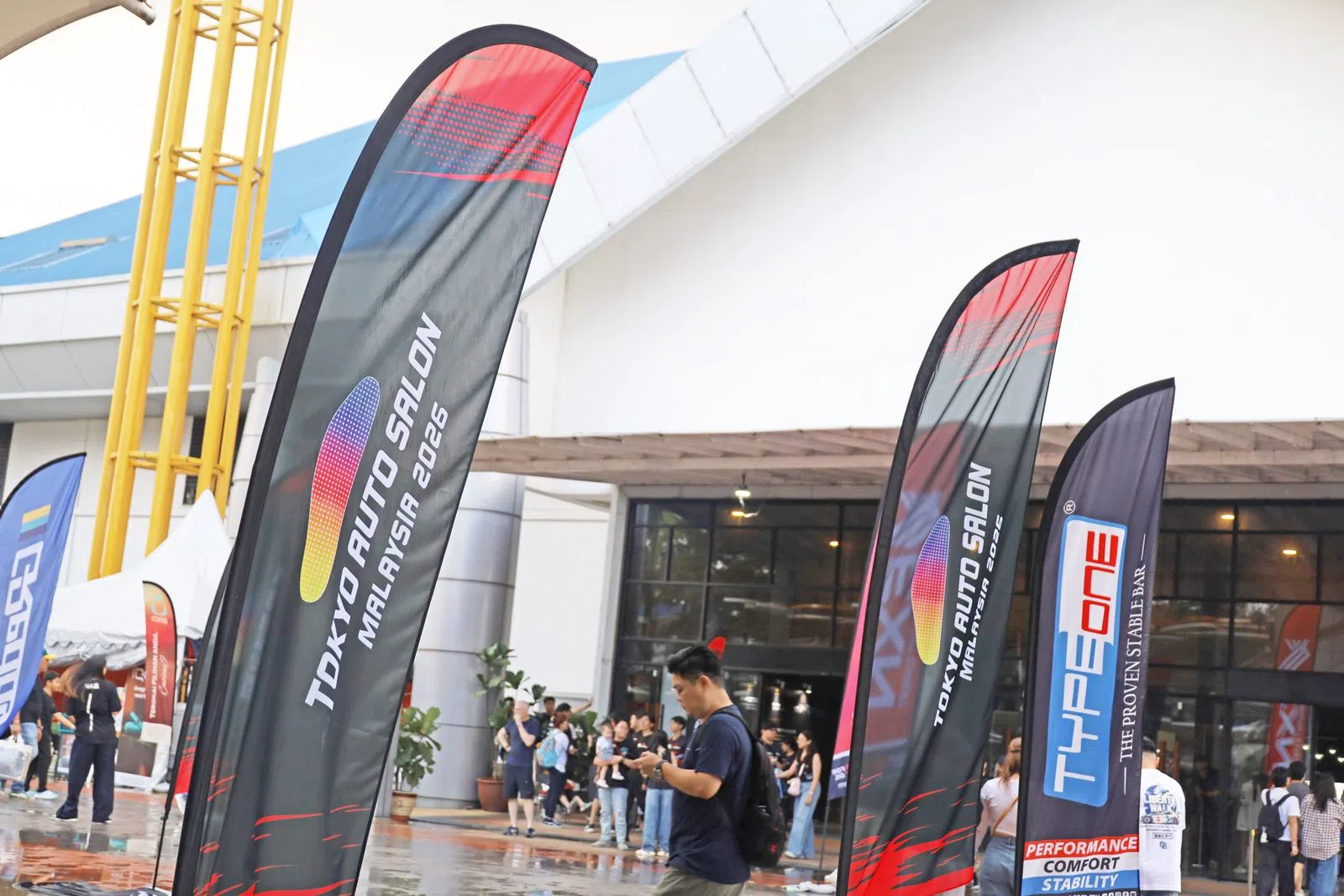
The venue has no group limit, but the Saturday crush is severe enough to ruin a day. Friday afternoon is the civilised option for anyone travelling in a group, and it is also when you can get close enough to the stands to talk to the people who made the parts.
Etiquette that keeps the lots open
The closures are not arbitrary. Tatsumi lost its weekend nights and Daikoku loses most of them because of noise and behaviour, and visitors are now part of that equation. Engine off and parked straight. No revving, no burnouts, no leaving in a way that announces you are leaving. Do not touch a car, do not lean on one, and do not put a camera through an open window. Ask before you photograph a person, and crop or blur plates unless the owner is happy. Do not stand in the driving lane for a shot. Take your rubbish with you, including the convenience-store bag. If police arrive, leave without a discussion, because the owners around you have to come back next week.
Planning the night
Transport first. Three of the four meet venues can only be reached by road, and the only exceptions are Umihotaru by highway bus and the shops and circuit by train. If you are not driving, book a chauffeured run and let someone else carry the ETC card. If you are driving, insist on ETC. It halves the Aqua-Line toll and is the difference between ¥1,600 and ¥3,140 each way.
Cash and cards. Tolls, rentals, tickets and the big shops all take cards, and IC cards work in parking-area vending machines, but carry ¥10,000 in notes for cash toll lanes, small food stalls and the one taxi that does not want plastic.
Timing. Weeknights, Tuesday to Thursday, 22:00 to 01:00 for Tatsumi and Daikoku. Sunday morning from 07:00 if you would rather see the cars than the dark. Do not plan a Friday or Saturday night around either lot; use Umihotaru instead. January 2027 if you want the show as well as the scene.
Budget, per person, for one night and one day of this. Chauffeured shared run ¥25,000, or a VIP car ¥45,000 to ¥65,000 split between three. Self-drive ¥17,000 to ¥25,000 per 24 hours plus ¥1,000 to ¥3,200 in tolls and fuel. Karting ¥3,500 to ¥7,000. Both shops free to browse, which is where the budget usually goes anyway. For where to sleep, eat and spend the daylight hours around all of this, start with the Tokyo guide.
Before you go
Can I get to Daikoku Futo Parking Area on foot or by train?
No. Daikoku Futo is an expressway parking area, closed to pedestrians, bicycles and mopeds, so there is no legal way in on foot. You have to arrive in a vehicle, either driving yourself or on a guided night drive with an operator such as C1 Experience Tokyo. Entry is free; you only pay Shuto Expressway tolls, roughly ¥1,000 to ¥1,900 round trip from central Tokyo.
Why are Daikoku and Tatsumi closed on Friday and Saturday nights?
Both closures are anti-street-racing measures. The Shuto Expressway shuts Tatsumi No.1 Parking Area every Friday and Saturday from 21:00 to 04:00, and police and the operator close Daikoku to incoming traffic from around 21:00 on most weekend nights, plus whenever the lot fills. Plan a weeknight after 22:00, or a Sunday morning from about 07:00 at Daikoku.
Do I need a Japanese licence to rent a JDM car in Tokyo?
No, but you need an International Driving Permit issued in your own country before you travel, and you must be 23 or over to book with Omoshiro Rent-a-Car. Rates run roughly ¥17,000 to ¥25,000 per 24 hours, with shorter 6, 9 and 12-hour options. Check the insurance excess and non-operation charge carefully, because these are thirty-year-old cars with no replacement panels.
Where can I actually drive fast legally in Tokyo?
CITY CIRCUIT TOKYO BAY in Aomi is the only real circuit inside the 23 wards. Outdoor single-seater sessions cost ¥3,500 to ¥7,000 per driver, with no driving licence needed and a 150cm height minimum. There is a two-seater EV kart for passengers, and the track hosts All Japan Kart Championship EV rounds. Book online or walk up; groups take consecutive slots.
When is TOKYO AUTO SALON 2027 and how do tickets work?
It runs 15 to 17 January 2027 at Makuhari Messe, with public days from Friday afternoon through Sunday. Timed tickets are sold online, roughly ¥3,000 to ¥4,500 for advance general admission, and advance sales opened on 1 October 2026. Friday afternoon is far more comfortable than the Saturday crush, especially for a group.