At twenty past seven on a weekday morning in Minami-Otsuka, eleven people are standing on a wet pavement outside a ten-seat counter that will not serve them for another four hours. Nobody talks. At eight the door slides back, a cook steps out with a strip of printed tickets, and ninety seconds later the street is empty again.
That is what the pre-dawn ramen queue in Tokyo has become at the top end of the scale. The two-hour wait still exists, but at the shops that manage it properly you spend those two hours somewhere else, in a coffee shop, on a train, back in your room, holding a slip of paper with a time written on it. Knowing which counters work that way, which ones sell their seats online at a fixed minute on a fixed day, and which ones still simply make you stand is the difference between eating four serious bowls here and eating one.
What follows is eight counters, all currently open, all either holding or having held a Michelin distinction. None of them is expensive. Every one of them has a door policy that will punish a group of five.
What the distinction actually buys you
Tokyo has more Michelin-recognised ramen than any city in the world, and the recognition behaves differently here than it does at a tasting-menu restaurant. A star or a Bib Gourmand on a ramen shop almost never means a bigger room, a host, or a wine list. It means one chef, a counter of six to twenty-three seats, a bowl between roughly ¥1,000 and ¥3,000, and a queue management system invented on the spot to cope with the attention.
It also moves. Three of the shops below have lost a star in the last few years and are cooking exactly the same broth they were cooking when they had it. Treat the guide as a map of where the obsessives are rather than a ranking, and ignore anyone who tells you a demoted shop is worth less of your morning.
The constraint that ruins most trips is seat count, not price and not language. A party of two can eat anywhere on this list. A party of four can eat at one of them together, and at two more if you accept being split up and seated as strangers. A party of six should plan to eat in shifts and stop negotiating with the door.
The ticket run in Minami-Otsuka
Sosakumenkobo Nakiryu (Minami-Otsuka, roughly five minutes on foot from Shin-Otsuka on the Marunouchi line) is the clearest demonstration of how this city solved its own queue. Ten counter seats, no reservations, and no group seating at all: a party of four is split up and seated as four singles, which is also the practical maximum. From around 8am on service days staff hand out timed return tickets. You arrive early, you take your slip, you leave, you come back at the time printed on it. Each person needs their own ticket, so send one representative and you will get one bowl.
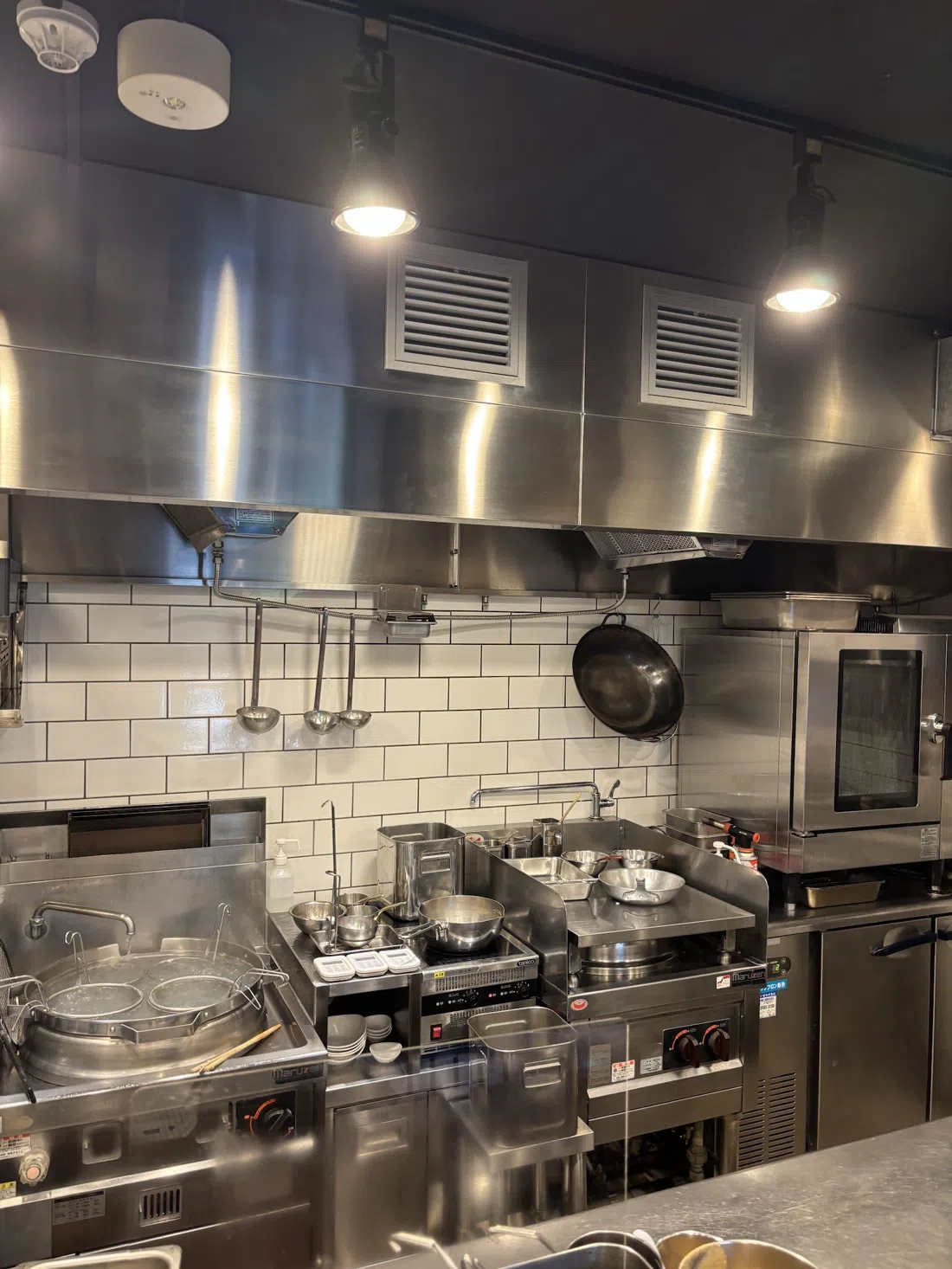
The bowl to order is the tantanmen, which held a star from 2017 to 2023: sesame and chilli over a chicken-and-pork base, thickened rather than oily, with a numbing edge that builds over the second half of the bowl rather than announcing itself. Expect ¥1,200 to ¥1,600. Bring coins and notes, because the ticket machine takes cash and nothing else and there is no card fallback inside the shop.
This is the one shop on the list where the early start is genuinely non-negotiable, and also the one where it costs you the least. You are out of the street by ten past eight with a seat guaranteed, which leaves the rest of the morning free.
Six seats and a Saturday alarm
Chukasoba Ginza Hachigou (Ginza) is the hardest table in this entire category, and the difficulty is administrative rather than physical. There are six seats. Booking runs through TableCheck only, at ¥500 per head, non-refundable, with a 30-minute seating and a requirement that every person at the counter orders a bowl. Reservations open at 9am on Saturday for the following week and are gone in about a minute, which is a measurement rather than an exaggeration. Walk-ins are capped at roughly 30 a day, a real option if you are prepared to arrive early and accept being turned away. It closes Mondays and keeps irregular Tuesdays, so check before you build a day around it.
Groups above two are effectively impossible, so do not plan one.
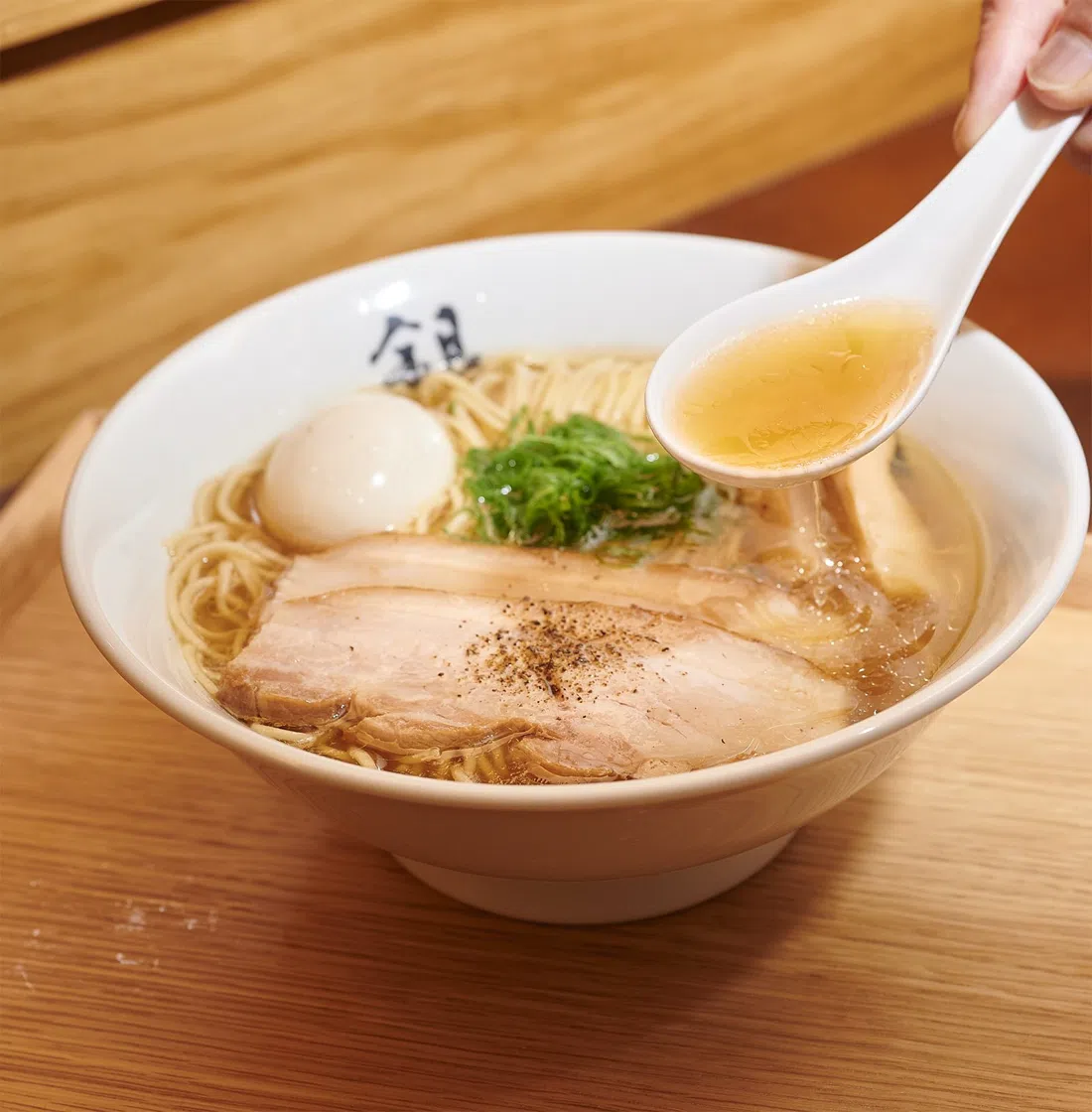
What Chef Yasuji Matsumura is doing justifies the logistics. The broth is built from duck, heritage jidori chicken, scallop, dried tomato and kelp, and it is seasoned with Italian prosciutto and French sea salt rather than a conventional soy tare. It reads like a stunt and tastes like stock reduced by someone trained in a French kitchen: clear, deeply savoury, no sweetness, no fat slick. Bowls run ¥1,200 to ¥2,200. It is the strongest case in the city for ramen as fine dining.
Set a phone alarm for Saturday at 8.55am Japan time, have the TableCheck account already created and logged in, and know which single date you want before the page loads.
Shellfish broth beside Shinjuku Gyoen
SOBA HOUSE Konjiki Hototogisu Shinjuku Gyoen Honten (Shinjuku Gyoen, two or three minutes from Shinjuku-gyoemmae on the Marunouchi line) is the most convenient serious bowl in central Tokyo and the single most common wasted trip on this list, because it closes Sundays and Mondays and a large share of visitors have exactly Sunday and Monday free.
It is counter-only, around eight seats, worked through a numbered ticket system. Two people are fine, four is awkward, and above that it does not work.
Chef Atsushi Yamamoto's clam-and-shellfish shio is the reason clam ramen became a Tokyo genre rather than one shop's signature. It is lighter than it looks, with a mineral finish that lands after you swallow rather than on the tongue. It held a star until 2024 and has carried a Bib Gourmand since. Bowls are ¥1,100 to ¥1,900.
If you are staying in or near Shinjuku, eat this one on your first morning, before jet lag resolves and while you are awake at six anyway. Walk into the garden afterwards; the gates are a few minutes away, and the contrast between a shellfish broth and an empty lawn at nine in the morning is one of the better things this city does for free.
Where four of you can sit together
Japanese Soba Noodles Tsuta (Yoyogi-Uehara, a short walk from the station on the Chiyoda and Odakyu lines) is the exception that makes group travel possible. Twenty-three seats, eleven at the counter and twelve at tables, with genuine online reservations through TableCheck or OMAKASE. A party of four to six can actually sit at the same table and talk to each other, which does not happen anywhere else in this piece.
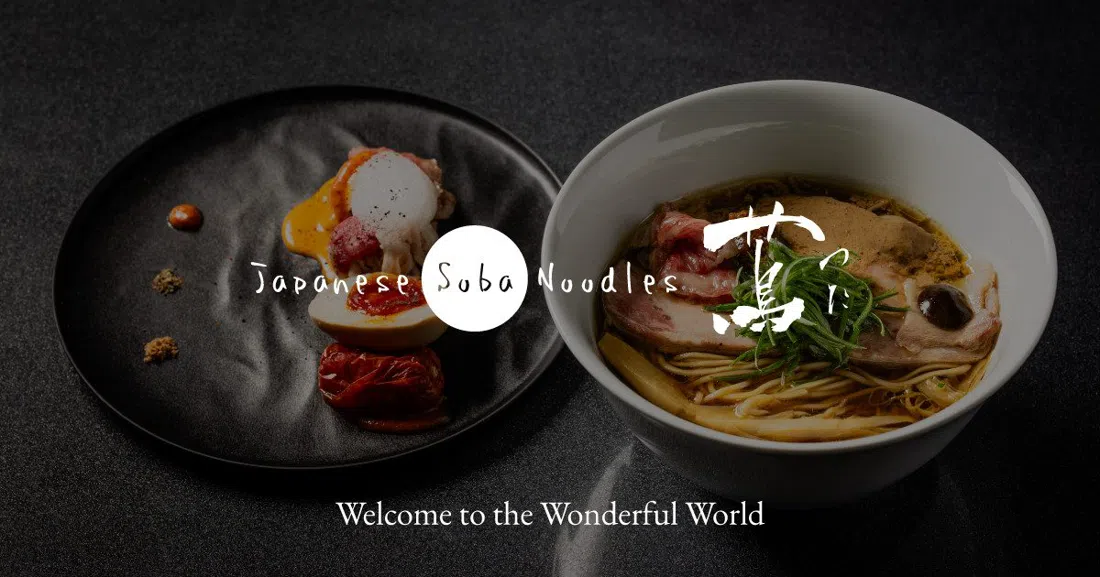
The history matters: this was the first ramen shop in the world to win a Michelin star, in 2016, when it was a nine-seat room in Sugamo. It closed in 2022 and reopened in Yoyogi-Uehara in 2023 without the star but with the same chicken, clam and dried-seafood shoyu finished with truffle oil. The truffle is used as seasoning rather than perfume; it sits behind the shoyu instead of on top of it. Bowls are ¥2,000 to ¥3,000, more once you add toppings, which makes this the priciest entry here and still cheap by any other measure.
Two hard rules. It is cashless only, with no notes at all. And it serves Thursday to Sunday, lunch. Book it rather than turning up hopeful, because a 23-seat room with a reservation book is exactly the kind of place that has nothing left for walk-ins.
Two counters worth the ride out
Japanese Ramen Gokan (Ikebukuro) is the easiest genuinely serious bowl to reach if you are sleeping anywhere on the north or west side of the Yamanote loop. It is a counter shop with a hard cap of about 64 customers a day, so arriving early is the whole strategy; split anything above two.
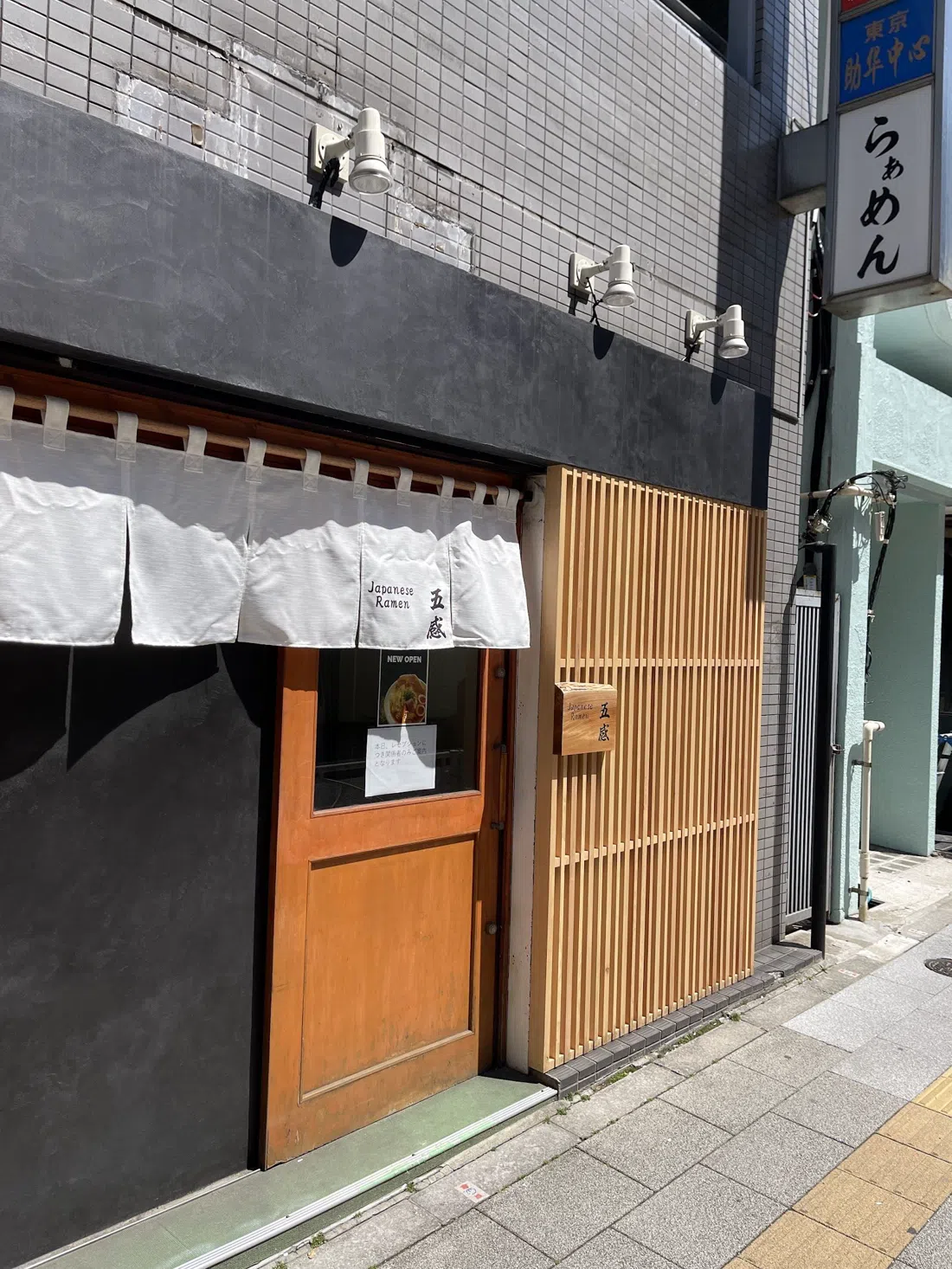
The shio layers two heritage free-range chicken breeds against clams sourced from three separate coasts, plus scallop. It is the most structured bowl on this list: you can taste the chicken and the shellfish as two distinct things rather than one blended savouriness. ¥1,500 to ¥1,800. Bib Gourmand every year since 2024 and a Japan Top-100 pick, and unlike most of the shops here it does not require you to reorganise your day around it.
Ramenya Toy Box (Minowa, a few minutes from Minowa on the Hibiya line) is the opposite trip: forty minutes of train from the centre to eat at an eight-seat counter that accepts no reservations of any kind. Pairs only, in practice. Around ¥1,300 for a chicken shoyu that is a long-running Bib Gourmand and, more to the point, the local's choice. The queue is people who live within a few streets, eating lunch.
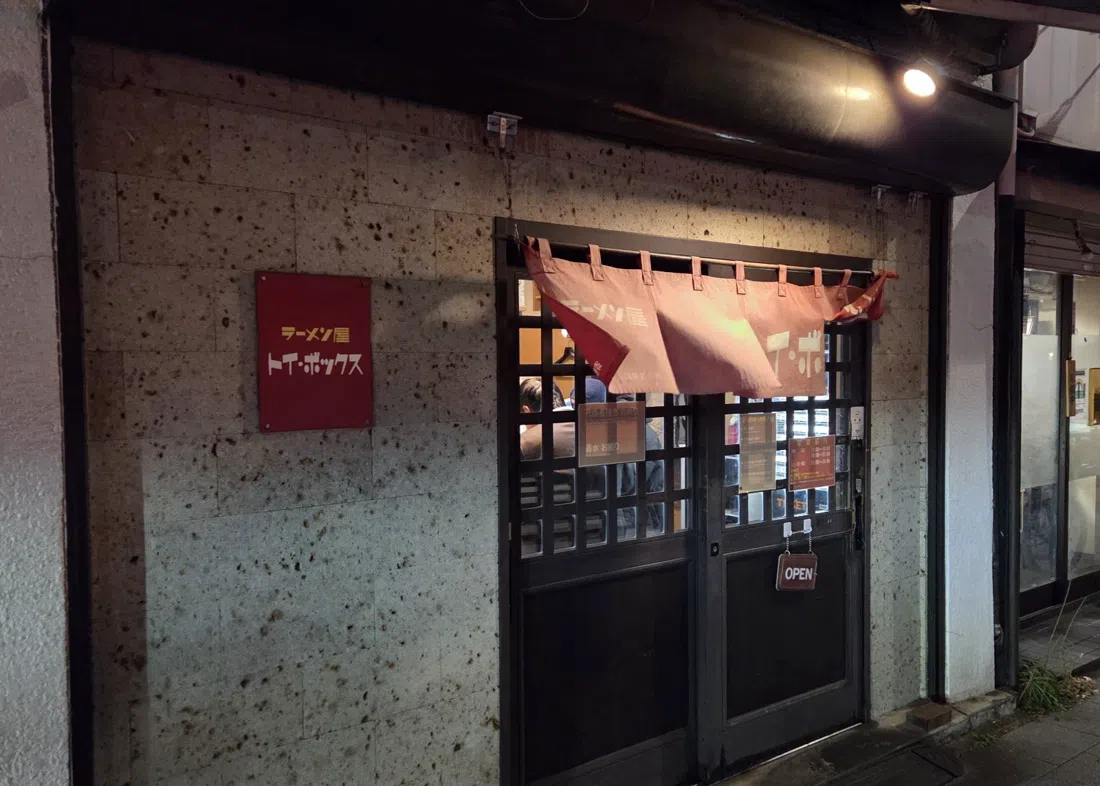
Go if you want the neighbourhood version of this ritual rather than the Ginza version. Minowa is low-rise and quiet, and nothing about it is arranged for visitors, which is the reason to make the ride. It serves lunch and dinner on weekdays and lunch only at weekends.
Wontons near Nakameguro and a purist's broth
Yakumo (Nakameguro, about ten minutes on foot from the station) has nine consecutive years of Bib Gourmand, the longest unbroken run of any ramen shop in the guide, which tells you more about consistency than any single star does. Small counter, no bookings, and the queue forms before 11:30, so treat 11:15 as the arrival time rather than the opening time. Two or three people is comfortable; more than that and you are waiting in shifts.
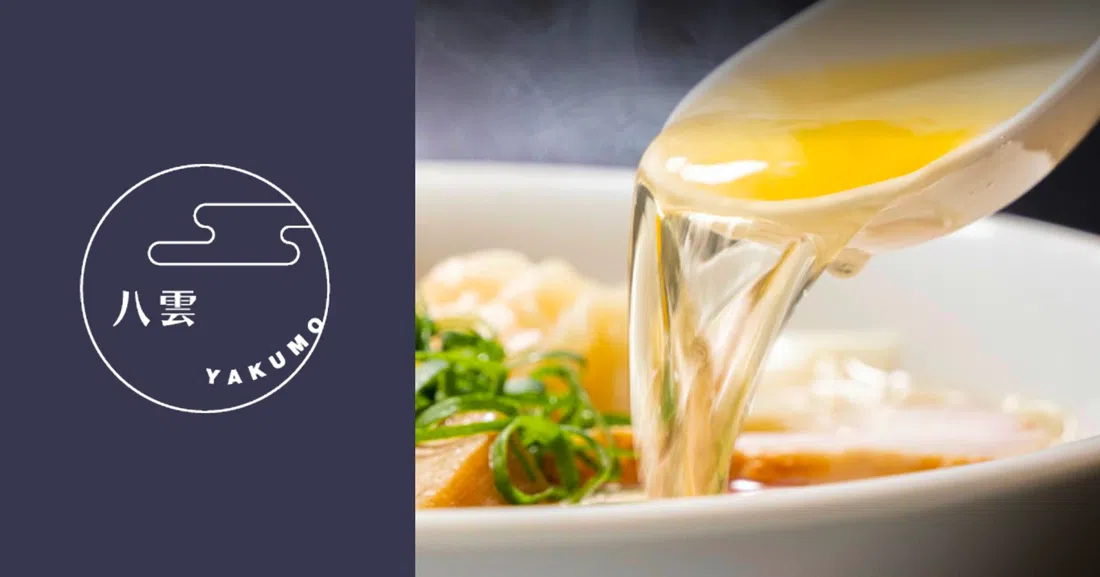
Order the 'tokusei', the version that gets you both kinds of wonton, and the wontons are the reason to be here. Thin-skinned, slippery, filled properly, floating in a clean shoyu that does not fight them. ¥1,000 to ¥2,000. Closed Tuesdays. It pairs naturally with an afternoon along the Meguro river, which is a flat, slow walk and the right speed after a bowl.
Homemade Ramen Muginae (west Tokyo) is the purist end of the spectrum and the quietest entry here. Counter-only with a reservation system, small parties only, lunch only, and closed Wednesdays and Thursdays: four separate constraints that between them knock it off most itineraries. Nine straight years of Bib Gourmand, built on house-made noodles from a proprietary flour blend and a niboshi shoyu broth made with no chemical seasoning and no extract.
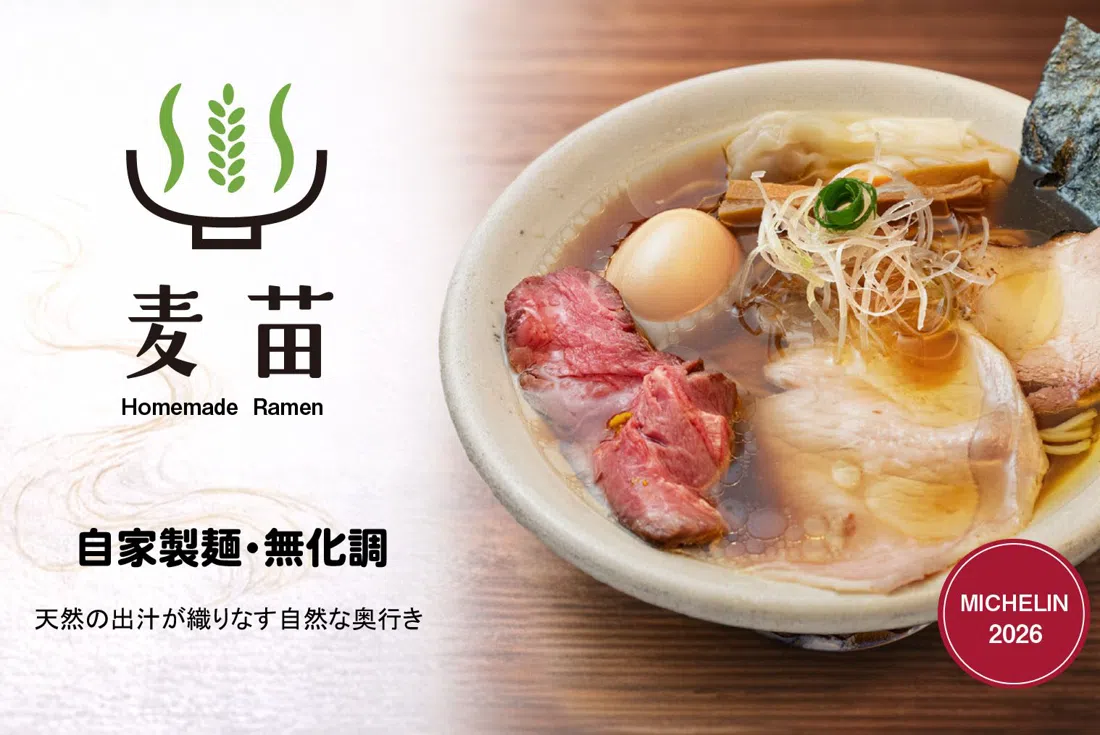
Without additives the broth lands softer and shorter than you may expect, and the dried-sardine bitterness is right there in the open with nothing sweet covering it. ¥1,000 to ¥2,000. If you have eaten a lot of ramen and want to taste what the noodle itself is doing, come here. If this is your first bowl in Tokyo, start somewhere else.
Putting a morning together
The workable pattern is one queue shop and one booked shop per day, never two queue shops. A realistic strong day: Shin-Otsuka by 7.45am for a Nakiryu ticket, coffee and a walk while the clock runs, back for your slot, then an afternoon that does not involve standing. A second day: book Tsuta for a Thursday-to-Sunday lunch with your whole group, and do nothing else food-related before it.
If you only have one morning, make it Konjiki Hototogisu: central, early, and the shortest distance between your bed and a star-grade bowl. Just not on a Sunday or Monday.
Stay on the Yamanote loop or on the Marunouchi line and five of these eight become a sub-twenty-minute ride; the Tokyo hotel search is the place to filter by that rather than by district name. For how these mornings fit around the rest of the city, the Tokyo guide covers the daytime half.
Practical notes
Everything here is on the subway or the Yamanote loop. Load an IC card on arrival; the first trains run from around 5am, which is earlier than any ticket handout you will need. Allow 20 to 40 minutes between any two shops on this list.
On payment, carry both kinds. Nakiryu is cash-only through a ticket machine. Tsuta is cashless only and will not take your notes. ¥10,000 in small notes and coins covers several days of bowls.
For timing, be at the ticket shops by 7.45am and at the queue shops by 11:15am, not 11:30. The booked shops mean 9am Saturday for Ginza Hachigou and a week ahead for Tsuta. Check closures first, because Mondays and Tuesdays take out three of these eight.
Budget ¥1,000 to ¥3,000 a bowl, plus ¥500 non-refundable per head at Ginza Hachigou. Two people eating two serious bowls a day for three days will spend under ¥20,000 on food.
On groups, four is the ceiling anywhere, and only Tsuta seats four together. Above four, book Tsuta and split the rest of the week into pairs.