 In this area
The Tokyo issue
Asakusa, Tokyo: Old Edo Still Breathing on the Sumida
Tokyo’s most lived-in temple town still runs on incense, tempura, river wind and cheap drinks — a district where old Edo isn’t staged so much as continued.
By Haruki TanakaYanaka craft studios to Ginza design
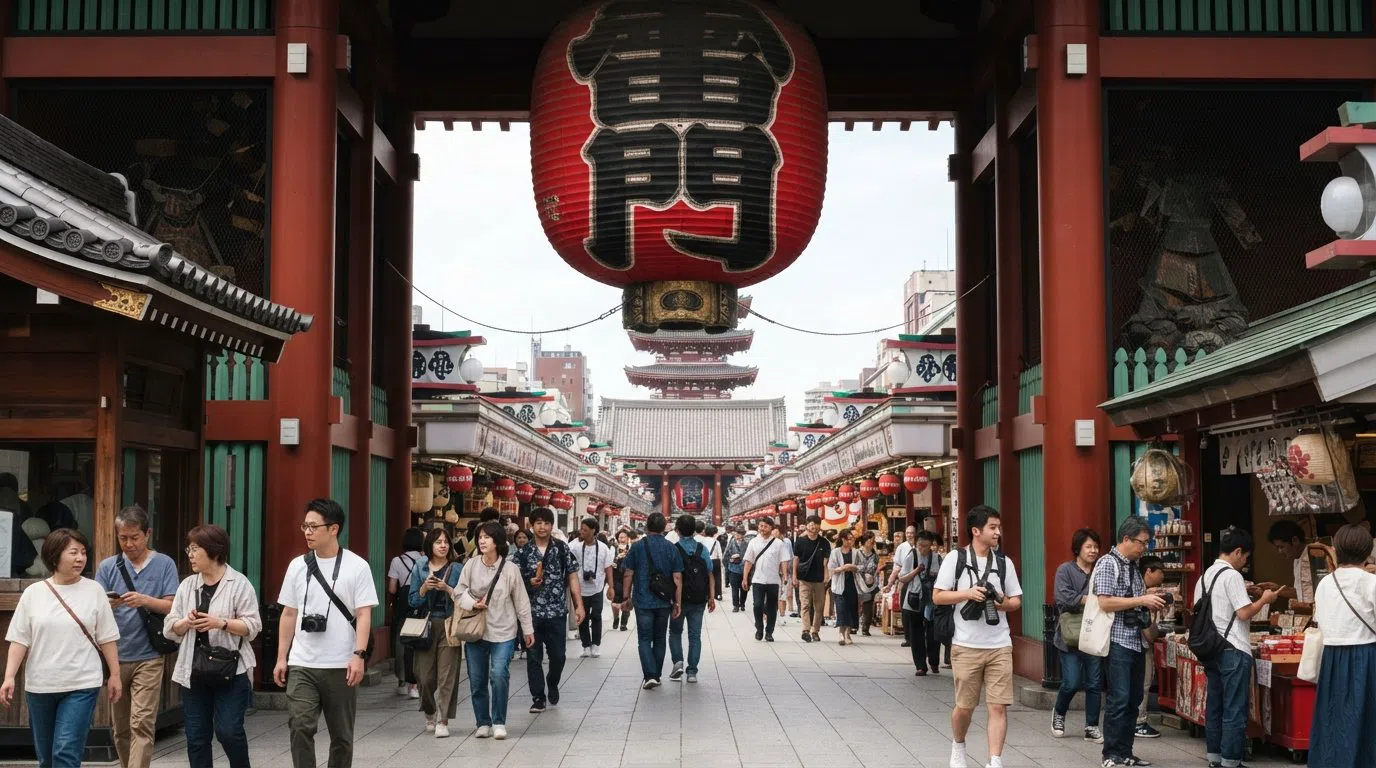
Asakusa begins with a red lantern. Under the Kaminarimon, the 3.9-metre paper globe hangs like a signal flare above the stream of visitors, and the whole district seems to gather itself beneath it: rented kimono, camera straps, the smell of frying rice crackers drifting from Nakamise-dori, rickshaw pullers waiting with the patience of men who know the day will come to them anyway. A block away, the noise drops away so sharply it feels edited. That is Asakusa’s first trick and still its best one — a place where Tokyo’s past is not preserved behind glass but used every day, at lunch, at prayer, at closing time.
What Asakusa is known for
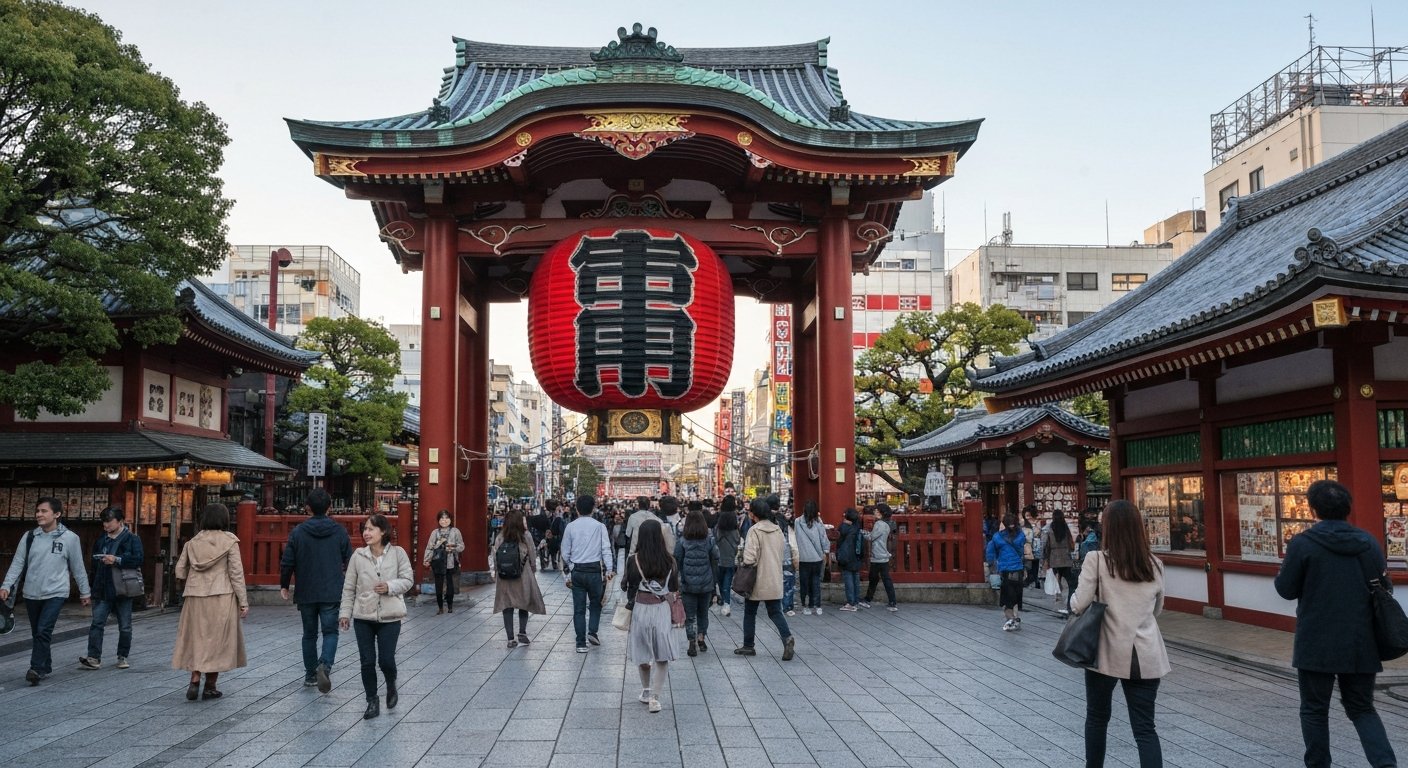
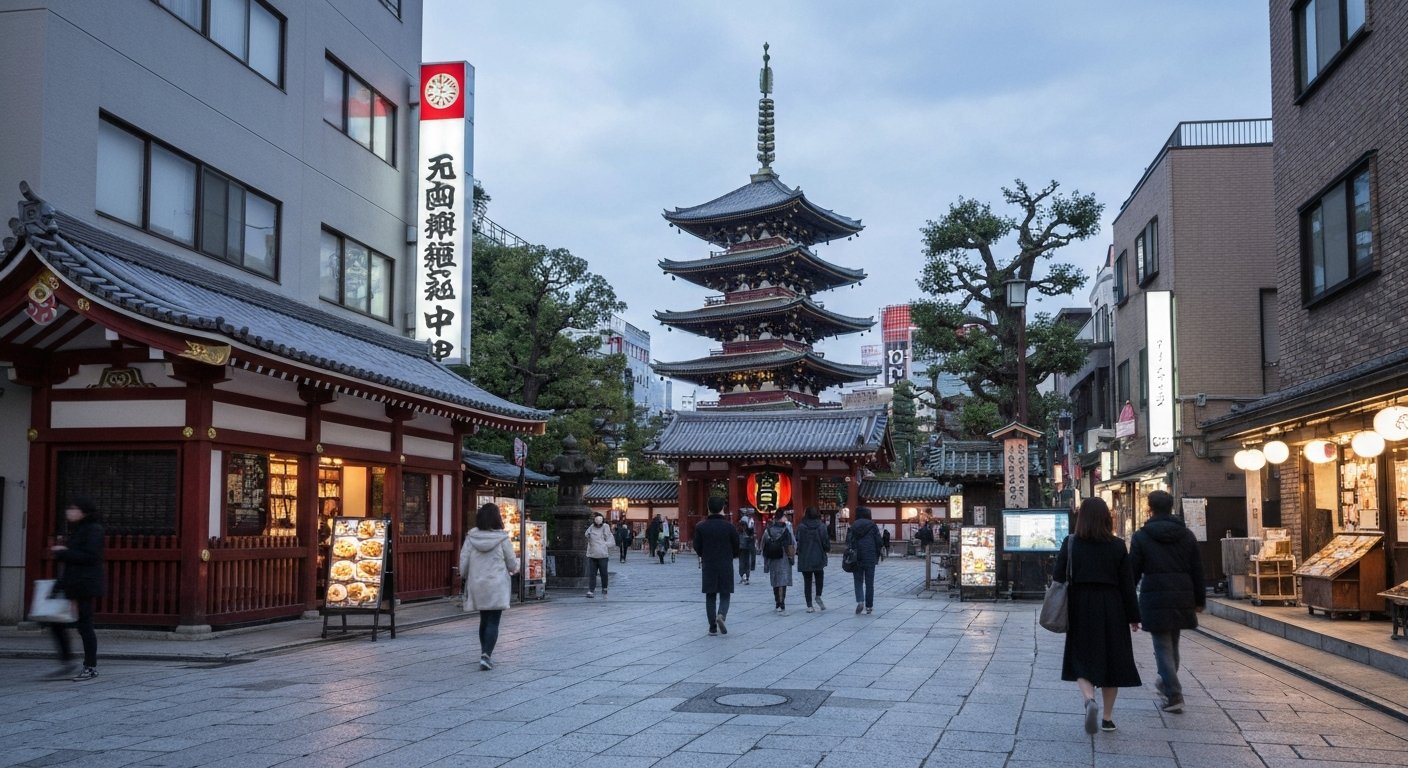
Everything here radiates from Senso-ji, Tokyo’s oldest temple, founded in 628 after two fishermen reportedly hauled a golden statue of Kannon from the Sumida. The story matters less as legend than as architecture of habit: for nearly 1,400 years, people have been coming here to ask for luck, to buy sweets, to make a day of it. You enter through Kaminarimon, then move up Nakamise-dori, a 250-metre approach that has been trading since the late 1600s, with the five-storey pagoda and the larger Hozomon gate drawing you onward like punctuation marks in a sentence everybody in Tokyo knows by heart.
The main hall keeps generous hours — roughly 6am to 5pm, opening from 6:30am October to March — but the real Asakusa lesson is timing. Dawn gives you the temple before the tour groups arrive; after dark, the buildings are lit and the crowds thin enough that the incense smoke seems to belong to you alone. The grounds never close, which is one reason the district still feels like a living temple town rather than a heritage set. People do not come here to check a box. They come to walk slowly, to pray, to eat something their family has eaten for generations, and to drink cheaply when the sun drops.
The neighbourhood’s calendar is just as old-minded. In May, Sanja Matsuri turns Asakusa Shrine — the Shinto shrine tucked beside the temple — into a surge of shoulder-borne mikoshi and shouting crowds, one of the city’s biggest and rowdiest festivals. In late July, the Sumida River Fireworks Festival sends around 20,000 shells over the water between the Sakura and Komagata bridges, a tradition that reaches back to the 1730s. Add the rickshaw pullers near the gate and the craftspeople still working the backstreets and you understand the district’s real brand: this is where Tokyo goes to feel old.
Plan your Tokyo trip
Live prices from our booking partners.
Guests & rooms
Free cancellation on many rooms. We may earn a commission when you book.
Where to eat & drink
Asakusa eats like a district with a long memory. At Sansada, beside the Kaminarimon since 1837, tempura is not a trend but a lineage. The house specialty is kakiage — a fritter of shredded carrot, burdock, onion and tiny shiba-ebi shrimp — fried in a dark sesame-oil blend that gives the whole room a warm, nutty smell. The menu stretches from roughly ¥1,400 for a ten-don rice bowl to ¥9,000 for a full set, but what lingers is the sense that the same counter has been doing the same work for nearly two centuries.
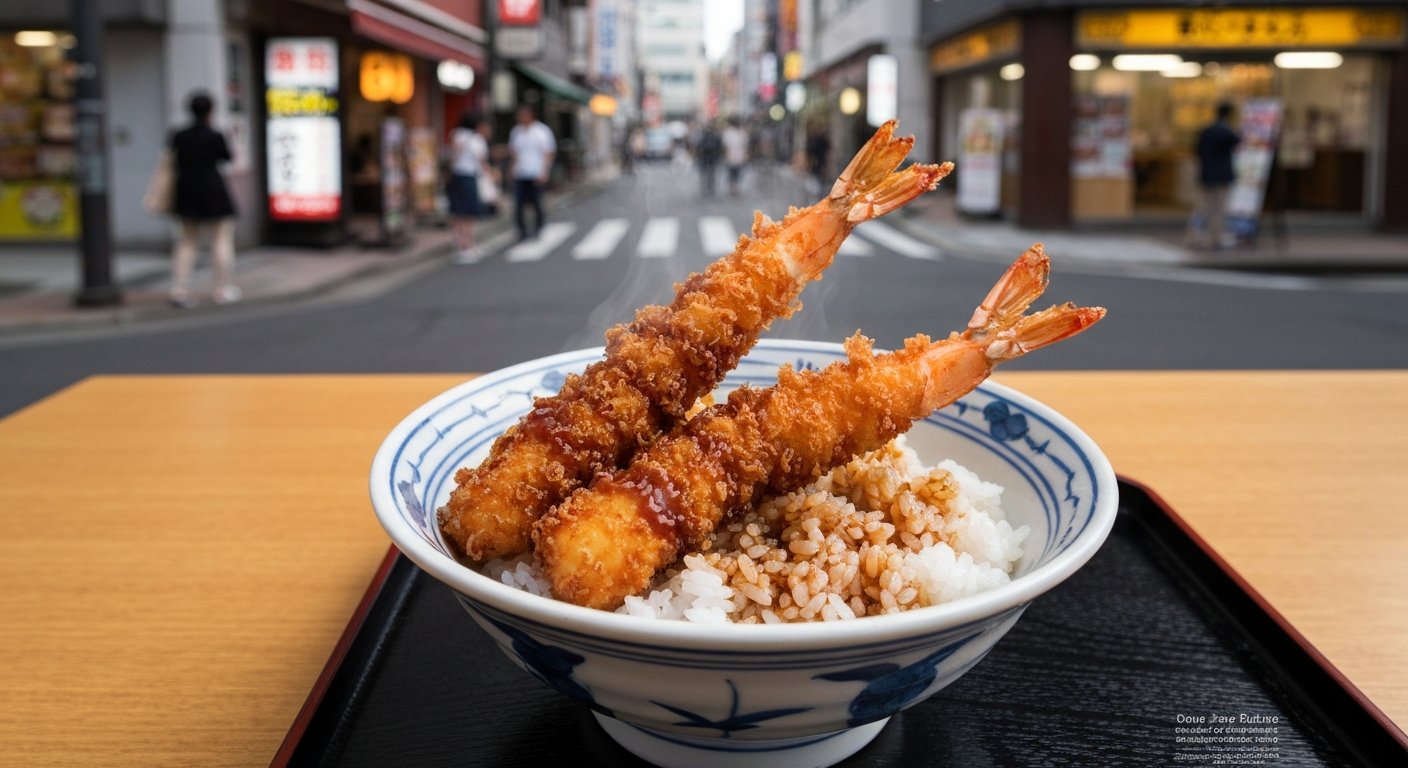
A short walk away on Denboin Street, Daikokuya takes the Asakusa tempura idea and makes it heavier, richer, more theatrical: fat prawn tempura piled on rice under a lacquer-dark sauce. It is the sort of place where the dish arrives with a kind of gravity. Asakusa Imahan Honten, serving sukiyaki since 1895, offers a different kind of old-world comfort — marbled wagyu simmered tableside in a sweet-savoury sauce, with lunch the more approachable way in. And at Komagata Dozeu, founded in 1801, the Edo period is not a theme but a method: dojo nabe, the communal hot pot of tiny loach fish softened in sake, is still cooked the traditional way.
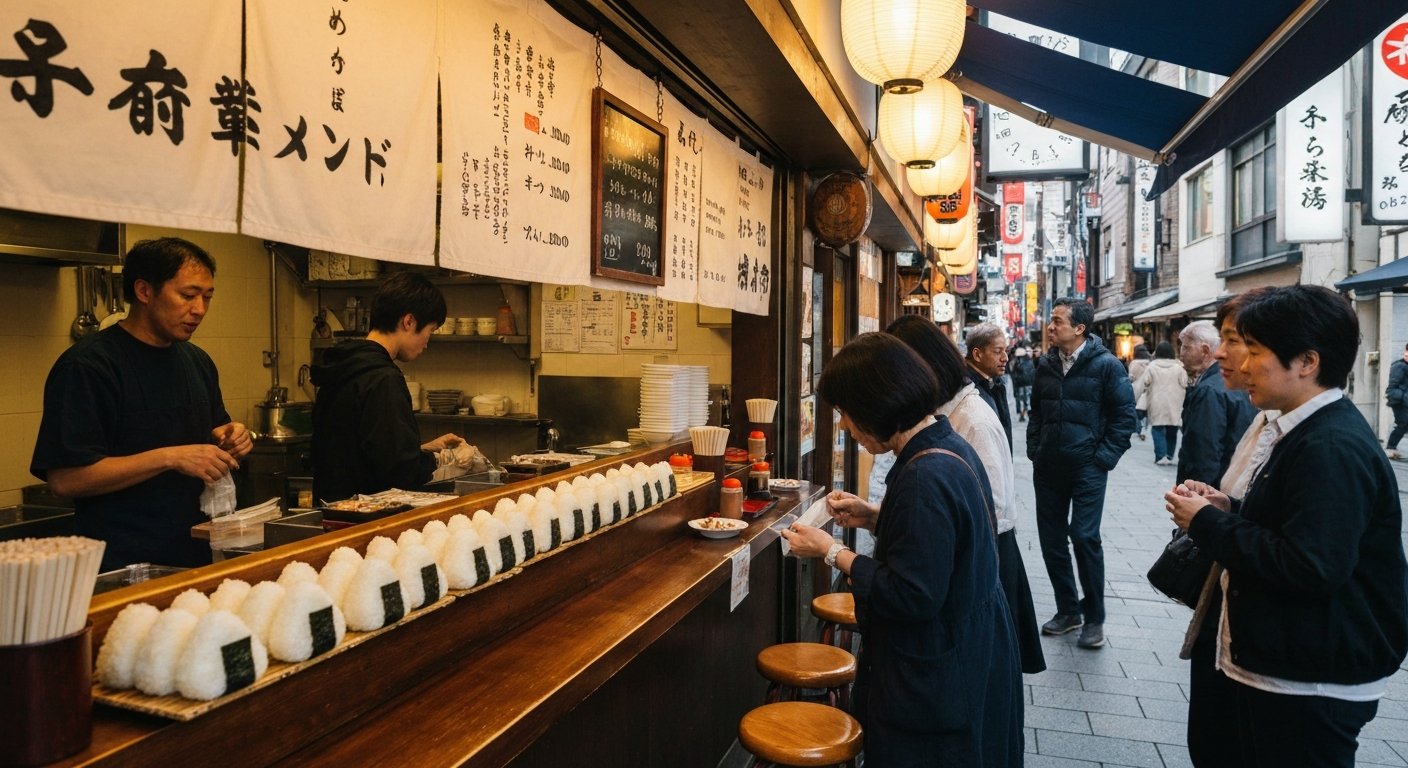
The more casual Asakusa is just as persuasive. Onigiri Asakusa Yadoroku, Tokyo’s oldest rice-ball shop from 1954 and a Michelin Bib Gourmand since 2019, makes each onigiri to order at a tiny counter. Most sit around ¥300, and the fillings — pickled plum, salmon, herring roe in sake lees — are the sort that remind you how much can be done with rice, salt and restraint. Sometaro, a creaky 1937 tatami house, hands you a hot griddle and lets you cook your own okonomiyaki and monjayaki, which is less a meal than a small domestic event. Near the gate, Asakusa Kagetsudo has been selling face-sized, sugar-crusted melon pan since 1945, and it still seems to move by the thousands.
For breakfast and coffee, the district has grown up without losing its modesty. Pelican Cafe, from the beloved Pelican bakery founded in 1942, does toast and ham-cutlet sandwich sets with the reassuring plainness of a place that knows exactly why people come. Fuglen Asakusa, a Norwegian import, pours lightly roasted single-origin coffee by day and cocktails at night. Suke6 Diner rounds out the morning options with one of Asakusa’s best sit-down breakfasts. None of these places shouts. That is the point. Asakusa’s food culture is not about novelty; it is about continuity, and the confidence to leave a recipe alone once it works.
Going out
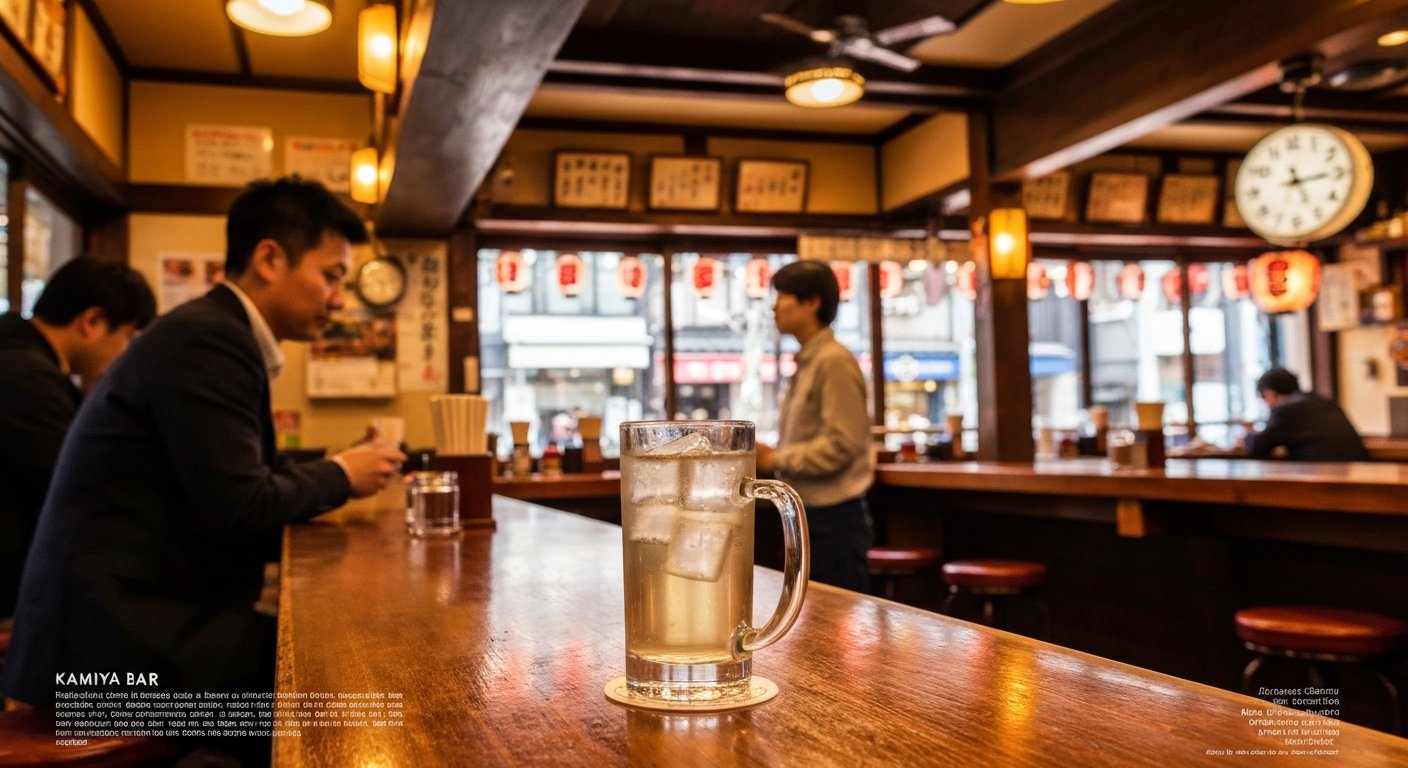
Asakusa does not do clubs, and the absence feels intentional. After dark, the district turns toward standing bars, cheap izakaya and one famously old drinking hall, as if the evening were meant to be spent in conversation rather than escalation. Kamiya Bar, opened in 1880 and generally called Japan’s oldest Western-style bar, is the anchor. Its house drink, Denki Bran, is a punchy 45% brandy-based cocktail with a secret blend of gin, wine, curaçao and herbs, invented in the Meiji era when anything modern got the prefix denki, or electric. You buy a ticket at the door, hand it over, and drink standing or at a plain table. The room offers no theatre beyond its own survival.
The livelier scene is Hoppy Street, a two-block lane behind the temple crammed with open-fronted izakaya and plastic stools. The name comes from Hoppy, the near-beer mixer once drunk by locals who could not afford real beer, and the ritual is still beautifully democratic: sit outside, order a Hoppy-and-shochu, and pair it with motsu nikomi or beef-tendon stew. Asakusa Sakaba Okamoto has been pouring here for more than 60 years, while Izakaya Koji is a reliable stop mid-lane for stewed tendon topped with tofu. Most small plates run from ¥300 to ¥700, and drinks from ¥400 to ¥600. Come mid-afternoon to early evening, when the light is good and the street feels most companionable. As the day cools, the whole lane takes on the look of a neighbourhood that has decided, sensibly, not to rush.
Things to do
The obvious walk is still the best one. Start under Kaminarimon, move up Nakamise-dori, wash your hands and waft incense at the jokoro cauldron, then climb to the Senso-ji main hall before cutting across to the quieter Asakusa Shrine and the five-storey pagoda. Draw an omikuji fortune — and if it is bad, tie it to the rack and leave it behind. If you want the old-town version of a guided ride, hire a rickshaw near the gate and let someone narrate the backstreets while you sit and watch the district perform itself.
The river is the second act, and it changes the whole mood. Sumida Park lines both banks and is one of central Tokyo’s best cherry-blossom stretches in spring, as well as a prime vantage for the July fireworks. From the pier by Azuma Bridge, the Tokyo Cruise water bus offers a more cinematic way to move, with the futuristic Himiko and Hotaluna boats designed by manga artist Leiji Matsumoto running down toward Odaiba and the bay. For a free overview, the Asakusa Culture Tourist Information Center — Kengo Kuma’s timber tower opposite the Kaminarimon — has an 8th-floor observation deck looking straight down Nakamise-dori. And if you want a modern counterpoint to all this historic weight, Tokyo Skytree is a flat 20-minute walk across the river, close enough to fold into the same day without breaking Asakusa’s spell.
Don’t miss in Asakusa
Senso-ji, Tokyo's oldest and most visited Buddhist temple, dedicated to the Bodhisattva Kannon.
Nakamise-dori, a historic shopping street leading to the temple, lined with stalls selling traditional snacks and souvenirs.
Hoppy Street, a lively outdoor drinking strip famous for stewed beef tendon and low-alcohol Hoppy beer.
Shopping
Shopping in Asakusa is not about conquest. It is about carrying home things that still feel useful after the trip: sweets, towels, a knife that cuts properly, a bowl that will outlast the souvenir phase. Nakamise-dori, the temple-approach arcade, is the obvious place to start. Its roughly 90 stalls specialize in edible souvenirs and Edo craft — freshly griddled ningyo-yaki shaped like lanterns or pigeons, crisp hand-toasted senbei, printed cotton tenugui, folding fans, yukata fabric and lacquerware. Even at its busiest, the street has the logic of a market that knows exactly who it is for.
Step onto Denboin-dori or into the Shin-Nakamise arcade and the pace softens a little, with less touristed craft shops, kimono rentals and old sweet-makers. Five minutes west, Kappabashi Kitchen Town opens into a different kind of Asakusa entirely: an 800-metre street of some 170 wholesale shops selling Japanese knives, ceramics, cast-iron tetsubin, bamboo steamers and the hyper-realistic plastic food models that fill Tokyo restaurant windows. It is practical, wonderfully packable and one of the city’s best places to buy something you will actually use. For a more curated sweep of regional Japan, Marugoto Nippon near the temple gathers foods, sake and handicrafts from across the country under one roof.
Where to stay in Asakusa
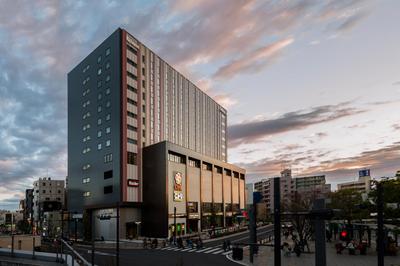
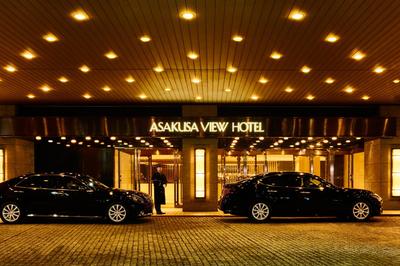
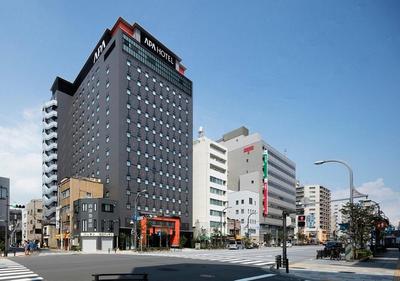
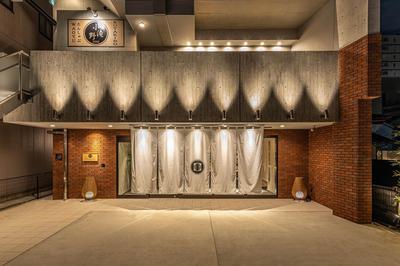
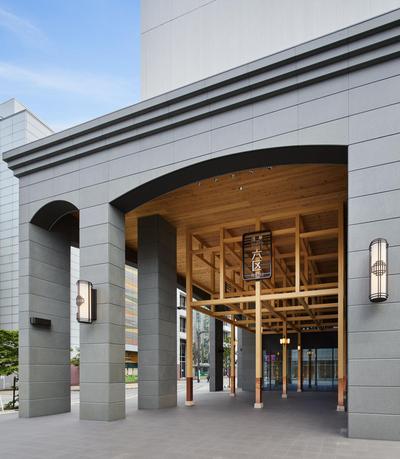
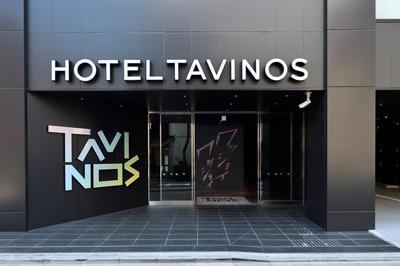
Asakusa works best as a base when you want the city’s old quarter to set the tone of your day. The accommodation here leans toward small hotels, hostels, business hotels and a scattering of ryokan rather than international five-stars, which suits the district’s temperament. A ryokan near the temple gives you tatami rooms and, sometimes, a small rooftop bath; a capsule or business hotel near Asakusa Station keeps costs down and puts you close to the trains. The quietest, prettiest pocket is the Hanakawado / Sumida riverside strip east toward the water, where you are still walking distance from Senso-ji but wake to the river and park rather than the Nakamise crush. Stay nearer the Kaminarimon and station if you want the food and the rail links at the cost of more daytime bustle.
The trade-off is worth understanding. Asakusa sits at the eastern edge of the network, so Shinjuku and Shibuya are a 25- to 30-minute ride away. Ueno, Akihabara, Ginza and Tokyo Station are all quick, but this is not the base for someone who wants a neon-heavy night and a five-minute ride home. It is, however, one of Tokyo’s most budget- and culture-friendly neighbourhoods, and the live hotels are listed below.
Hotels in Asakusa
Our best-rated stays in this neighbourhood. Prices are approximate “from” rates — confirmed at the provider when you continue. We may earn a commission if you book through our partners — at no extra cost to you.
In this area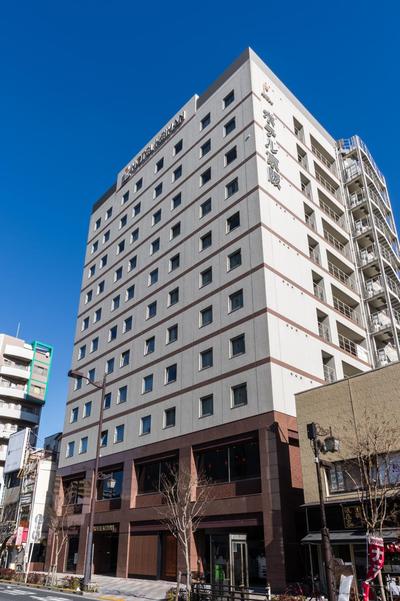 In this area
 In this area
 In this area
 In this area
 In this area
 In this area
 In this area
Asakusa
Henn na Hotel Premier Tokyo Asakusa Tawaramachi
8.6· 7,022 reviews
approx. from£179 / nightSee prices
 In this area
 In this area
 In this area
 In this area
Getting around
Asakusa is compact and made for walking. The temple, river, Hoppy Street and Kappabashi all sit within about a 15-minute stroll of one another, and the neighbourhood rewards the unhurried route anyway; its pleasures are measured in blocks, not distances. Four separate stations carry the Asakusa name and interconnect: the Tokyo Metro Ginza Line, the Toei Asakusa Line, the Tobu Skytree Line and the Tsukuba Express, which sits about a 10-minute walk west. Ueno is about five minutes on the Ginza Line, Ginza around 15, and Tokyo Station roughly 12 to 15 minutes via one change. Shinjuku and Shibuya take about 25 to 30 minutes.
For airports, Asakusa has a rare advantage: the Toei Asakusa Line gives you direct or near-direct trains to both Haneda via Keikyu through-service and Narita via the Keisei Access Express, which runs straight through from the airport to Asakusa Station without a change. The Skytree and Solamachi complex are a flat 20-minute walk across Azuma Bridge, and the Sumida River water bus is a scenic alternative for getting south toward Odaiba. That combination — walkable, river-bound, and unusually well connected for a district that still feels old — is why Asakusa remains such an easy place to stay a little longer than planned.
Gallery
Asakusa in pictures
Asakusa — your questions
Is Asakusa a good area to stay in Tokyo?
Yes, especially for first-timers, families and budget travellers who want traditional atmosphere and easy sightseeing. You’re beside Tokyo’s oldest temple, the riverside park and some of the city’s best cheap eats, with direct trains to both airports and quick hops to Ueno, Akihabara and Ginza. The trade-offs are that nightlife is limited and it winds down early, and Shinjuku and Shibuya are a 25- to 30-minute ride away.
When is the best time to visit Senso-ji?
Go at dawn or after dark. The temple grounds never close, and in the early morning or evening the main hall and pagoda are lit and the Nakamise crush is gone, so you get the atmosphere without the crowds. The main hall is open roughly 6am to 5pm, with opening from 6:30am October to March.
Is Asakusa safe at night?
Very. Like almost all of Tokyo, it’s safe to walk after dark, including the temple grounds and Hoppy Street. The main thing to note is simply that Asakusa gets quiet early, so it feels calm rather than lively. Take normal care in the dense festival and fireworks crowds.
What is Asakusa best for?
Old-Edo temple atmosphere, traditional food, festivals, cheap eats and easy sightseeing. It’s the place for a slow walk from Kaminarimon to Senso-ji, a tempura lunch, a river stroll and a cheap drink on Hoppy Street.