Tokyo专刊
How to walk Ueno, Tokyo's museum and market district
Four national collections, a shrine from 1651, a pond with swan boats and 400 stalls under the railway, plus the 2026 prices, closing days and booking rules that set the order of your day.
作者:Lukas BrandtTokyo on foot, timed to the temple gates
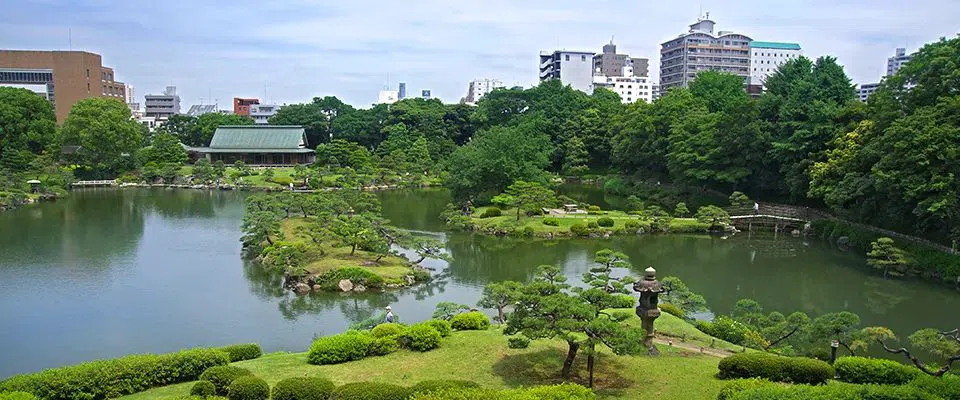
Ueno Park opened in 1873 as Japan's first public park, and more than 1,000 cherry trees shade its central gravel promenade. Four national collections are inside the gates or a two-minute walk out of them. Under the railway viaduct at the south end, the 400 shops of Ameya-Yokochō trade on the ground of a post-war black market.
Ueno Park and the central promenade
The Saigō Takamori bronze marks the south entrance, the man in a hunting kimono with his dog at his heel. Walk past it and the ground opens into the broad gravel promenade that runs the length of the park under the cherry trees, museum facades showing through the greenery. Ueno Park (Ueno Onshi Park) is free and unticketed, and school parties and coach groups use the promenade as their assembly point all year.
In late March and early April the blossom crowds are shoulder to shoulder, so come before 09:00. Groups lay tarps under the trunks and eat bento there through the afternoon, with red paper lanterns strung between the trees above them. Every other place in this guide is inside the park or a short walk out of it, so start here and not at a restaurant.
规划您的Tokyo之旅
实时价格,来自我们的预订合作伙伴。
许多客房可免费取消。您预订时,我们可能会获得佣金。
The park's three big museums
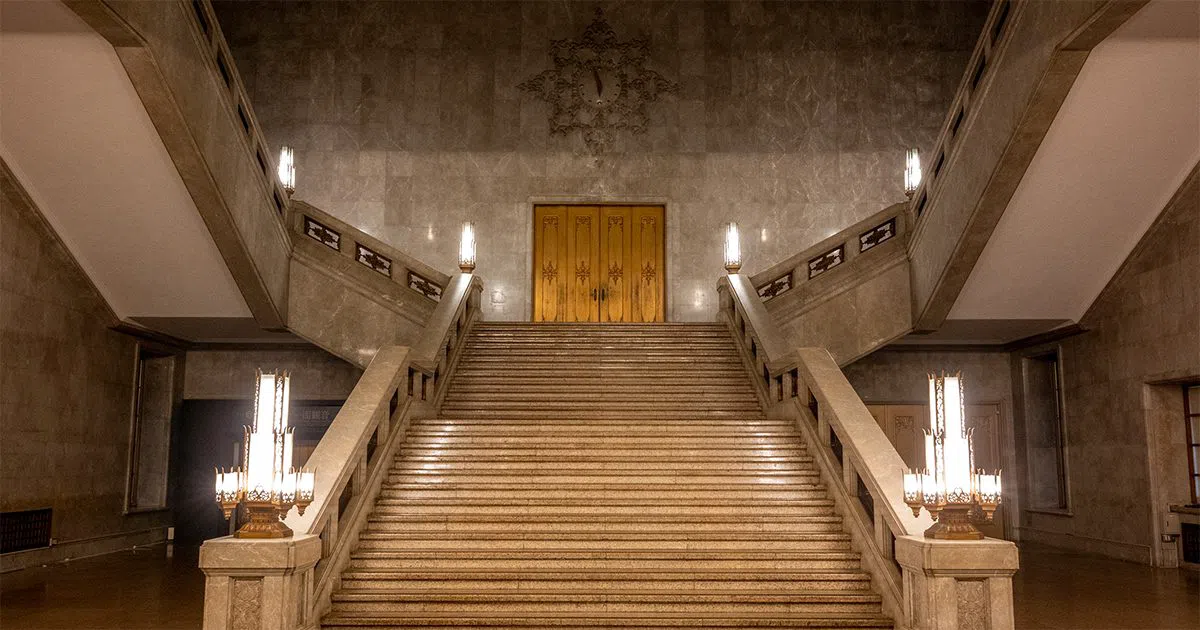
Tokyo National Museum (Ueno Park) is Japan's oldest and largest, with 120,000 objects across six buildings, including the Gallery of Hōryūji Treasures. The 1938 Honkan hall is pale stone under a low tiled roof in the 'imperial crown' style, its symmetrical staircase facing a long reflecting pond and lawn. Inside, lacquered samurai armour and swords sit in dark vitrines. Admission is ¥1,000 for adults and ¥500 for students, free under 18 and over 65, and the single ticket covers every building the same day. Give it half a day. It closes Mondays.

National Museum of Nature and Science (Ueno Park), known as Kahaku, is the cheapest serious ticket in Ueno at ¥630 for adults, free for high-school age and under and for over-65s. A green bronze blue whale lies life size on the forecourt beside a retired D51 steam locomotive, which is where most families stop before they have even bought a ticket. Inside, mounted dinosaur skeletons fill a soaring atrium, Hachikō the dog is on display, and THEATER 36○ projects onto a 12.8-metre dome. On a wet afternoon with children, nothing in Ueno beats Kahaku. It closes Mondays.
National Museum of Western Art (Ueno Park) is the only Le Corbusier building in East Asia and a UNESCO World Heritage listing, so the raw board-marked concrete box on pilotis counts as much as the Monets and Rubens inside. Rodin bronzes stand on gravel in the forecourt, The Thinker and The Gates of Hell among them, and the top-lit spiral of the Nineteenth-Century Hall pulls you up through the middle of the building. Adults pay ¥500, under-18s and over-65s go free, and special exhibitions are priced separately. Check the calendar before you travel, because the museum shuts entirely for multi-week exhibition changeovers. It was dark from 16 February to 27 March 2026, and the permanent galleries close from 12 January to 19 March 2027.
Tōshōgū Shrine and Ueno Zoo
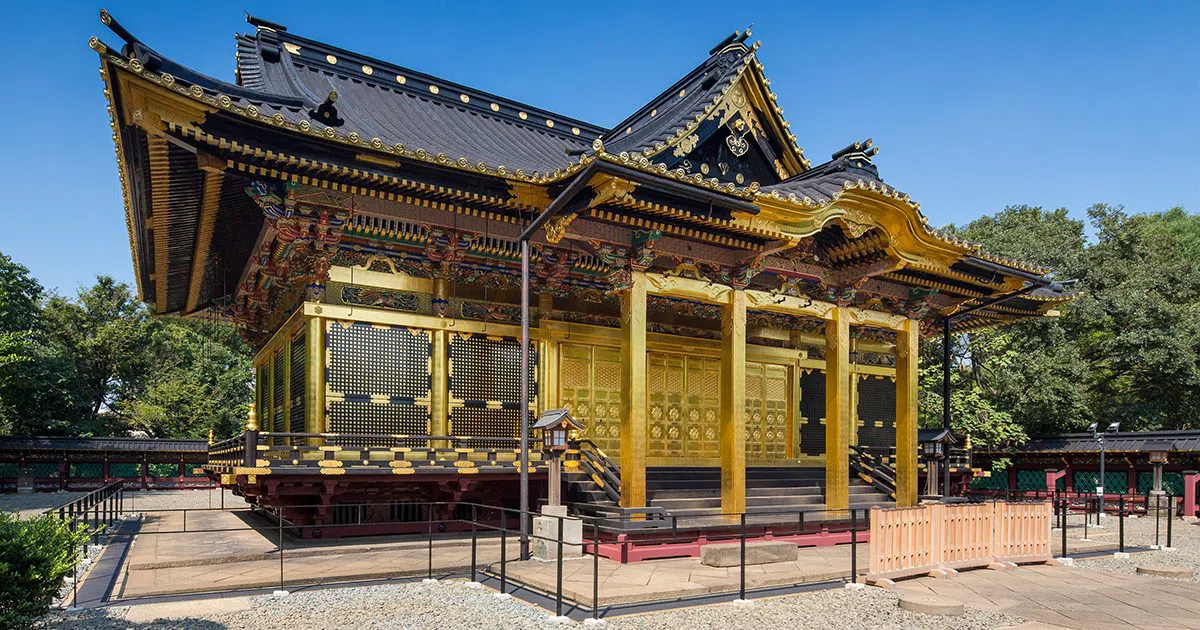
An avenue of more than 200 stone and bronze lanterns leads to the gold-leaf Kondō hall at Ueno Tōshōgū Shrine (Ueno Park), where the black lacquer carries polychrome dragon carvings. The shrine dates from 1651 and came through the Boshin War, the earthquake and the firebombing intact. The precinct is free. Its walled peony garden, a field of tented straw yukibotan shelters, costs ¥1,000, or ¥800 for parties of 15 or more, and it runs as the Winter Peony Garden from 1 January to 23 February 2026 and the Spring Peony Festival from 4 April to 6 May 2026. Three minutes downhill, the 1631 Kiyomizu Kannon-dō is a miniature Kiyomizu-dera with a viewing terrace, and it costs nothing.
Ueno Zoo (Ueno Zoological Gardens) opened in 1882 and still keeps more than 2,000 animals across 300 species. The giant pandas went back to China on 28 January 2026 and none remain here, so nobody in your party should travel for them. What is left is a wooded hillside with the five-storey vermilion Kaneiji pagoda rising inside the grounds, the Gorilla & Tiger Forest in glass and timber, and pelicans on the lotus-edged Shinobazu pond section. Adults pay ¥600, over-65s ¥300, junior high ¥200, and primary age and under go free. Weekday mornings carry heavy school-trip traffic. It closes Mondays.
Shinobazu Pond and the boathouse
The vermilion octagonal Bentendō hall sits on an island causeway in the middle of Shinobazu Pond, and the full loop of the water takes 40 minutes on foot and costs nothing. July and August are the reason to come: the lotus beds close over into a solid green carpet, with leaves taller than a person.
Boats run from 09:30 to 16:30. Rowboats are ¥800 per 30 minutes, pedal boats and swan boats ¥1,000. A swan holds two adults and one child, which splits a family across more than one craft. The boathouse shuts Wednesdays from December to February.
Kyū-Iwasaki-tei Gardens at Yushima
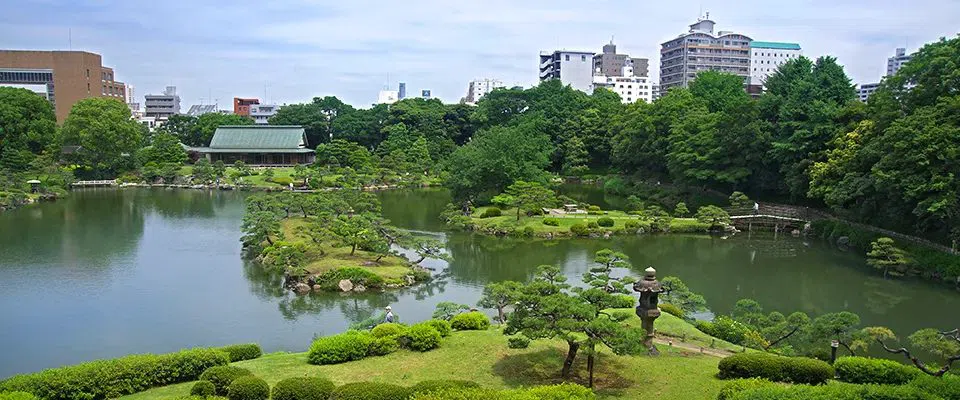
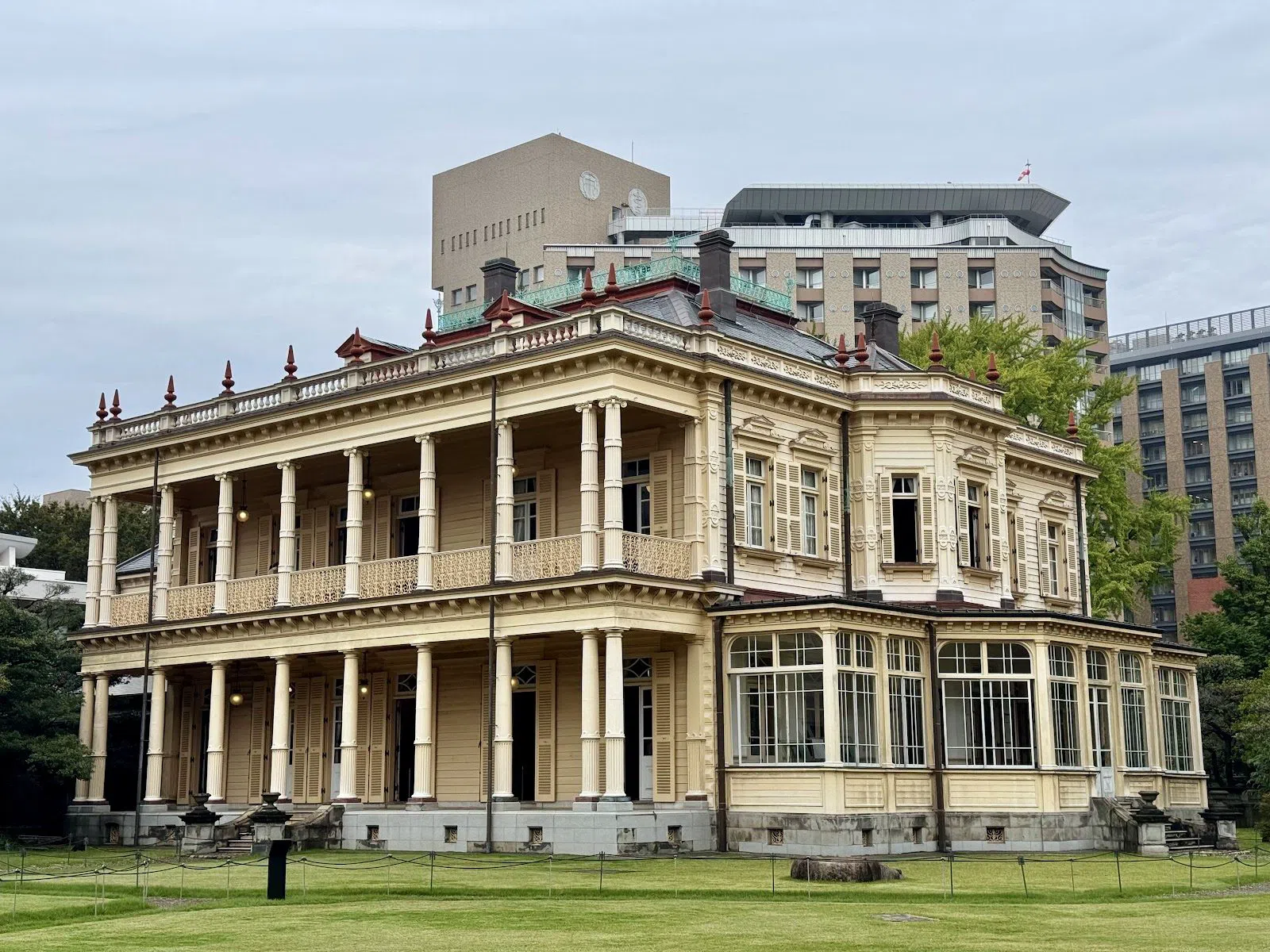
Ten minutes out of the park crowds at Yushima, Kyū-Iwasaki-tei Gardens (Former Iwasaki House) is the quietest big thing in Ueno. Josiah Conder built the Jacobean mansion in 1896 for the founding family of Mitsubishi, with a columned wooden verandah and a Moorish-arched smoking room, and grafted it onto a dark-timber Japanese wing. Both halves look out over a single flat sweep of lawn.
Entry is ¥400 for adults, ¥200 for over-65s, free for primary age and under. Volunteer guides run tours to a set schedule. The house closes from 29 December to 1 January.
The Shitamachi Museum back alley
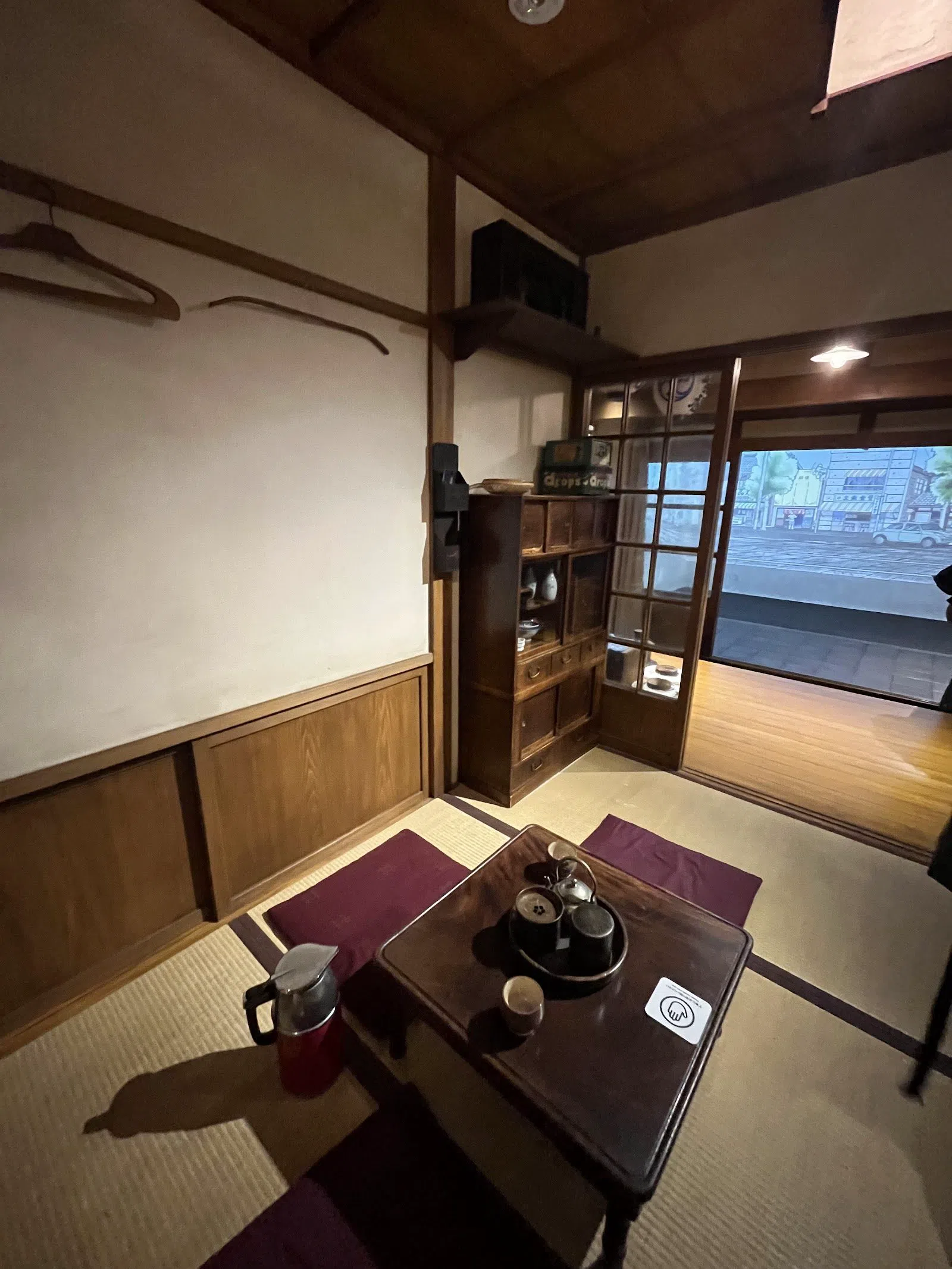
Shitamachi Museum (Taito City Shitamachi Museum) holds a full-scale 1920s Tokyo back alley indoors: a tenement row of wooden nagaya houses, a sweet shop with glass jars on the counter, tin washbasins, and a shared well you can walk up to and touch. Handling the exhibits is allowed, which makes it the one museum here that small children do not have to be steered through.
It reopened in March 2025 after a two-year rebuild, now with proper English signage, and it shows how this side of Tokyo lived. Adults pay ¥300 and children ¥100. It closes Mondays.
Ameya-Yokochō under the viaduct
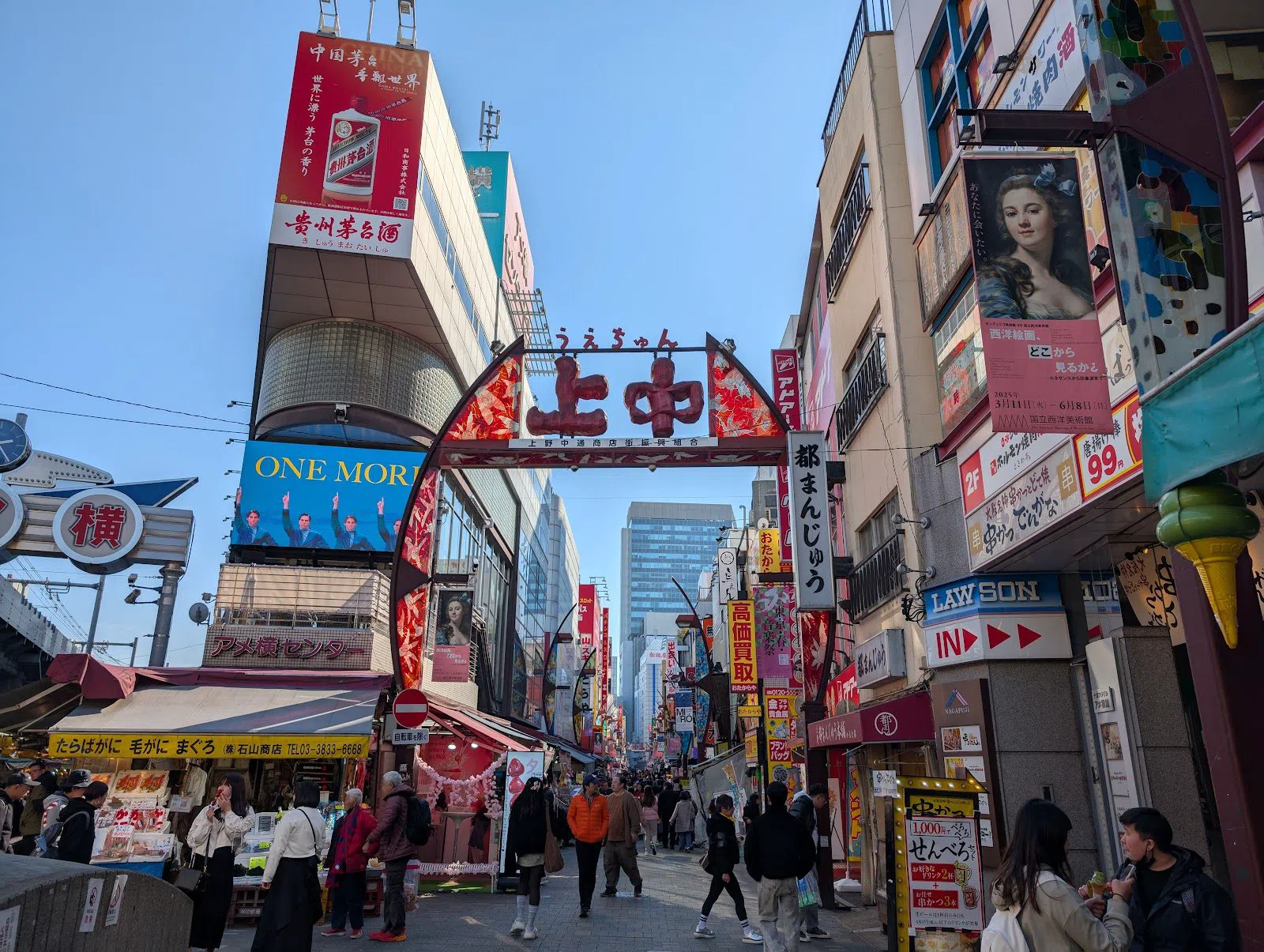
Ameya-Yokochō runs 500 metres directly beneath the elevated Yamanote railway viaduct, between Ueno and Okachimachi stations, with trains rumbling overhead the whole way. Dried fish hangs from the awnings, price boards are hand-painted, and the 400 shops sell fish, spices, sweets, trainers and cheap cosmetics at ¥ to ¥¥.
Most open 10:00 to 19:00, and many shut on selected Wednesdays. The last days of December are chaos. The street itself is free and open. The stalls and the bars under the arches are tiny, so a large party will break up within the first minute.
Eel and kaiseki by the south gate
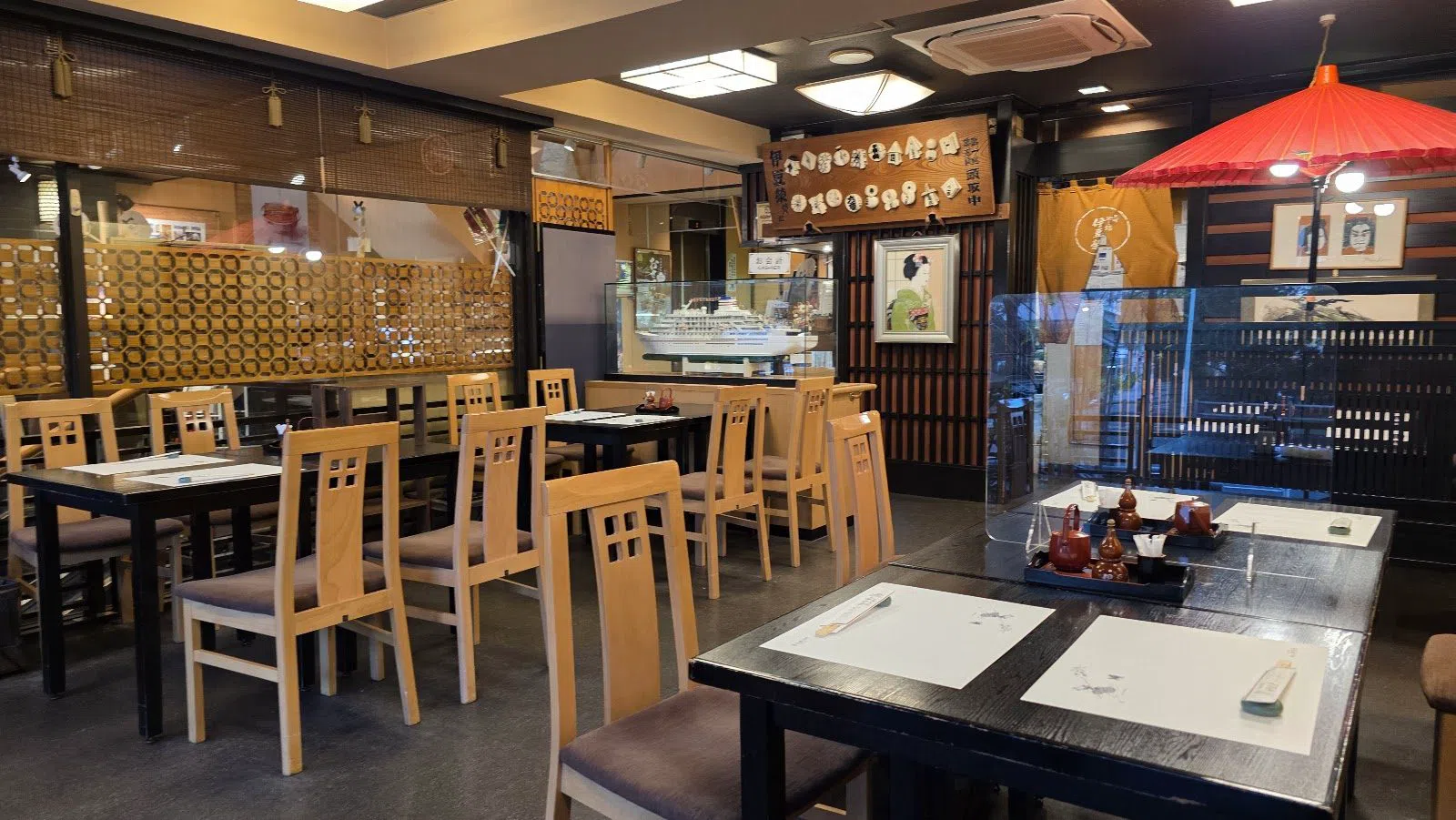
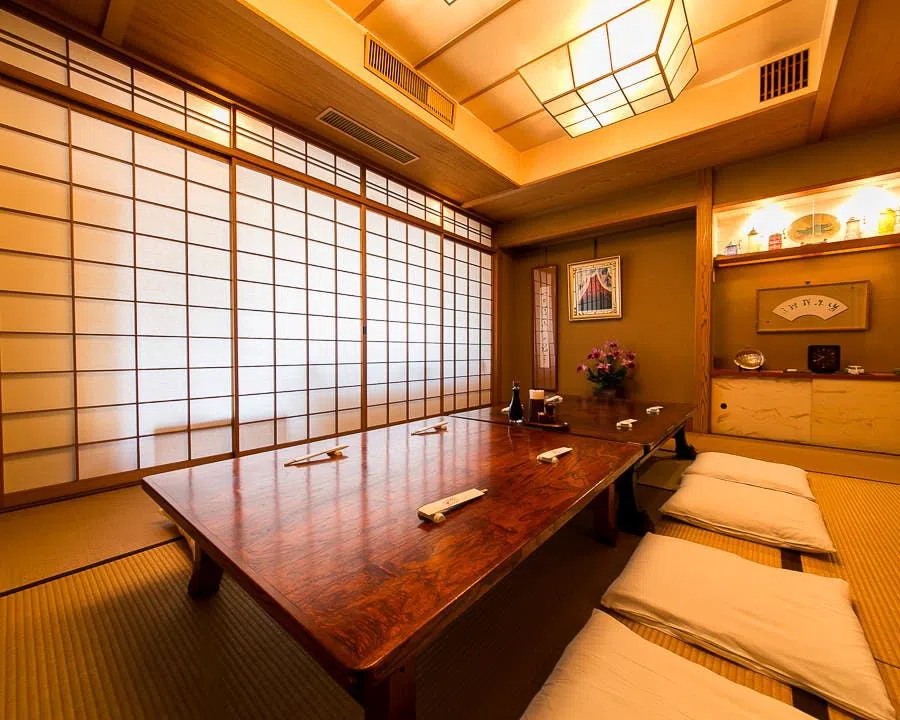
Unagi Kappō Izuei Honten stands at the park's south gate and runs on Mikawa eel. The lacquered black jūbako arrives at the table and opens onto glossy dark-caramel grilled eel over rice, and the tatami rooms look out at the pond. Una-jū runs ¥3,960 to ¥6,160. It is the most reliable grand meal in Ueno, since it opens every day of the year, 11:00 to 21:00 with last orders at 20:15. The building has several floors of private tatami rooms and banquet courses, and reservations are advised. The Nagatachō branch shut in 2022; book the Ueno Honten.
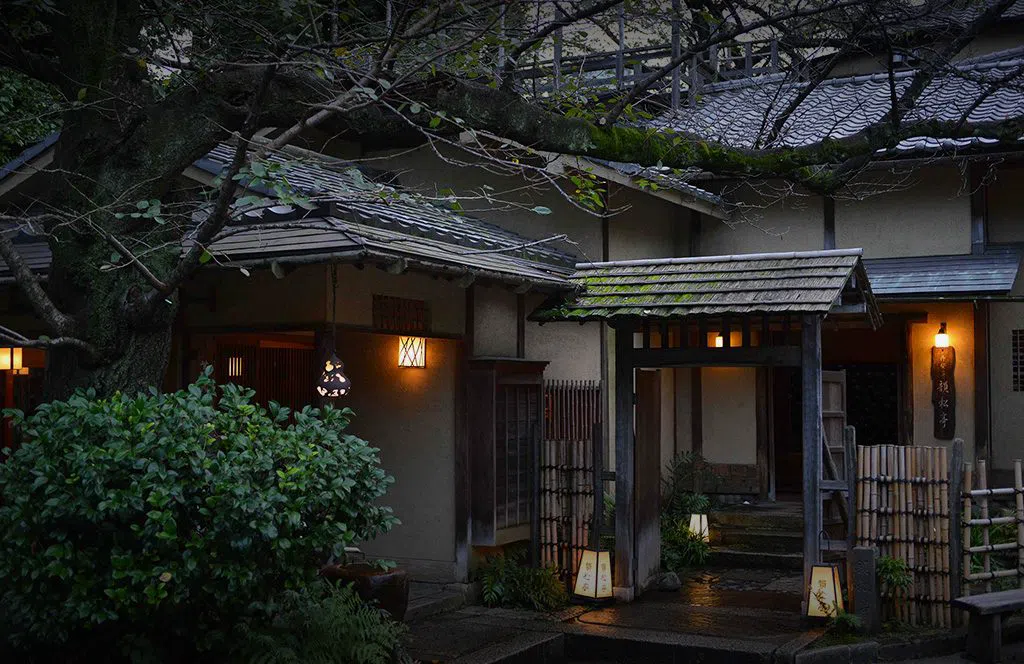
Innsyoutei (Ueno Park) has stood among the trees inside the park since 1875, a two-storey wooden house behind paper shōji screens. The tiered bamboo hanakago basket lunch, a set of small seasonal dishes, starts at ¥2,000 and is the cheapest way into a 150-year-old Meiji dining room. Courses run ¥3,000 to ¥4,400 and kaiseki ¥6,500 to ¥15,000. Reserve by phone or through TableCheck, since walk-ins rarely work and blossom season fills the private rooms weeks out.
Cutlets and soba for lunch
Ponta Honke opened in 1905 and is widely credited with inventing katsuretsu. The cutlet is loin only, no fillet, fried in lard at low temperature until it comes out pale, almost blond, then sliced thick onto a white oval plate with shredded cabbage. The room behind the wooden shopfront is hushed, a counter and a few tables. Katsuretsu is ¥3,850, plus ¥550 for the rice, miso and pickle set. Service runs 11:00 to 14:00 Tuesday to Sunday and 16:30 to 20:20 Tuesday to Saturday, closed Mondays, and the queue starts before the doors open. The counter suits two to four people.
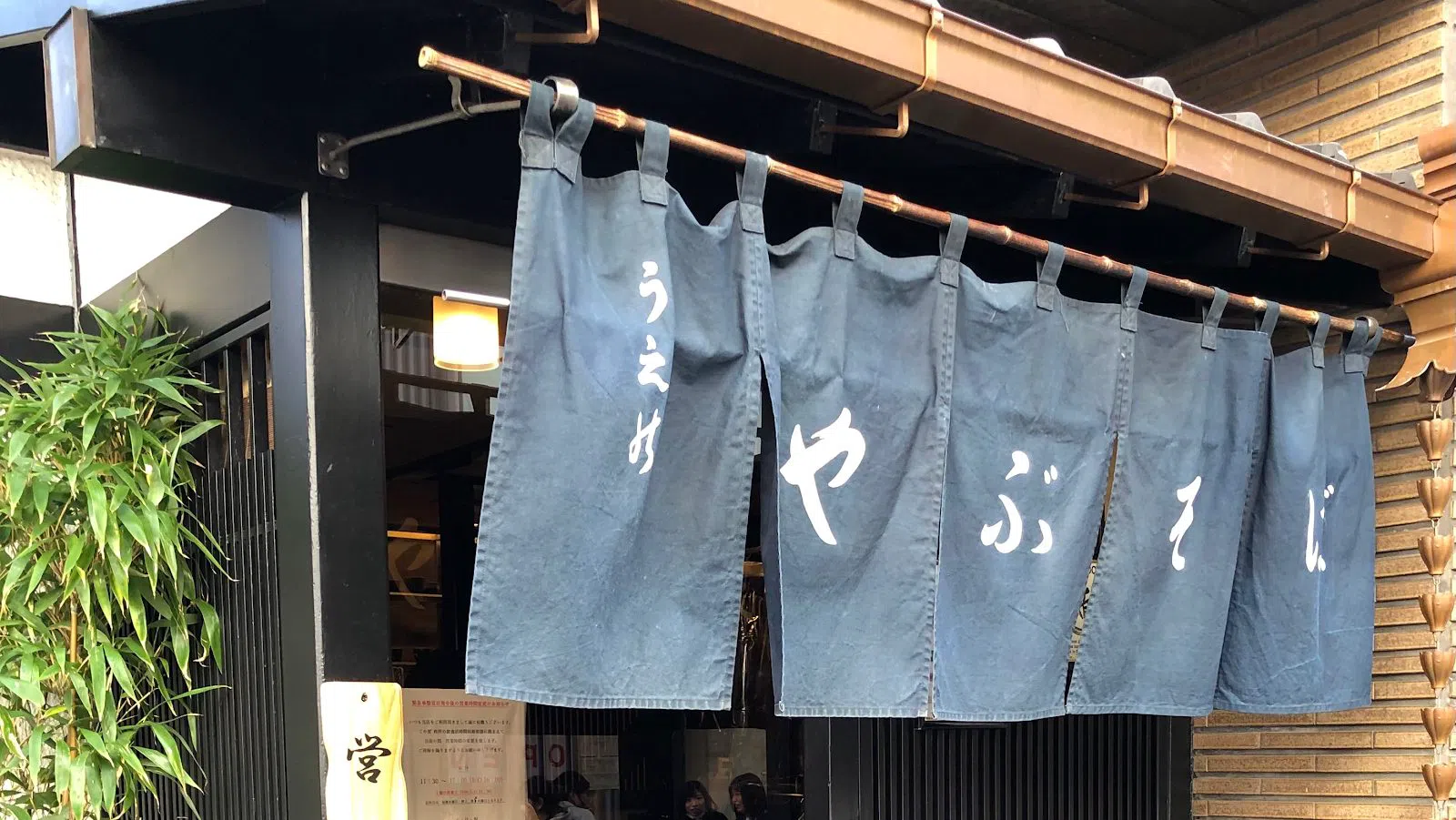
Ueno Yabu Soba sits on a side street off Ameyoko in a modest tiled-roof shop, the first offshoot of Kanda Yabu Soba and trading here since the Meiji era. Pale greenish hand-cut buckwheat noodles come coiled on a square bamboo zaru with a small cup of dark tsuyu, at ¥1,000 to ¥2,000. Hours are 11:30 to 21:00, closed Wednesdays. The Parco-ya branch has shut permanently.
Drinking at Motsuyaki Daitōryō
Motsuyaki Daitōryō has held its corner under the Ameyoko rail arches since 1950. The shopfront is wide open, red plastic stools and crates spill onto the pavement, vats of miso-dark horse-offal stew bubble in view, and skewers go over charcoal behind them. The miso-simmered horse offal is the house dish and it has not changed.
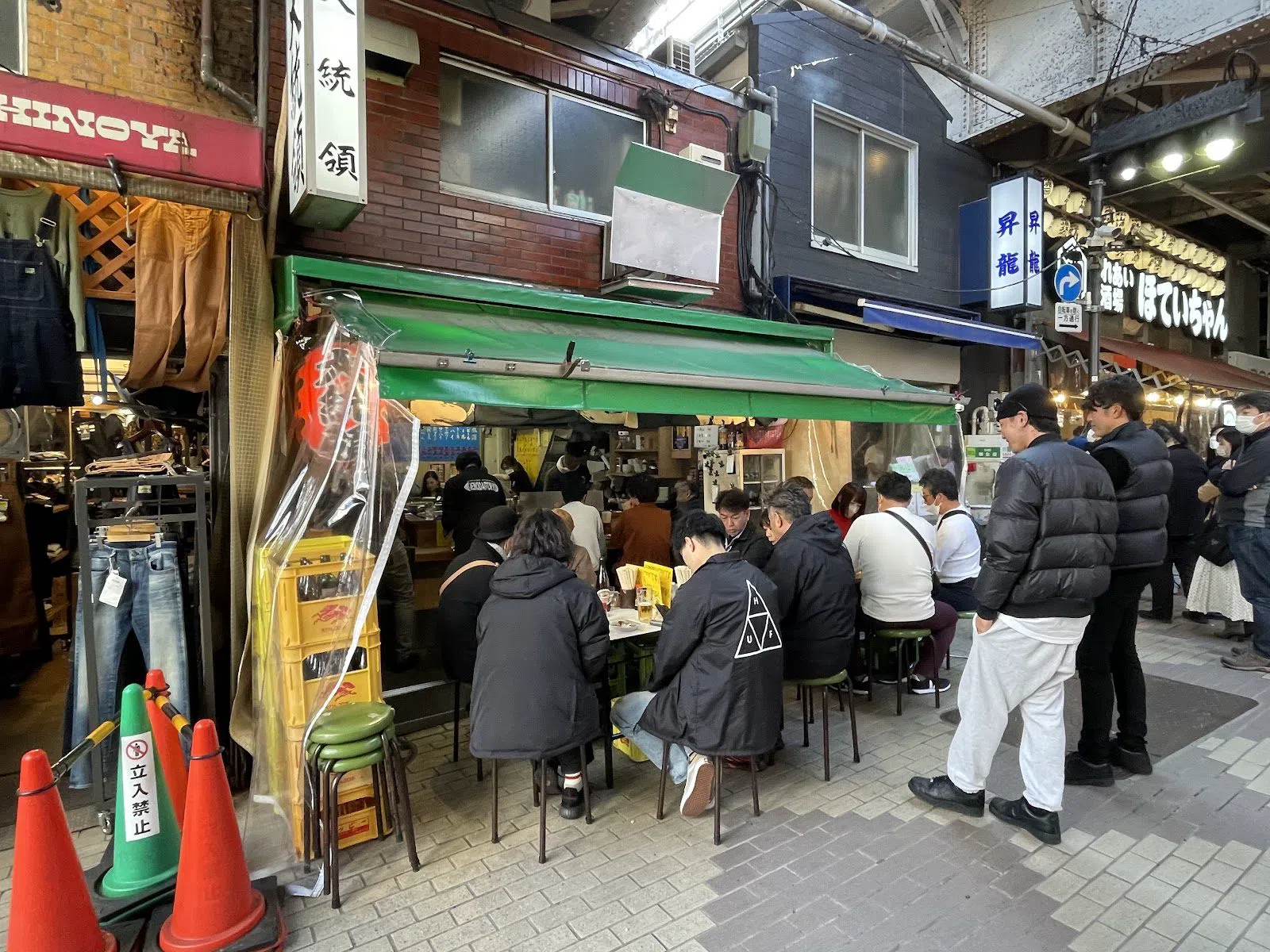
Drinkers are standing here from mid-morning, because the place opens at 10:00 and runs to midnight. Drinking costs ¥2,000 to ¥3,000 a head. No reservations are taken and the seating is tight and shared, so arrive as four to six and expect to stand.
Kayaba Coffee on the way to Yanaka
Walk out of the park's north gate towards Yanaka and Kayaba Coffee appears at a crossroads, a two-storey 1938 corner machiya under a mustard-yellow awning, bentwood chairs inside. The café closed, and locals got it reopened. Order the thick toasted egg sandwich, cut into triangles, at ¥950; coffee is ¥600 to ¥900.

Hours are 08:00 to 18:00, closed Mondays, and a 90-minute seating rule applies, so book online if you want the table at a set time. The restored Ueno Sakuragi Atari houses are two minutes further on.
Closed days and bookings
Mondays shut Tokyo National Museum, Kahaku, the zoo, Shitamachi Museum, Ponta Honke and Kayaba Coffee, which leaves the park, Tōshōgū, Shinobazu Pond and Ameyoko. Reserve Innsyoutei and Izuei before you arrive, and check the National Museum of Western Art's calendar for a changeover closure.
See the Tokyo guide and the Tokyo hotel search.
出发之前
Are there still giant pandas at Ueno Zoo?
No. The giant pandas returned to China on 28 January 2026, so there are none at Ueno Zoo now. The zoo still has more than 2,000 animals across 300 species, and adult admission is ¥600.
What is open in Ueno on a Monday?
Tokyo National Museum, the National Museum of Nature and Science, Ueno Zoo, the Shitamachi Museum, Ponta Honke and Kayaba Coffee all close on Mondays. Ueno Park, Ueno Tōshōgū Shrine, the Shinobazu Pond walk and Ameya-Yokochō stay open.
How much does it cost to get into the Ueno museums?
Tokyo National Museum is ¥1,000 for adults, students ¥500, free under 18 and over 65, and one ticket covers all six buildings the same day. The National Museum of Nature and Science is ¥630, the National Museum of Western Art ¥500, and the Shitamachi Museum ¥300.
When should I go to Ueno Park for the cherry blossom?
Late March and early April, and arrive before 09:00. At peak the central promenade is shoulder to shoulder, and groups hold their spots with tarps for bento picnics under the trees.
Do I need to book restaurants in Ueno?
Book Innsyoutei by phone or on TableCheck, since walk-ins rarely work and blossom season fills it. Reserve ahead at Unagi Kappō Izuei Honten, which opens every day of the year, 11:00 to 21:00. Motsuyaki Daitōryō takes no reservations, and Ponta Honke has a queue before it opens.