A single fare buys you the whole story. The Yamanote Line circles central Tokyo in about an hour if you never got off, but the point is to get off, because within a few minutes' walk of a dozen of its stations sit buildings and gardens spanning five distinct eras, from Tokugawa-era temple wood to a glass observation deck finished in 2019. No other transit loop on earth stacks its architectural history this densely, and none of it requires a guide, a reservation, or, in most cases, more than a few hundred yen.
This isn't a single-day itinerary. Trying to hit all fifteen stops in one loop would turn a walking tour into a train marathon. Treat it instead as a menu organized by where the train actually stops, so you can build a half-day or a full day around whichever era interests you most.
Where the loop starts and ends at Tokyo Station
Every Yamanote journey begins and ends at the same brick facade. The Tokyo Station Marunouchi Building (Marunouchi side, Tokyo Station) is the loop's opening chapter and its closing one: a Meiji/Taisho-era statement in red brick, built when Japan wanted the world to see it as a modern industrial power, and still the terminus every train on this route returns to. The concourse and plaza are fully open, free, and handle any group size without booking; there's no ticket and no gate to pass through to look at the building itself, only the platforms behind it. Stand in the plaza on the Marunouchi side in the early evening and the brick catches the light in a way the glass towers around it don't.
Ueno's museum cluster makes the Edo-to-Meiji argument in two buildings
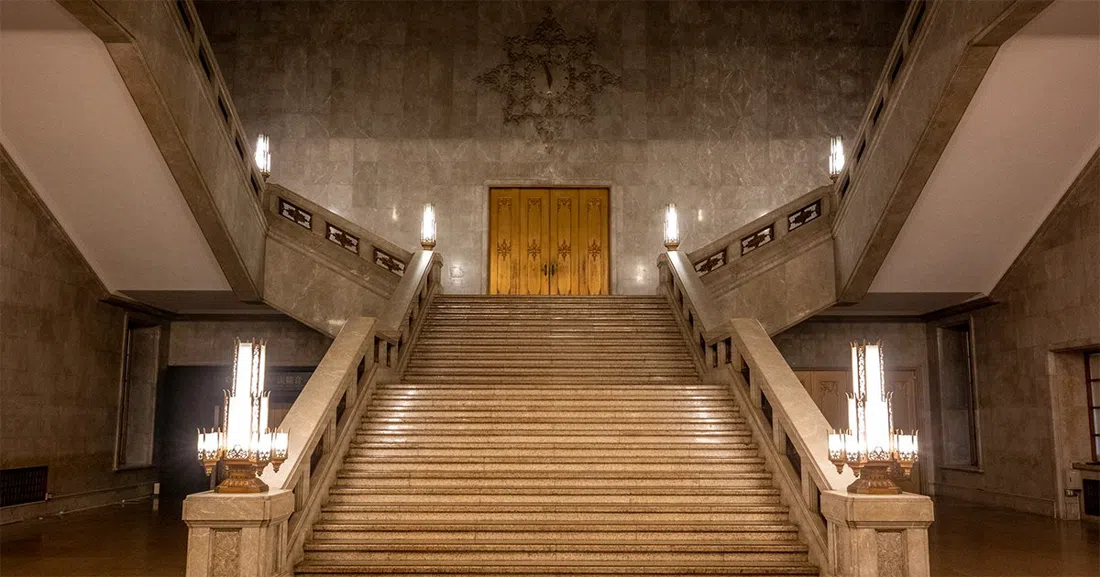
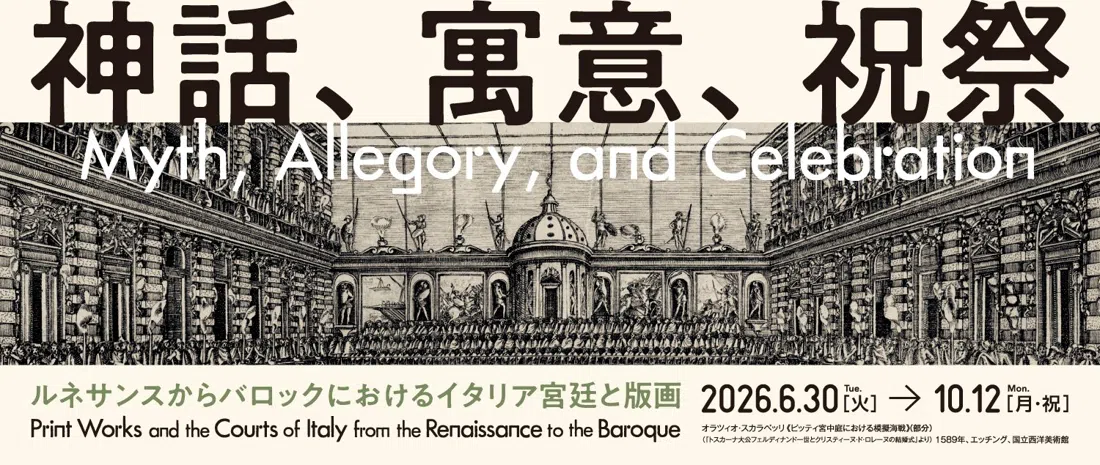
Get off at Ueno and you land in the densest concentration of architectural argument on the whole loop. The Tokyo National Museum (Ueno Park) is built in the Imperial Crown Style, a 1930s hybrid that grafts a Japanese roofline onto a Western masonry base, itself a physical debate about what a "modern Japanese building" should look like. General admission is ¥1,000, group rates and reservations are available, and it takes large groups comfortably. A few minutes' walk away, inside the same park, the National Museum of Western Art answers back in raw concrete: a UNESCO World Heritage building, postwar modernist, unapologetically international in a way the museum across the path is not. Entry to the permanent collection is ¥500, group tours can be booked through the museum, and it's worth checking the museum's site before visiting since exhibit changeovers close it on a rotating schedule. Pairing these two buildings is the single clearest stop on the entire loop for understanding the Edo-to-Meiji design shift; you don't need a third venue to make the point, just a slow walk between them.
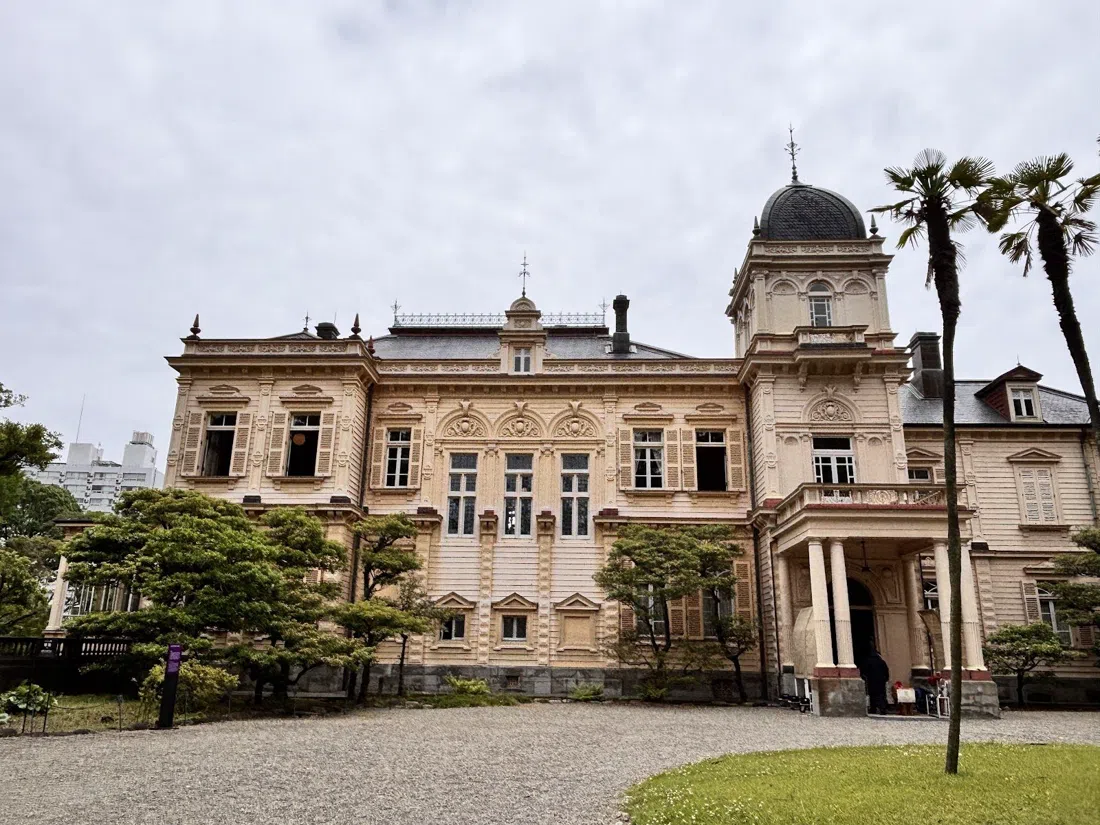
A short walk from the park entrance, the Kyu Iwasaki-tei Gardens round out the Ueno cluster with something more domestic: a Meiji-era mansion built for the founding family of Mitsubishi, where Japanese and Western architectural elements sit inside the same roofline rather than across a courtyard from each other. It's ¥400, no booking required, and the grounds are spacious enough for a group without feeling crowded. This is where Meiji elites actually lived, not a museum reconstruction of it.
Yanaka Ginza preserves what Tokyo looked like before the loop's later chapters
One stop from Ueno, or a fifteen-minute walk through the temple district, Yanaka Ginza (Nippori/Sendagi) is the counterpoint to everything else on this itinerary: a shitamachi shopping street that survived both the 1923 earthquake and the 1945 firebombing largely intact, which makes it the closest thing left in central Tokyo to what the whole city looked like before the concrete and neon eras arrived. It's an open street: free to walk, no booking, no group-size limit, with food stalls and shops adding their own small cost. Go in the late afternoon when the local shops are busiest and the light down the sloped street is at its best; this isn't a place that needs planning, just a couple of unhurried hours.
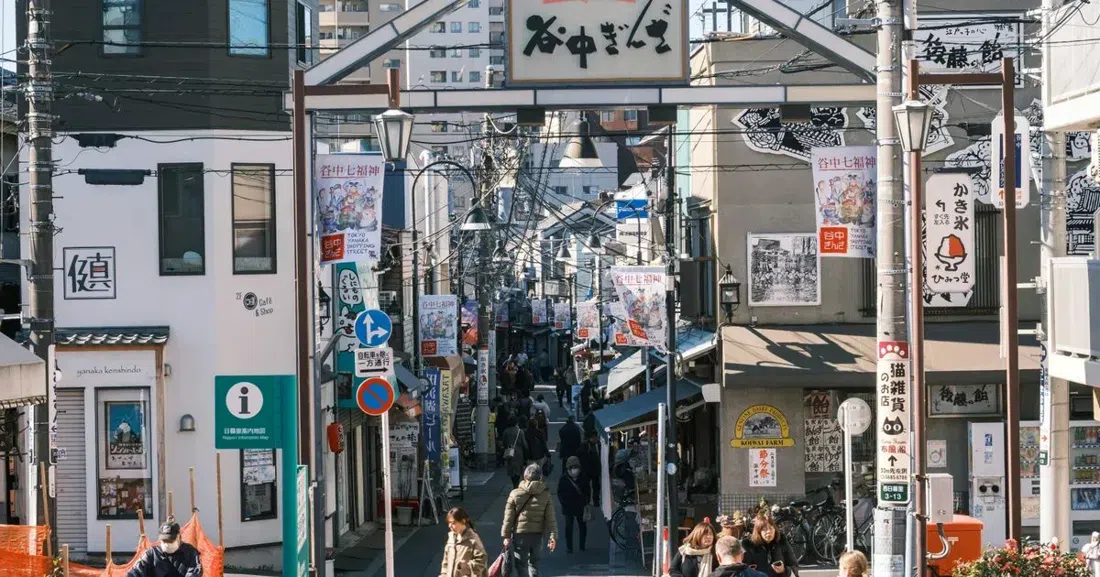
Meguro's Art Deco museum and Harajuku's shrine forest cover the Taisho-into-Showa stretch
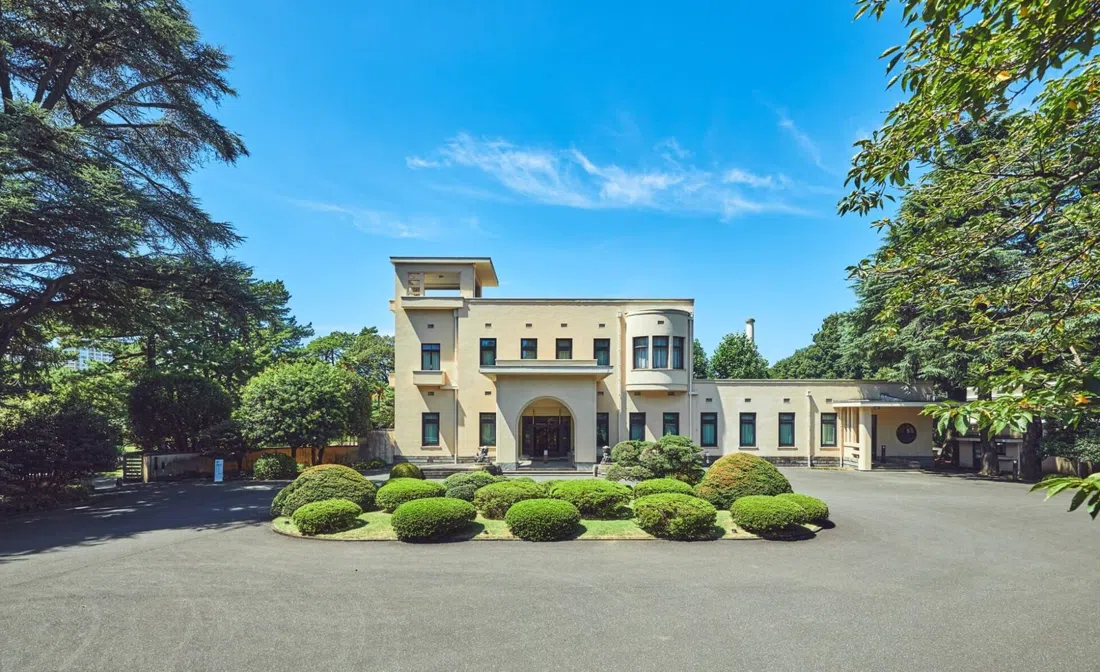
The Tokyo Metropolitan Teien Art Museum, a few minutes from Meguro Station, is the loop's clearest Art Deco stop: an Important Cultural Property whose interiors are as deliberately composed as its facade, built in the transition from Taisho into early Showa. Grounds-only admission is ¥200, with exhibitions priced separately, and the museum takes groups comfortably given the size of its garden. It suits a slower, more deliberate visit better than a large tour group moving fast through the rooms.
Meiji Jingu, reached from Harajuku Station, is a different kind of architecture altogether: a Taisho-era imperial shrine where the forest itself is the built structure, planted and planned as a landscape-architecture project as much as a religious one. The grounds are free, the Inner Garden is ¥500, and very large groups pass through routinely without any booking needed. This is one of the few stops on the loop genuinely built to absorb crowds by design.
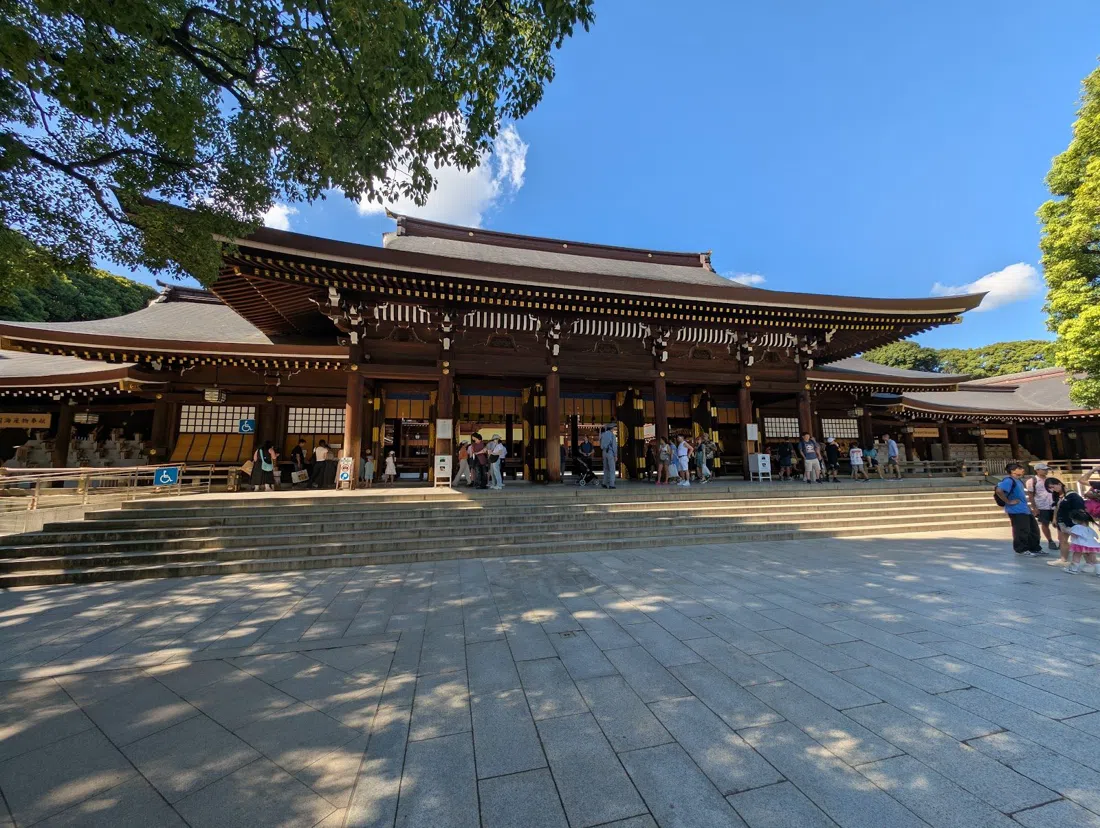
Omotesando and Shibuya read contemporary Tokyo from below and above
A short walk from Meiji Jingu, Omotesando Hills (Omotesando) makes the contemporary case in architecture: Tadao Ando's below-grade spiral is the literal opposite move from the rooftop clock tower you'll see later in Ginza, carving space downward instead of building up. It's a public mall: any group size, no booking, free to enter, shopping extra. It works equally well as a five-minute architectural detour or a slower browse.
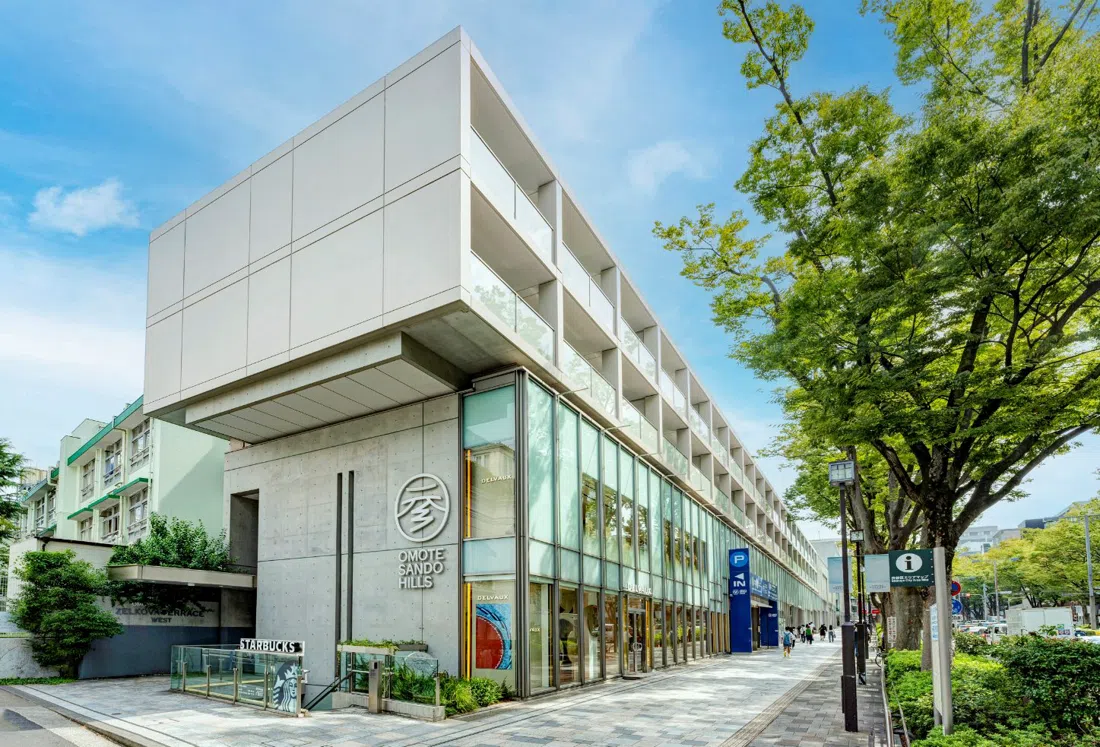
From there it's one stop to Shibuya, where Shibuya Sky (above Shibuya Station) closes the modern half of the argument by reading the whole route from above. Opened in 2019, it's the newest structure on this itinerary, and it's also the one place here where you should book ahead: timed-entry tickets are recommended in advance, starting from ¥2,000 for adults, and it comfortably takes groups if you reserve as one. Go near sunset if you can time it; the transition from daylight Tokyo to the lit-up loop below is the whole reason to buy the ticket.
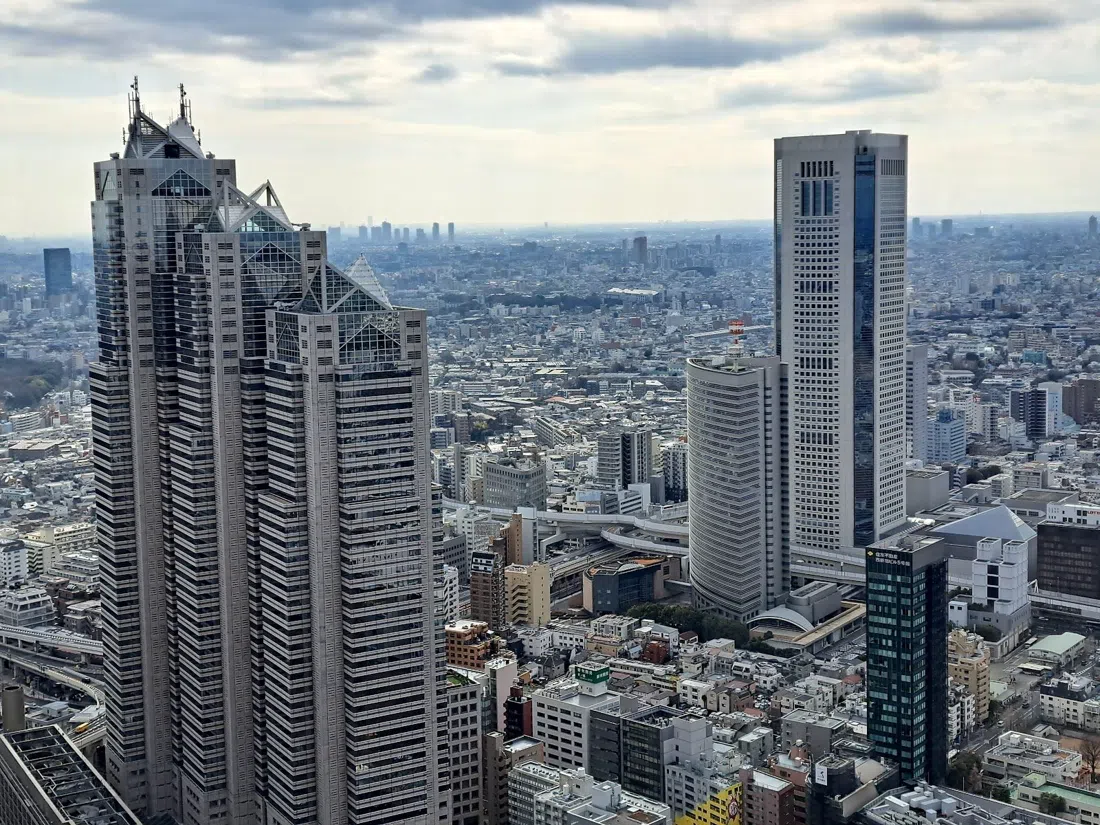
Shinjuku's free tower is the postwar civic counterpoint
Not every high view on this route costs money. The Tokyo Metropolitan Government Building Observatories in Shinjuku are Kenzo Tange's postwar-into-Heisei civic statement: the tallest architectural claim on the loop that isn't a commercial tower, and free to go up, with no timed ticket required. Large groups move through easily. It's worth doing back-to-back with Shibuya Sky on the same day if you want the paid-versus-free, commercial-versus-civic comparison while it's fresh; the two towers are roughly fifteen minutes apart by train.
Ebisu turns a Meiji brewery into a working example of adaptive reuse
Yebisu Garden Place, home to Yebisu Brewery Tokyo and a short walk from Ebisu Station, is the loop's cleanest single illustration of industry becoming leisure: an 1890 Meiji-era brewery building folded into a 1990s mixed-use redevelopment, plaza and taproom included. It's free to walk the plaza, with the museum and tastings priced separately, and both the outdoor space and the taproom handle groups without difficulty. This is a good stop to build an evening around rather than an afternoon: the taproom is the payoff after a day of walking museum floors.
Shiba and Hamamatsucho set Edo wood against postwar steel
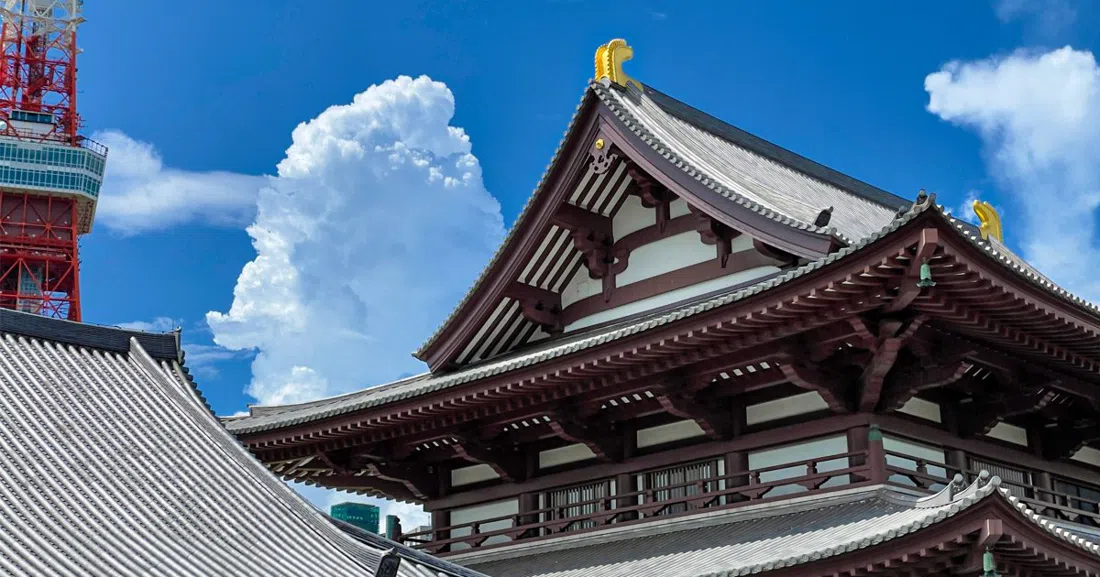
Zojoji Temple, a few minutes from Hamamatsucho Station, holds the tombs of Tokugawa shoguns and produces the single best juxtaposition image on the entire loop: Edo-era wood-and-tile architecture standing directly against the postwar steel skyline behind it. The grounds are open 24 hours, free, and handle large groups easily; the Treasures Gallery is ¥1,000 for those who want to go further than the grounds. There's no bad time of day to see it, but the contrast reads strongest in late afternoon light.
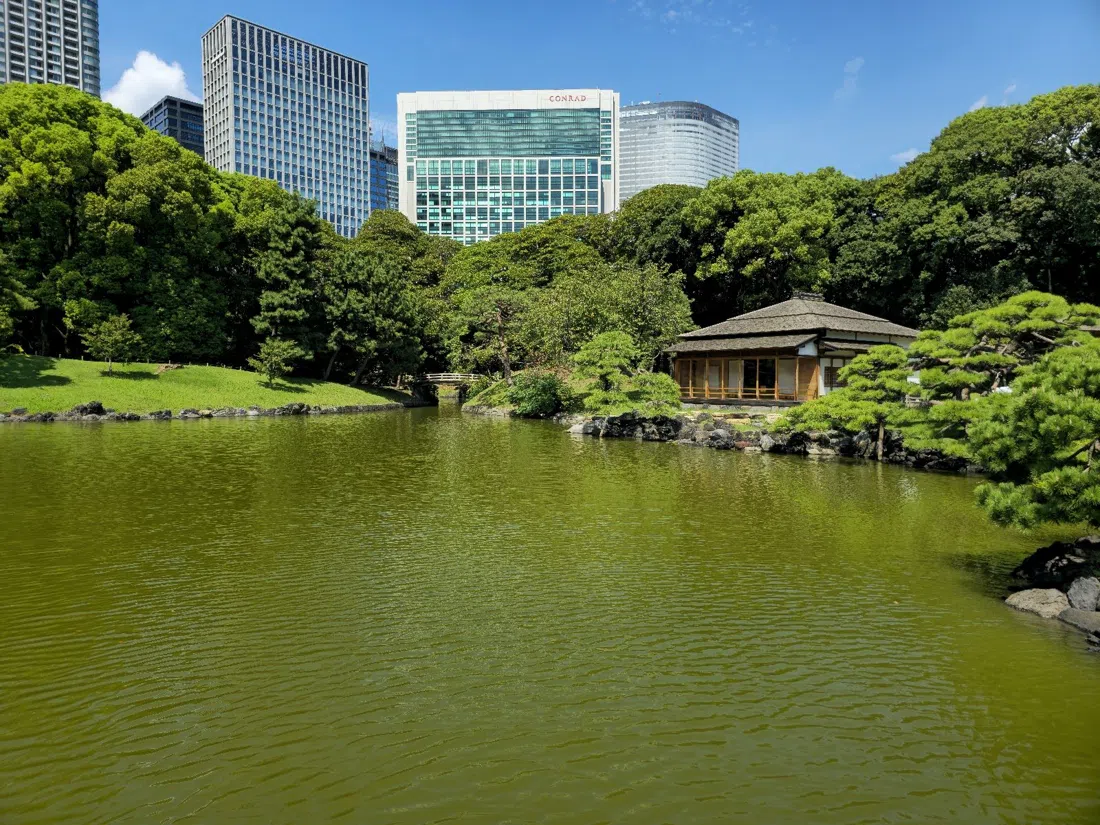
A short walk away, near Shimbashi Station, Hamarikyu Gardens is the last surviving shogunal tidal garden in Tokyo, now ringed on every side by glass office towers, a quieter, slower version of the same argument Zojoji makes. Admission is ¥300, the grounds are wide open, and large groups are welcome without booking. Go at high tide if you can check it, since the garden's tidal pond was designed around exactly that rhythm.
Ginza and Akihabara close the loop between neo-renaissance and neon
Seiko House Ginza, known to most Tokyo residents by its older name, the Wako Building, anchors the Ginza crossing with a neo-renaissance facade and clock tower dating to the 1930s, reopened under its current name after a 2022 renovation. It's a public storefront: free to view the exterior, groups fine for viewing, no booking needed. The interior is retail space rather than a museum, so the visit here is architectural, not curatorial.
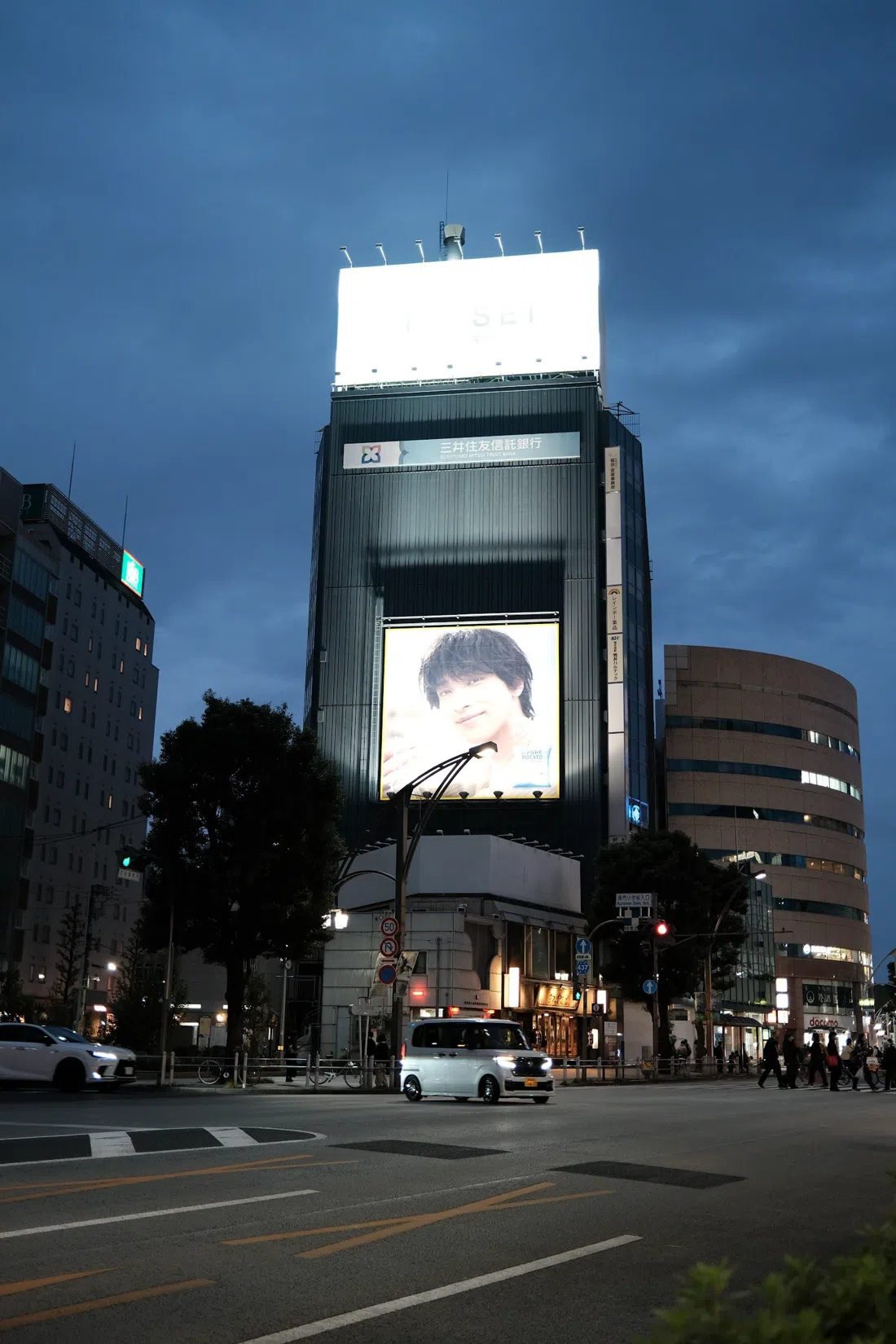
From Ginza, the loop's final architectural argument sits at Akihabara Electric Town: open streets of postwar neon commercial vernacular that grew out of the district's black-market origins into the tech-and-anime retail strip it is today. It's free to walk, with no group-size limit, and it's the visual opposite of the brick you started at back in Marunouchi: the clearest possible bookend to a day spent moving through five architectural eras on one train line.
Planning your own loop
A one-day Yamanote pass or an IC card (Suica or Pasmo, both now available as phone-based cards for most smartphones) covers every leg of this itinerary. There's no need to buy individual tickets between stops, and the whole loop runs frequently enough that waiting is rarely more than a few minutes. Budget the day around free-or-cheap grounds (Zojoji, Meiji Jingu, the Shinjuku observatories) plus two or three paid stops; even with Shibuya Sky's ¥2,000-plus ticket and a museum admission or two, a full day of this itinerary runs well under ¥5,000 per person outside food.
Carry cash. Smaller sites (Kyu Iwasaki-tei Gardens, the Teien Art Museum's grounds fee, Hamarikyu's entrance) are set up for coin and small-note payment, and not every ticket window takes cards. Book ahead only for Shibuya Sky; every other stop on this list is walk-up. If you're building a multi-day trip around this route rather than a single day, a Tokyo hotel search near a station on the eastern side of the loop (Ueno, Tokyo, or Shimbashi) puts you within a short ride of most of these stops without needing to change lines. For everything else worth doing between architectural stops, the full Tokyo guide covers the rest of the city.
Start early if you're covering more than three or four stops in a day: museum hours end mid-afternoon at the Tokyo National Museum and the National Museum of Western Art, while outdoor sites like Zojoji and Yanaka Ginza have no such constraint. The loop itself never closes; your itinerary should follow the opening hours of whichever building you're chasing, not the train schedule.