
The 11:47 out of Akihabara Station pulls in half-empty, ties loosened past the point of pretending, faces lit blue by phone screens. Step out the Electric Town exit and the street does the opposite of what the platform just did — it wakes up. Neon washes over shuttered PC shops, a maid in a pinafore hands a flyer to a man who ten minutes ago was cc'ing his boss on a sign-off email, and Akihabara begins its second shift: the one that runs from last orders in the office to the actual last train, and sometimes well past it. This is a guide to that second shift — where a Tokyo salaryman with two or three hours to burn actually goes, what it costs to the yen, and which doors are genuinely open to a solo traveller or a stag-night-sized group. Full piece and prices below; if you're staying over, start with a Tokyo hotel search before you commit to a hotel far from Chūō-dōri.
Maid Cafés: The Soft Entry
Nobody's first stop in Akihabara after dark should be the loudest one. @home cafe (5F, Akiba Cultures Zone, Electric Town) opened in 2004 and is still the reference point every other maid café gets measured against — table service, staged "moe moe kyun" routines, and a floor staff that's had two decades to get the choreography right. It runs ¥3,000–5,000 per person once you factor in the table charge, a drink or light food order, and the inevitable photo. Groups should book ahead; solo visitors and pairs can often walk a quieter weeknight slot, but Friday and Saturday evening seatings fill before 7pm.
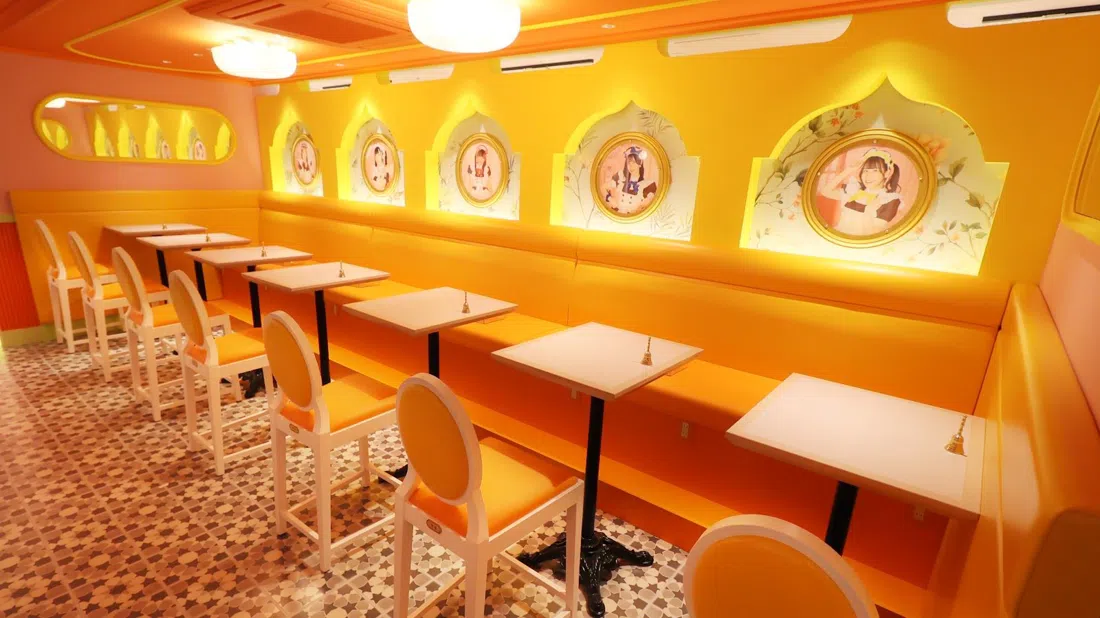
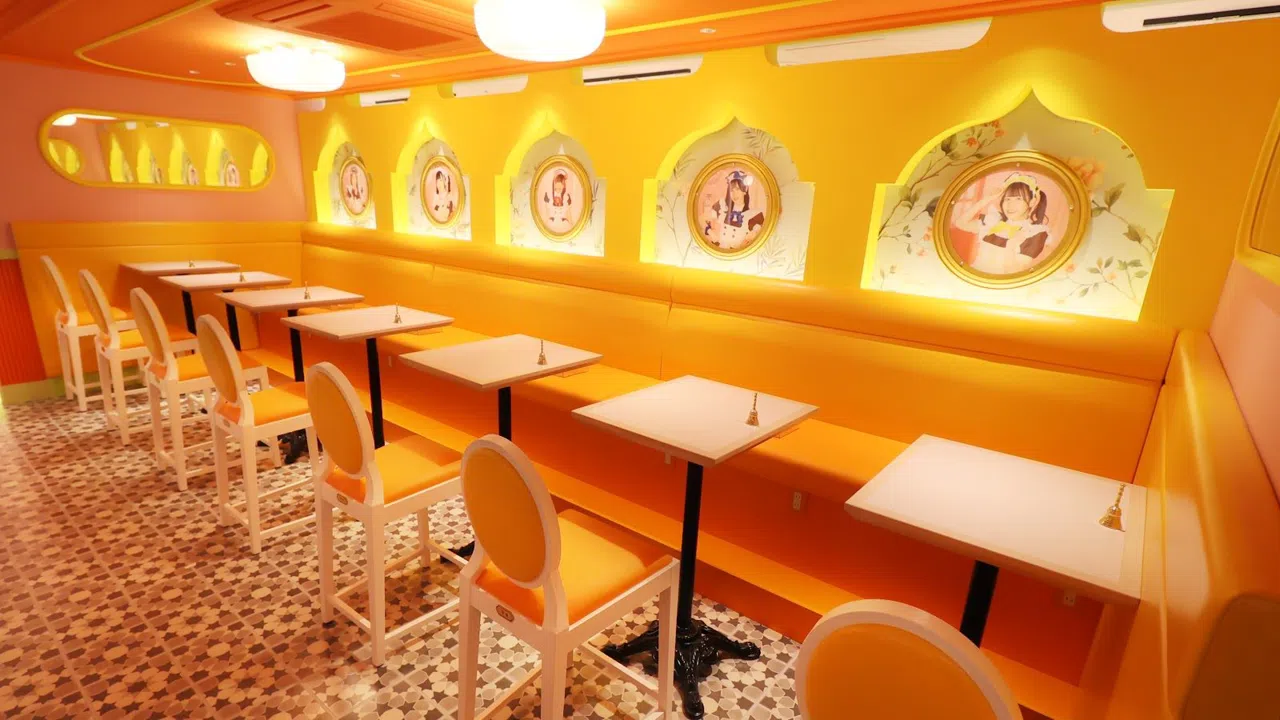
Maidreamin Akihabara (Head Store), a short walk toward the station, is the chain version done at scale — English menus, staff briefed for international visitors, and live mini-shows on a small stage between table rounds. The number worth knowing is the after-8pm HYPER course: an all-you-can-drink set running ¥3,000–4,500pp that turns the café from a novelty stop into an actual night-out venue. It's the clearest "salaryman winding down" hook in Akihabara — order the HYPER course, stay for two rounds of the show, and you've spent less than a round at a hostess bar and seen more of what the district actually is.
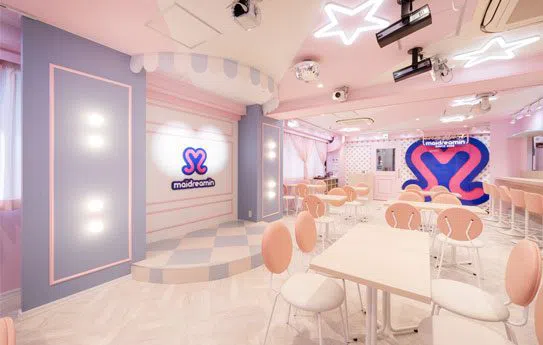
Neither venue runs a foreigner surcharge or a hidden cover beyond what's posted — the table charge is the table charge, quoted upfront in yen, same for everyone in the seat.
Arcades That Never Close the Cabinet
This is where the after-work crowd actually lives, and it's the most honest measure of Akihabara: no door staff, no dress code, no cover charge — just a coin slot and a queue for the good machine.
Silk Hat Akihabara, on the corner that spent 32 years as Club Sega and then GiGO Akihabara #1, reopened under new ownership in November 2025. Same red-lit landmark building, new name on the sign, same multi-floor stack of rhythm games, claw machines and fighting-game cabinets running ¥100–500 a play. Open floor plan, no door policy — a group of eight can spread across three floors and regroup by text. It's the arcade to be seen at right now, which is exactly why the crowd is younger and louder than the older GiGO towers.
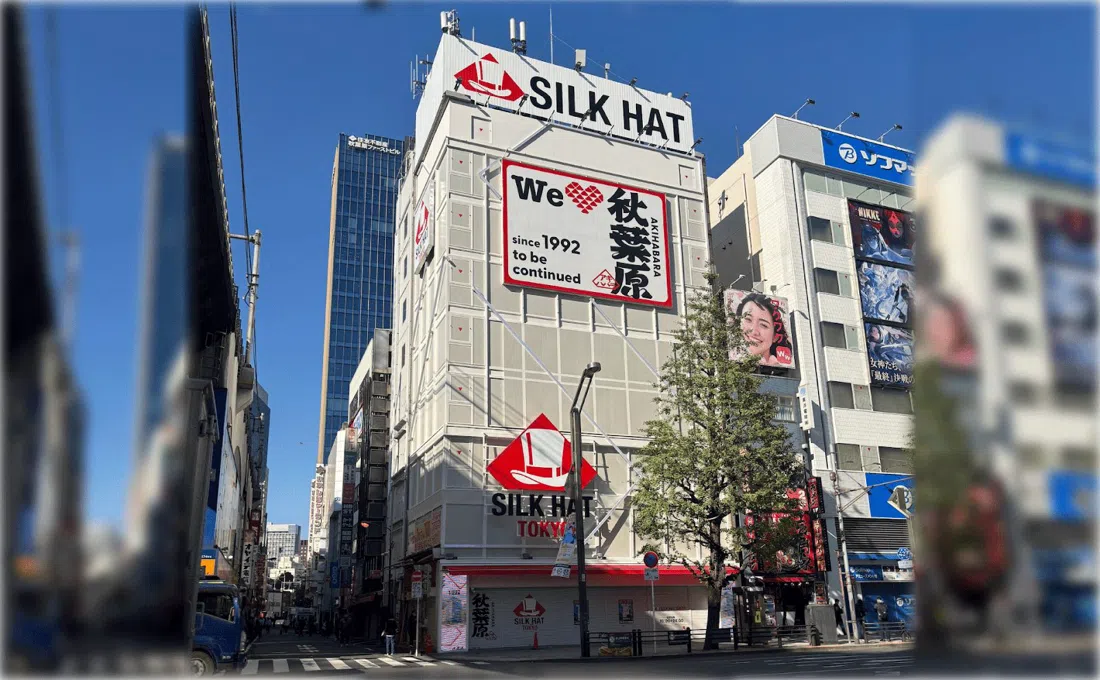
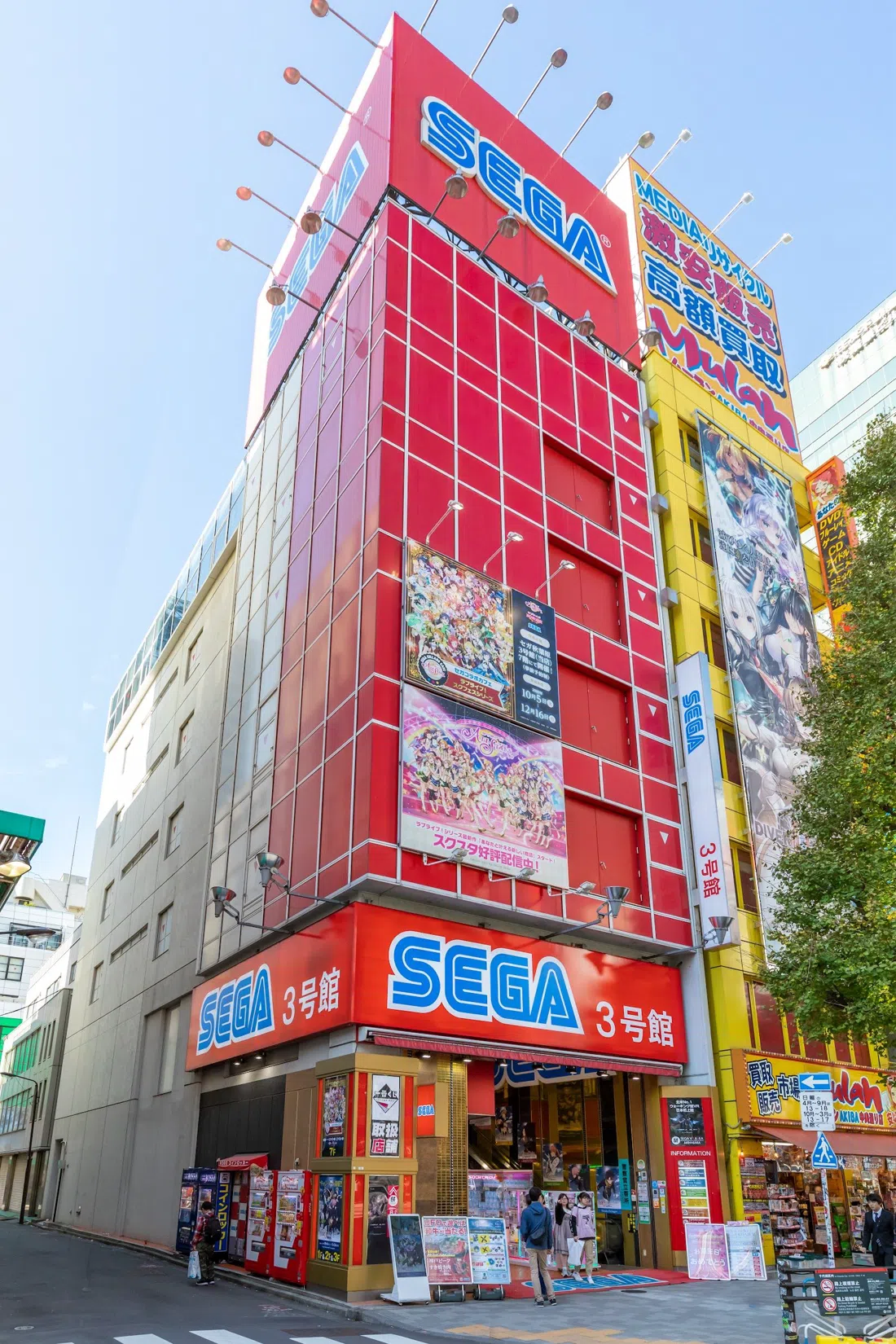
GiGO Akihabara Building 3 is the working counterpoint a few minutes' walk away — one of the surviving towers under the GiGO brand (the old Sega arcade name), still running deep into the night, still packed and loud after 9pm on a weekend. No door policy here either. If Silk Hat is the new-money version of the scene, Building 3 is the one that hasn't changed its personality to match a new sign.
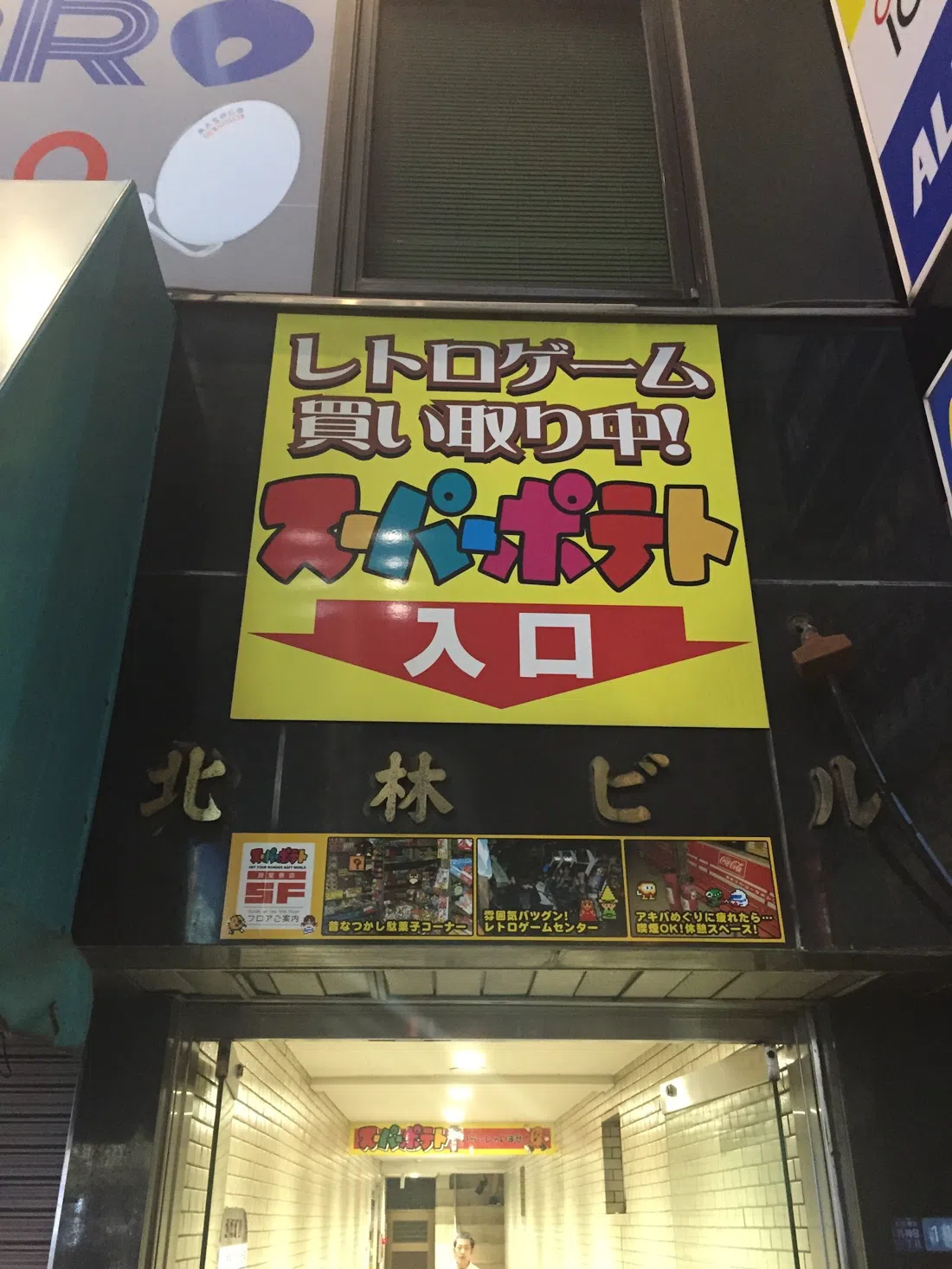
For something quieter and more reverent, Super Potato Akihabara is a small, cramped, three-floor shrine to retro Japanese gaming — Famicom cartridges from a few hundred yen up to serious collector prices, a mini in-store arcade running ¥100 a play, and shelving that rewards actually reading the labels. The floors are tight: groups of two to four are comfortable, anything bigger should split up and browse independently rather than try to move as a pack. For a salaryman in his forties, this is the most direct line back to his own childhood — the actual cartridges he grew up on, still boxed, still playable.
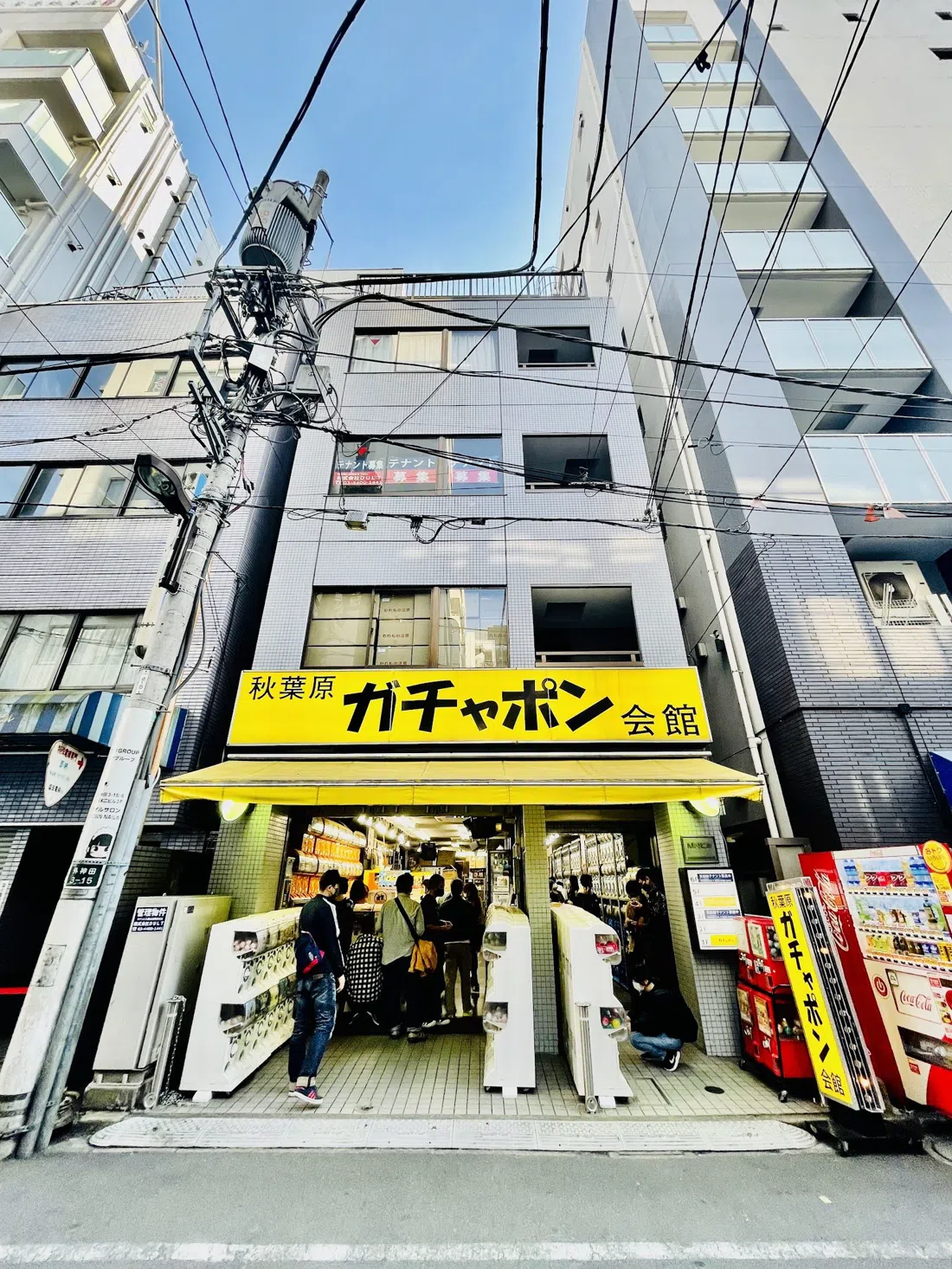
Five minutes from any of the above, Akihabara Gachapon Kaikan is the fastest, most photogenic stop in the district: a wall-to-wall room of capsule-toy machines, ¥200–500 a pull. The aisles are narrow — it works best in twos or threes, and a big group will bottleneck fast — but even a five-minute detour here captures the collector-compulsion instinct that runs under everything else in Akihabara better than almost any other single venue.
The Vertical Otaku Stack
Some buildings in Electric Town aren't a single venue so much as a stacked itinerary, and three of them do the heavy lifting for anyone with a short window.
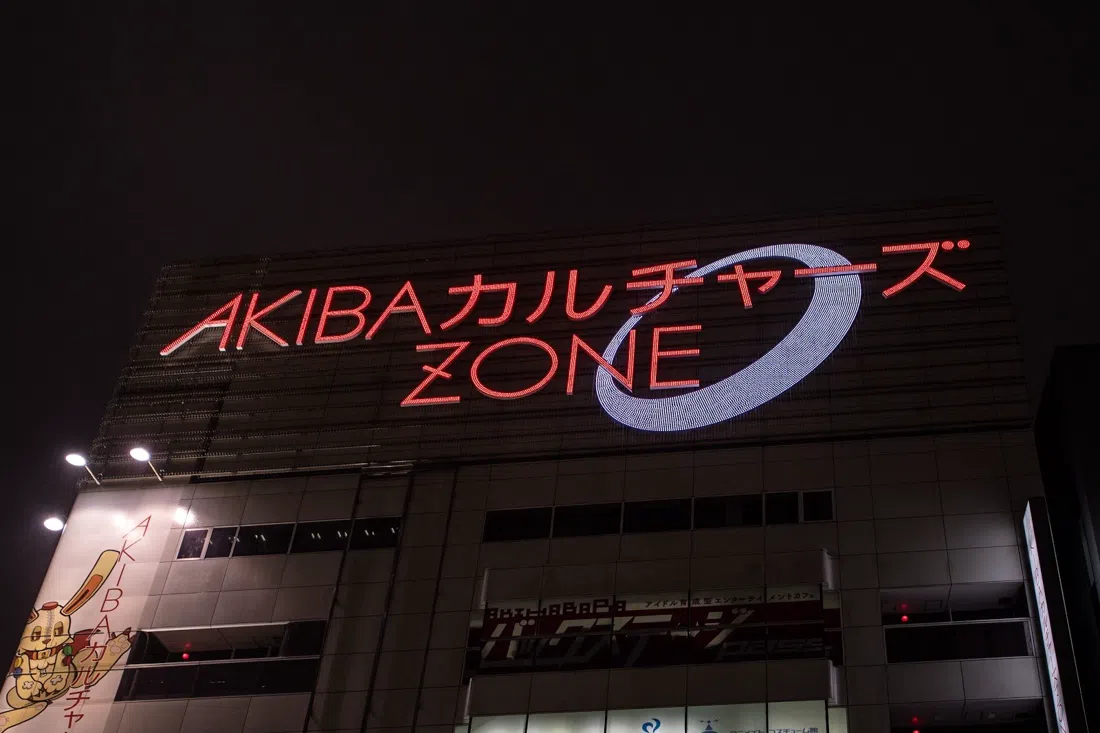
Akiba Cultures Zone is the single best one-building slice of after-dark otaku Tokyo — cosplay retail, a karaoke floor, and a basement idol/anime theatre running a nightly show, all under one roof (and home to @home cafe, above, on 5F). Floor charges vary — karaoke and the theatre ticket separately — but the building is built for groups splitting off by floor and reconvening at the entrance. It's the venue to hand a mixed group with different interests: send the gamers to one floor, the cosplay shoppers to another, meet at the basement theatre for the last show.
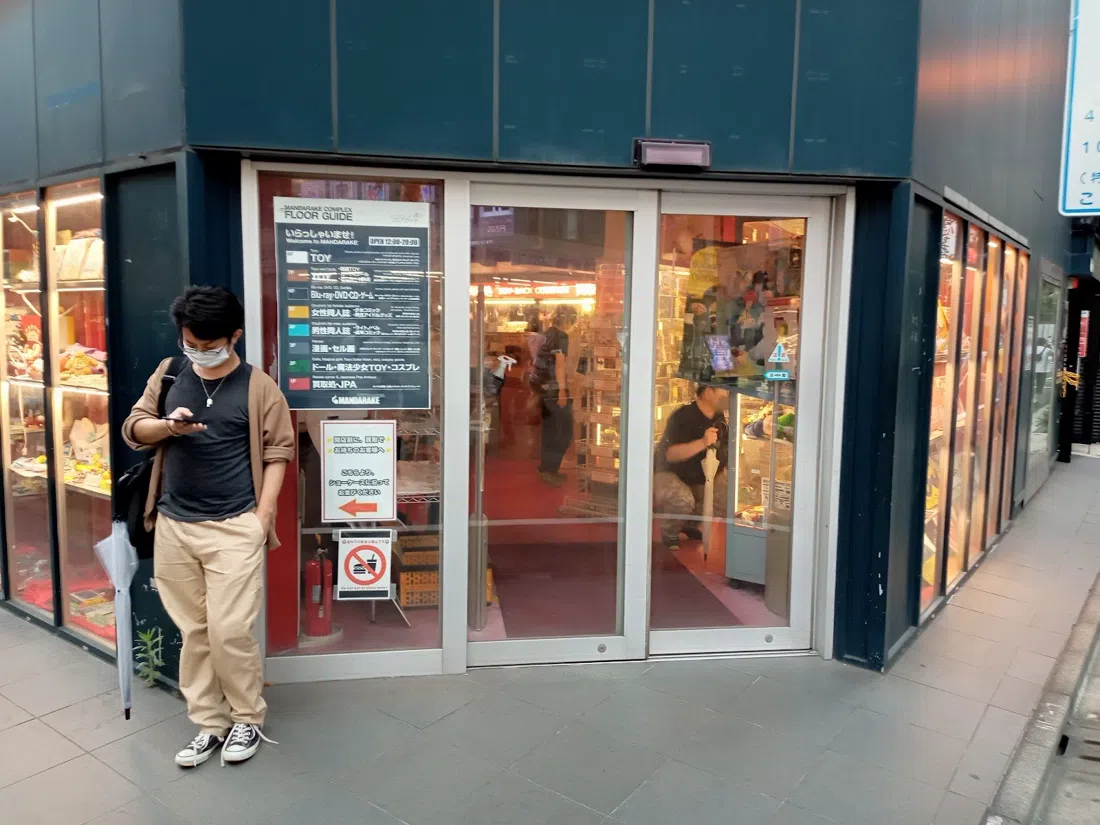
Mandarake Complex, a few streets over, is the deepest secondhand otaku archive in the district — manga, doujinshi, cel art, figures and collectibles spanning ¥100 back-issue doujinshi to six-figure-yen rarities, spread across a building with no door policy and open browsing that suits a group splitting by floor. It's open 365 days a year until 8pm, and as of this year it's expanded next door into Complex 2 for its one-year anniversary — worth the extra twenty minutes if manga back-catalogue or cel animation art is the actual interest, not just a browse.
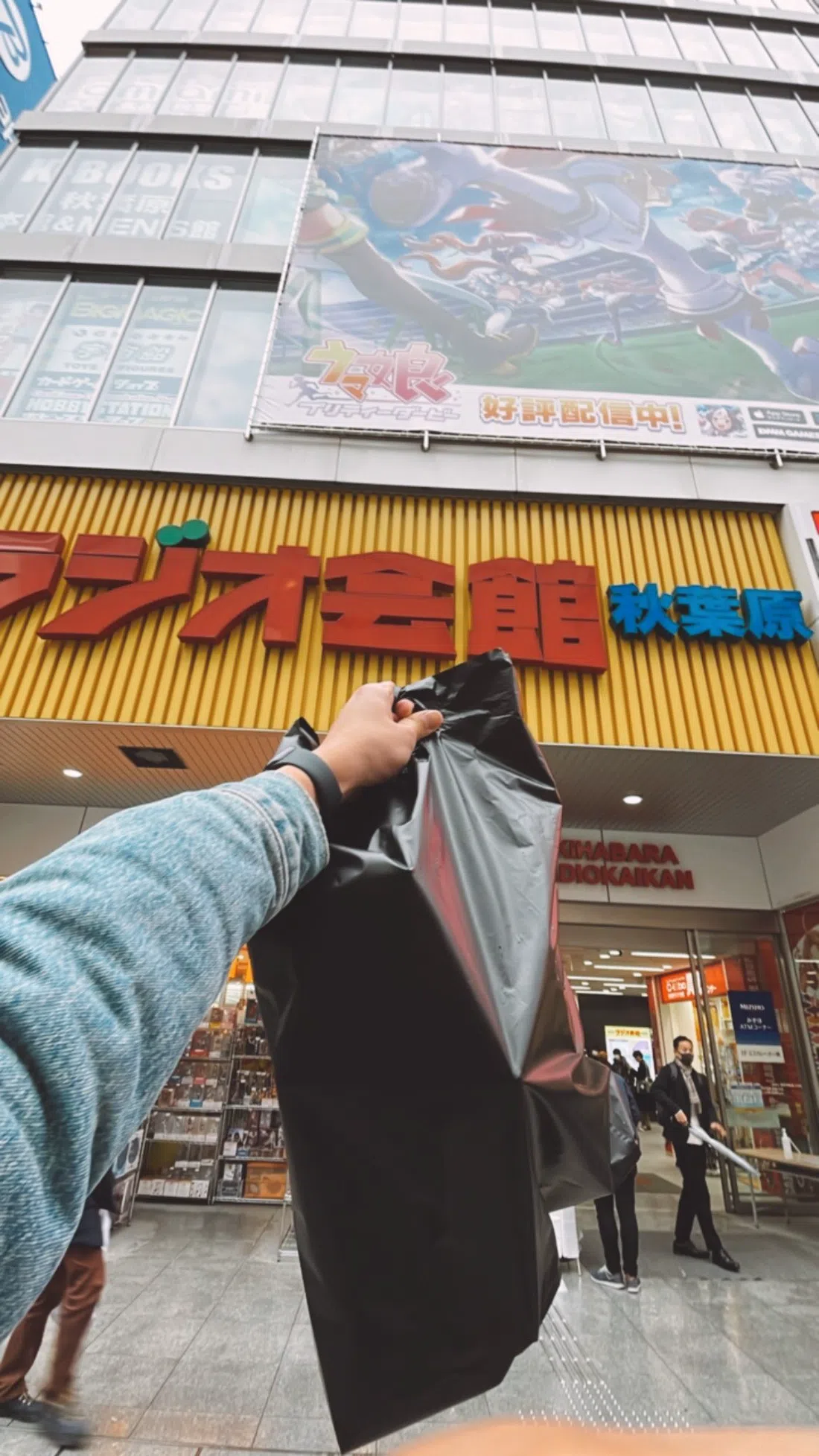
Akihabara Radio Kaikan is the vertical anchor for the shopping side of the night — a reconstructed 1950s tower now packing more than 30 figure, trading-card and hobby specialists over multiple floors, no door policy, free entry, and shopfronts that genuinely light up after dark rather than shutter early like a lot of the district's daytime retail. It's a browse, not a destination in itself, but it's the building to route past between an arcade and dinner.
Idol Nights and a Dinner Worth Booking Ahead
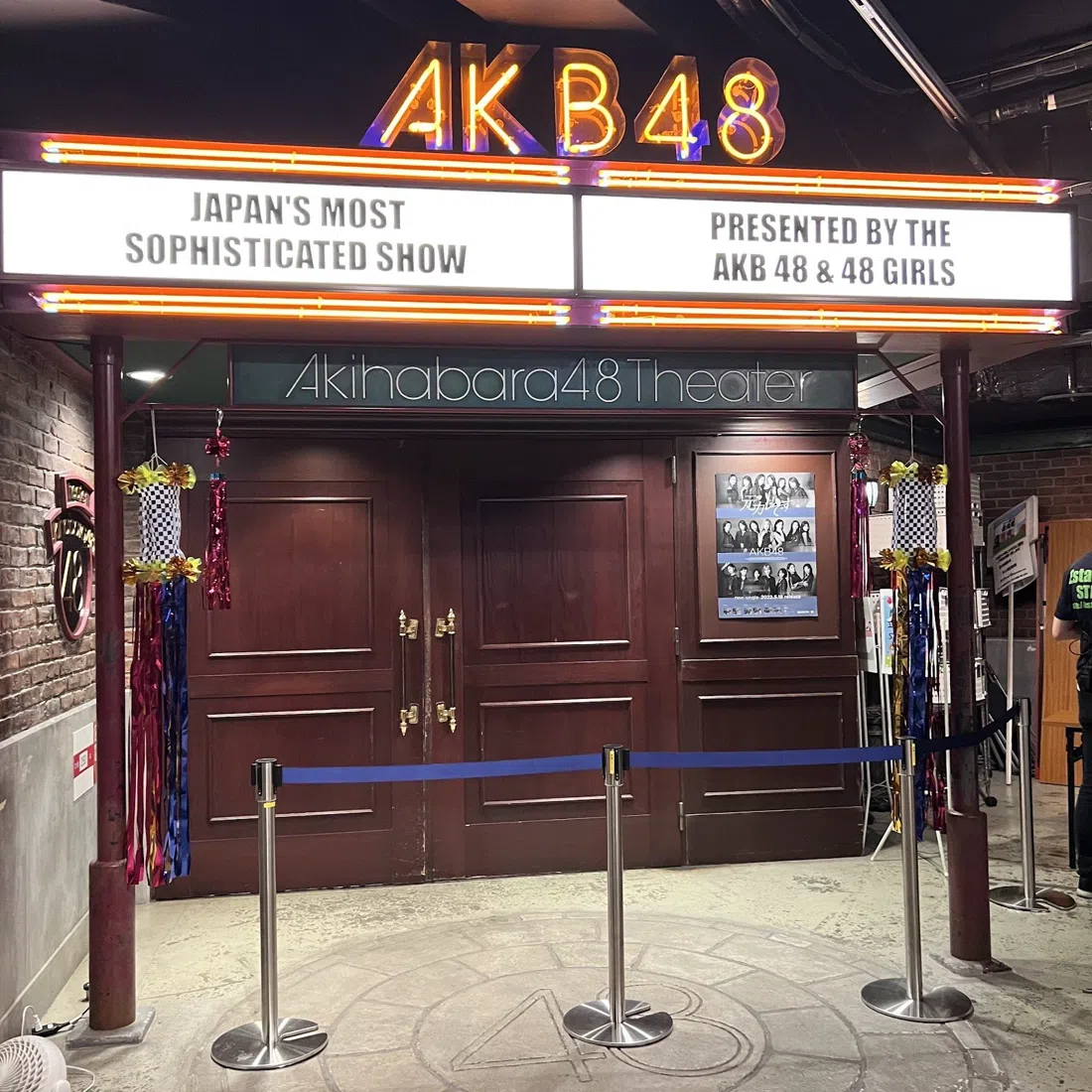
AKB48 Theater is the home stage of the idol group that defined 2000s Akihabara pop culture, and it's still running near-daily shows in 2026 — the purest live idol-theatre experience left in the district. The catch is booking: tickets are lottery-based, not walk-in, running roughly ¥3,000–4,000 plus a drink charge, so this is a plan-ahead stop, not a same-night decision. Groups can attend together once tickets clear the lottery, but don't build an evening around it without securing seats first.
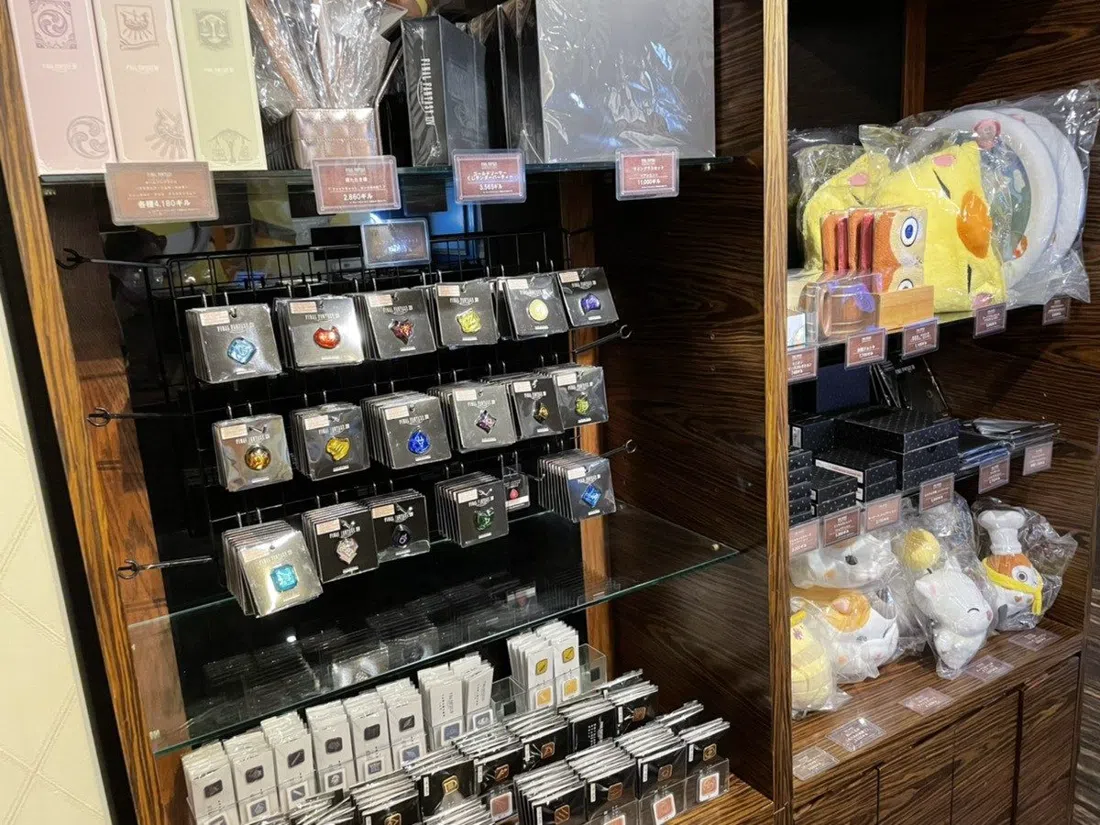
Final Fantasy Eorzea Cafe is the night's one genuine dining reservation, and it's worth treating as such — a Square Enix and Pasela collaboration plating real, craft-level food alongside the theming, running ¥4,000–6,000pp on a timed-slot, reservation-only seating. It clears a bar most concept cafés in Akihabara don't even attempt: this is food a Michelin-adjacent reviewer wouldn't wave off as a novelty. Book ahead for any group larger than two or three; walk-in slots are the exception, not the rule.
The Slow Wind-Down
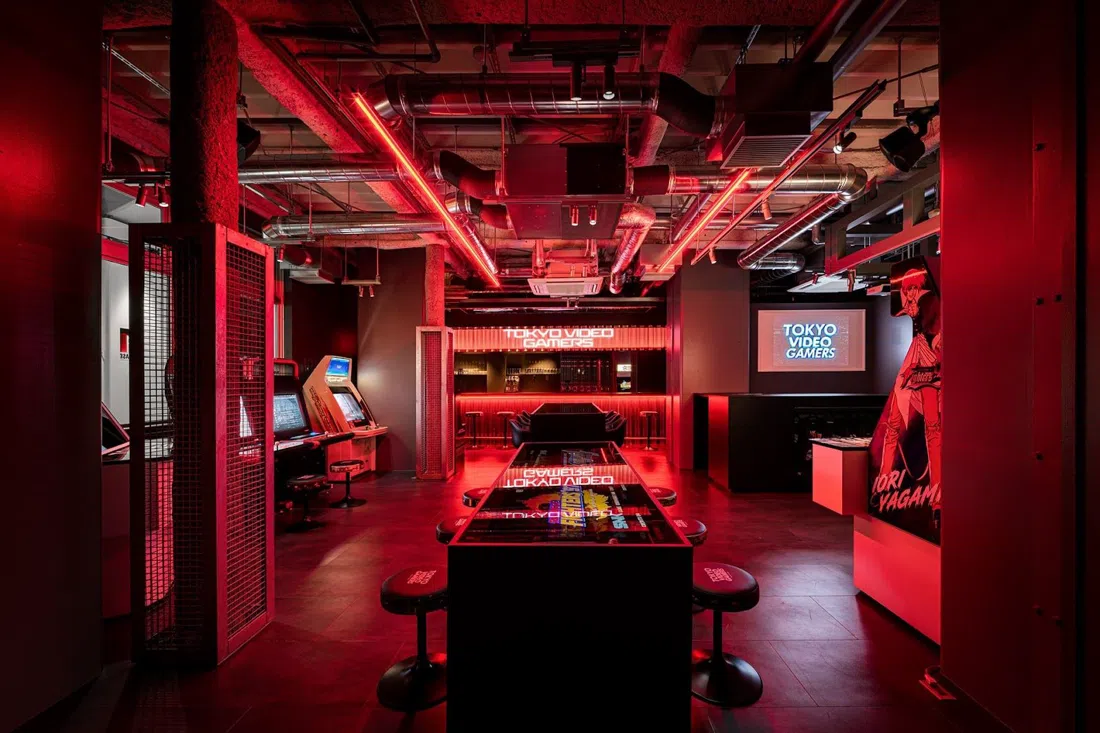
Not every late stop in Akihabara has to run at arcade volume. Tokyo Video Gamers Cafe&Bar is the precise venue for the "last train" framing this piece opened on: bar seating, retro cabinets free to play with a food or drink order, and a salaryman crowd that genuinely does wind down here over a highball before heading for the platform. Drinks and food run ¥800–1,500, games are complimentary once you've ordered, and it's open to 11pm nightly. Bar and table seating suit small-to-medium groups well; reserve ahead if you're bringing more than four or five.
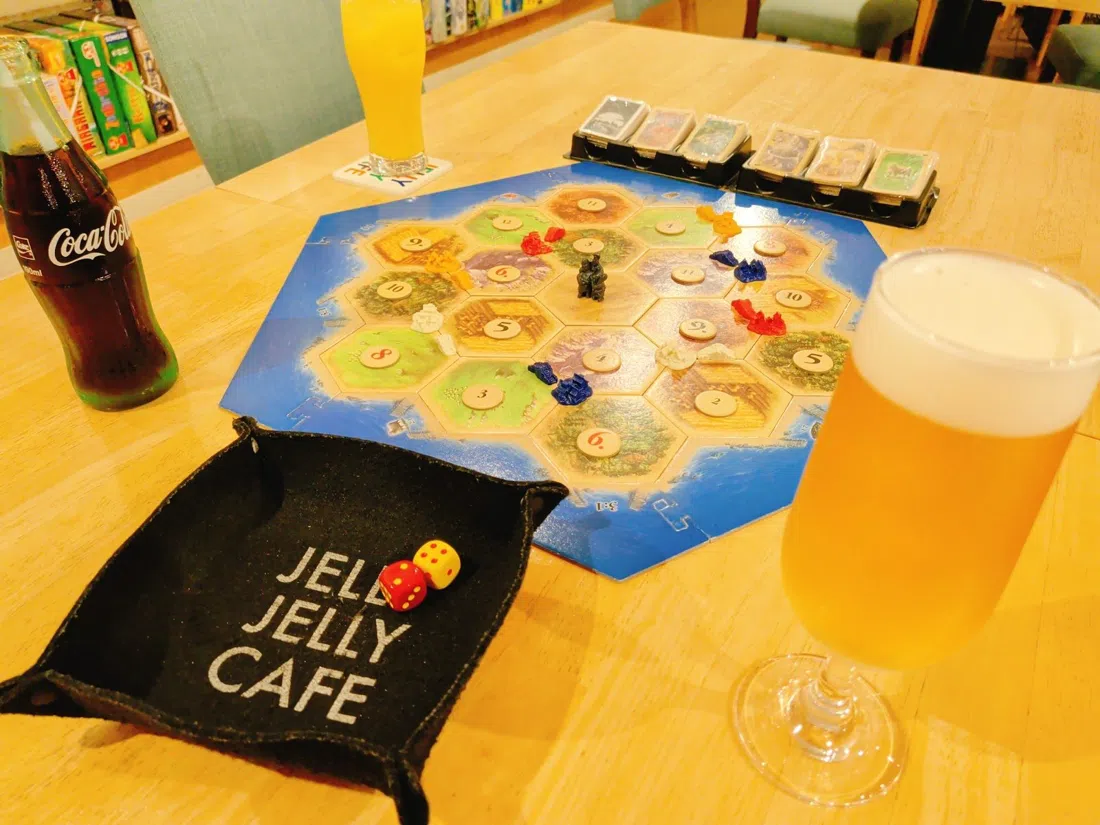
Jelly Jelly Cafe Akihabara is the analog counterpoint — a board game café built around communal tables, staff who'll teach the rules on request, and a genuinely social, unhurried pace that the arcades don't offer. It runs a time-based cover of ¥1,500–3,500 depending on day and hour, with one drink included, and stays open to 11pm. It's the best stop on this list for a slower final hour before the last train — less spectacle, more actual conversation.
After the Actual Last Train
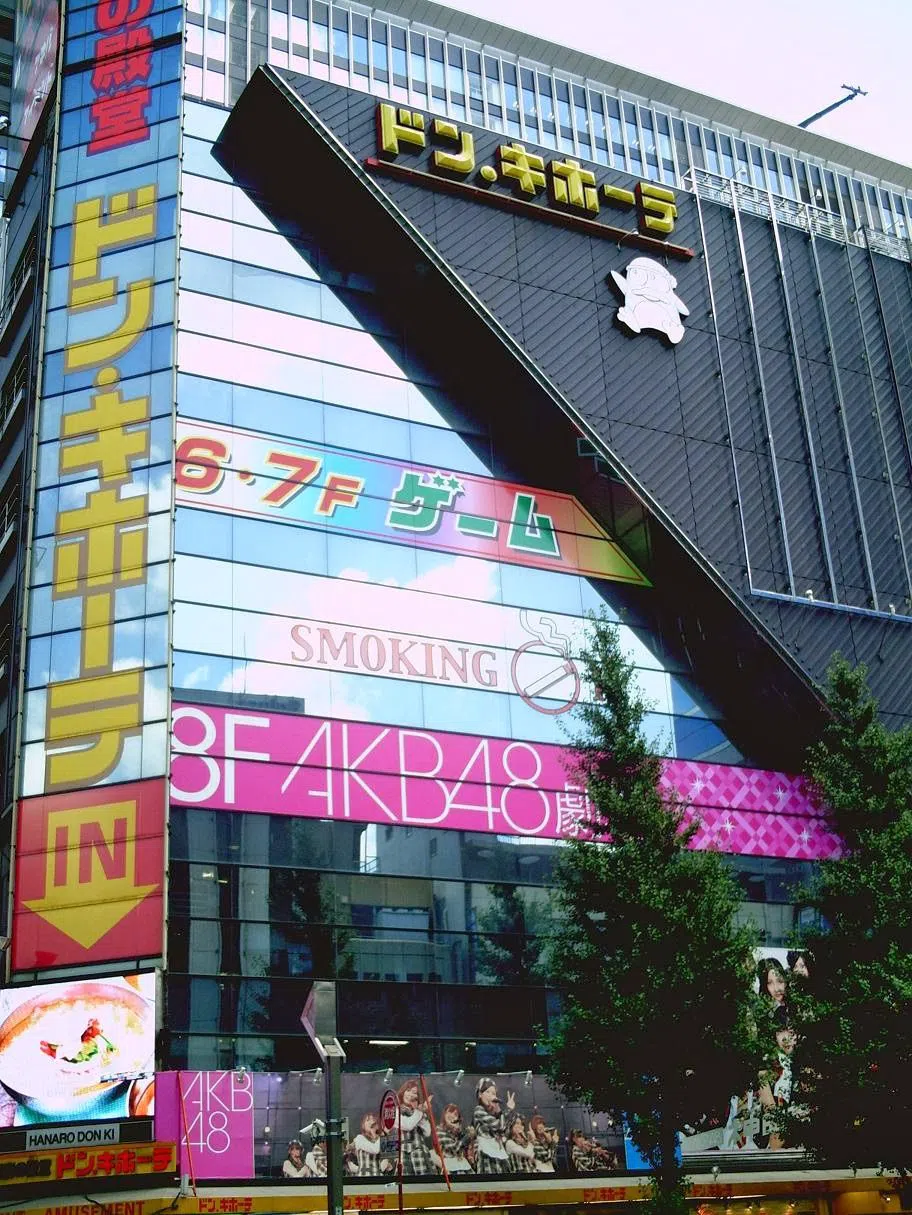
If the last train really has gone, Don Quijote Akihabara is the literal answer to what happens next. It's genuinely open 24 hours — no door policy, no group size it can't absorb — stacking discount chaos, snacks, novelty otaku merchandise and duty-free shopping (tax-free on purchases over ¥5,500) directly below an idol theatre and a maid café in the same building. Nothing here needs a reservation or a plan. It's the anchor venue for anyone who's missed the last train and needs somewhere loud, bright, and open until the first one runs again.
Getting There, Cash, Timing, Budget
Transport. Akihabara Station sits on the JR Yamanote, JR Sōbu, and Hibiya and Tsukuba Express lines — from most central Tokyo hotels it's a 15–25 minute ride. The Yamanote line's last departures from Akihabara run close to midnight; after that, night buses and taxis are the only way back, so build your exit around the JR timetable, not the venue's closing time, if a maid café or idol theatre is your last stop before public transport shuts. If you're basing yourself nearby for a proper Electric Town crawl, check a Tokyo hotel search for something within walking distance of the station rather than a taxi ride away.
Cash. Arcades run entirely on coin or IC card (Suica/Pasmo) — carry a stocked transit card rather than relying on cash for ¥100 plays. Maid cafés, Don Quijote, and most retail take cards, but smaller shops inside Mandarake and Radio Kaikan can be cash-only per stall, so keep a few thousand yen loose.
Timing. Arcades and Don Quijote don't have a real closing hour to plan around — GiGO Building 3 and Silk Hat are genuinely busier after 9pm. Maid cafés and theming venues (Eorzea Cafe, AKB48 Theater) need reservations made days ahead, not on the night. Jelly Jelly and Tokyo Video Gamers Cafe&Bar both close at 11pm, which makes them the natural last stop before the platform.
Budget. A realistic full circuit — one maid café, an hour of arcade play, a wind-down drink — lands around ¥8,000–12,000 per person. Skip the maid café and it drops under ¥5,000. None of the venues on this list charge foreigners a different price than anyone else standing at the same counter; every figure above is what's posted, in yen, for whoever's paying. For the wider district beyond Electric Town after dark, the full Tokyo guide covers where to base yourself and what else the city runs on.