Sakura season in Tokyo runs about two weeks, and it never holds still — the bloom moves west to east, riverbank to hillside, over roughly ten days, so the same week that strips the petals off one bank of the city can still be a week from peak on the other side of it. This piece maps twelve spots worth the trip in 2026, from the packed tarp cities of Ueno Park to the quiet stone paths of Koishikawa Korakuen, with enough on crowds, cost and door policy to build an actual route rather than a wish list.
Where the Season Officially Starts
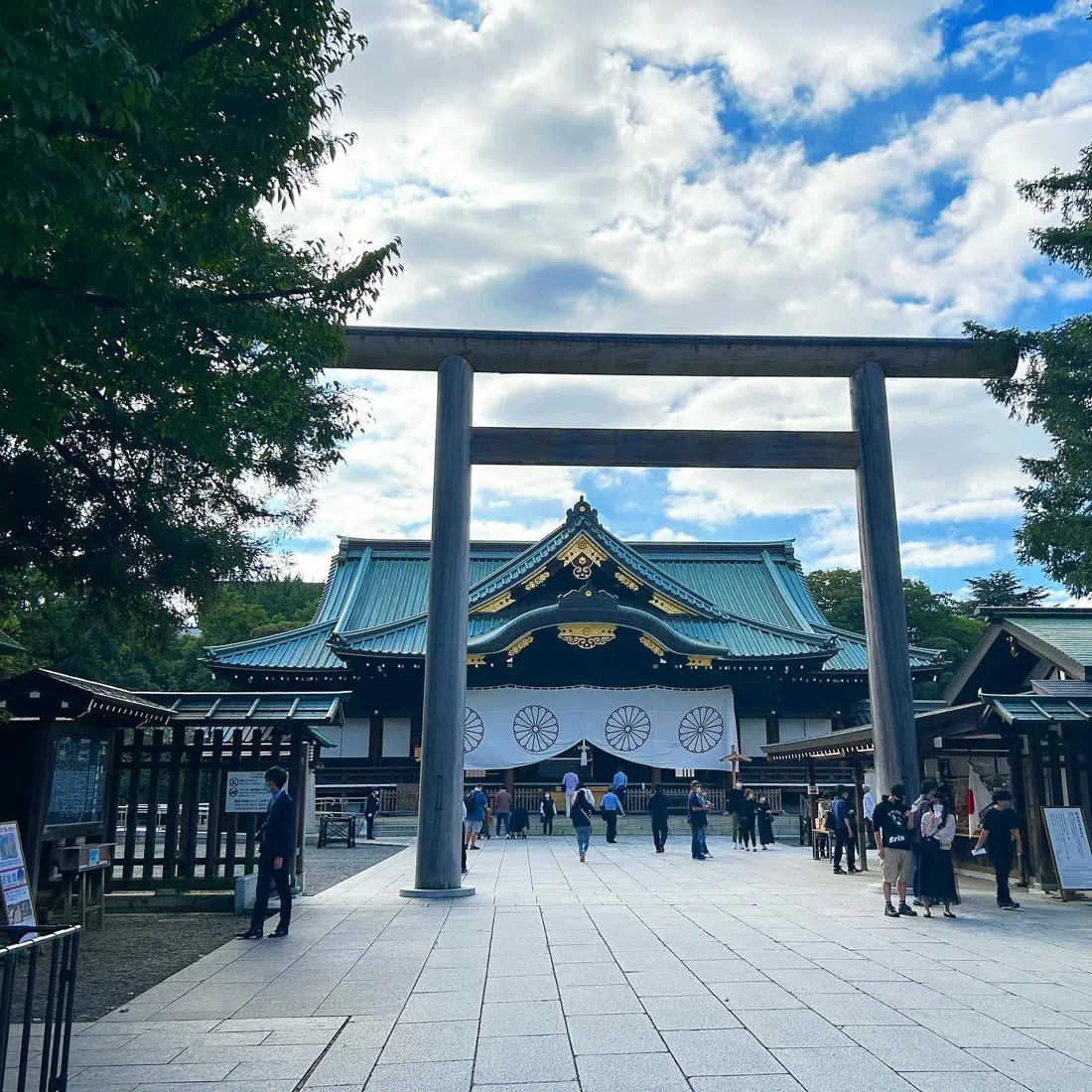
Every hanami season in Tokyo has an official start date, and it's set by one tree. The benchmark specimen used to declare Tokyo's kaika — the opening — sits inside the grounds of Yasukuni Shrine (Kudanshita, Chiyoda-ku); once it hits five or six open blossoms, the season is officially on. It's not a spectacle worth building a trip around by itself, but it's worth knowing the shrine exists for this reason before anything else, since every date later in this piece is downstream of that one tree deciding to bloom. The grounds are free, open, and wide enough for a group to walk without bunching up, and the adjoining Sotobori Park moat path lets you stretch the visit into a proper loop rather than a fifteen-minute stop. There's no picnic culture here — it's a shrine grounds, treat it as a walk-through, not a lawn to sit on.
The Riverside Classics
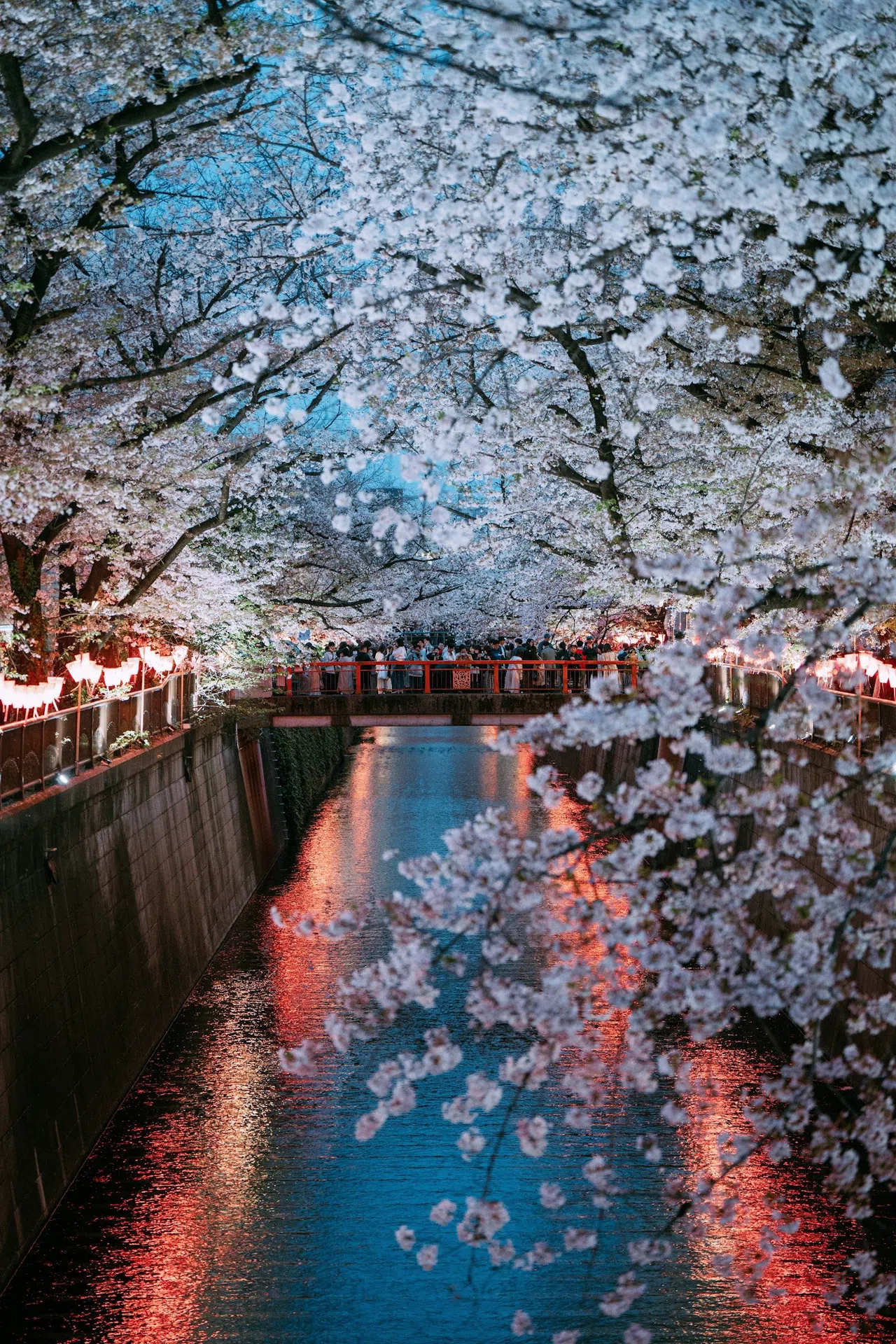
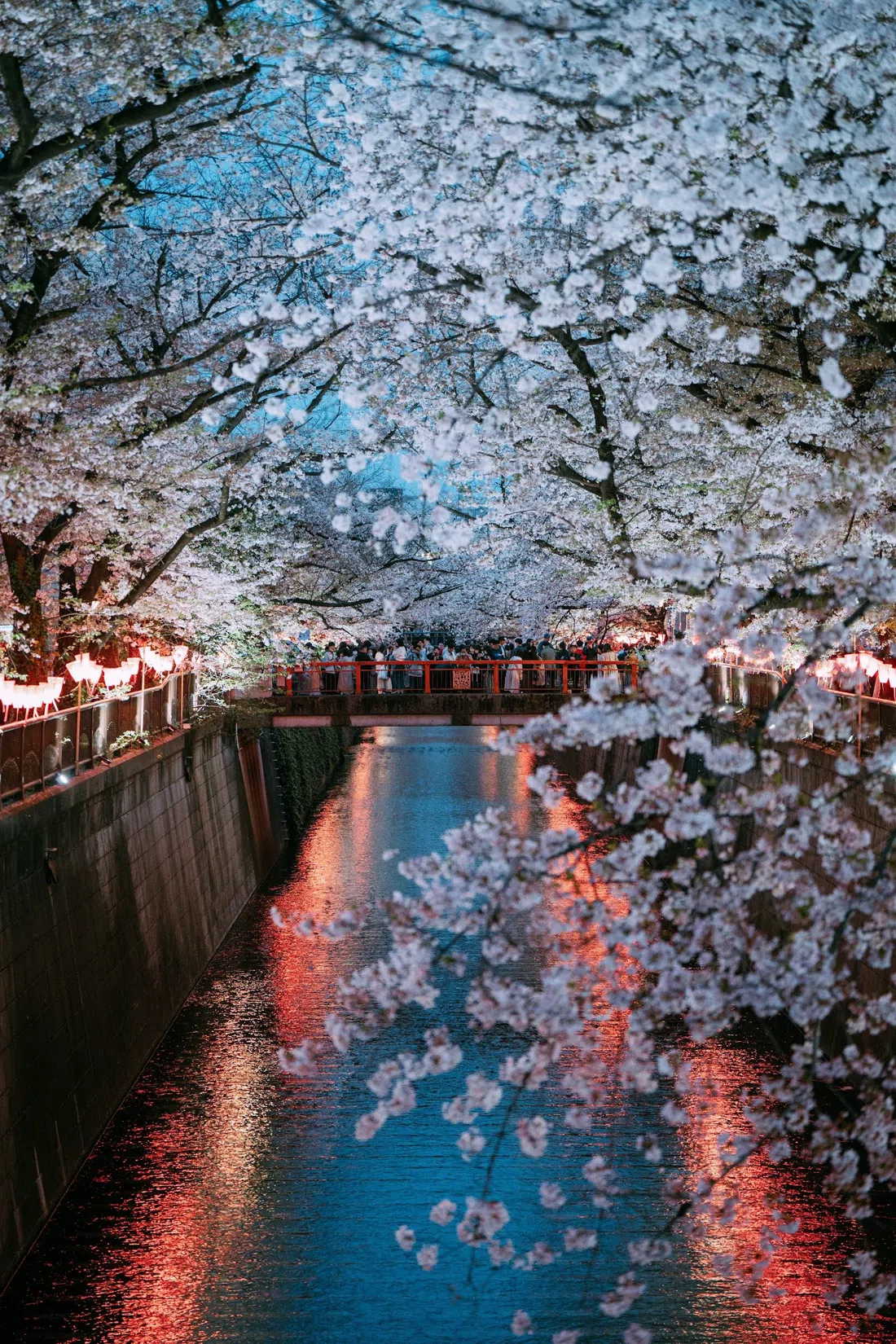
Meguro River (Nakameguro) is the single most photographed hanami scene in the city, and the shot you've seen — pink canopy over dark water, lanterns doubled in reflection — is real and repeatable if you go at the right hour. The catch is the banks: they're a paved walking path, not a lawn, with nowhere to lay out a tarp. That makes it a poor fit for a stationary picnic group and a genuinely good fit for a group that wants to walk, stop at a riverside café, walk again. During the festival dates (Mar 28–29, 2026), food and drink stalls line the path at ¥300–1,500 an item, and the crowd runs shoulder-to-shoulder from late afternoon onward. Go on a weekday morning instead — same trees, a fraction of the people, and you can actually see the water for the reflection shot rather than a wall of phones.
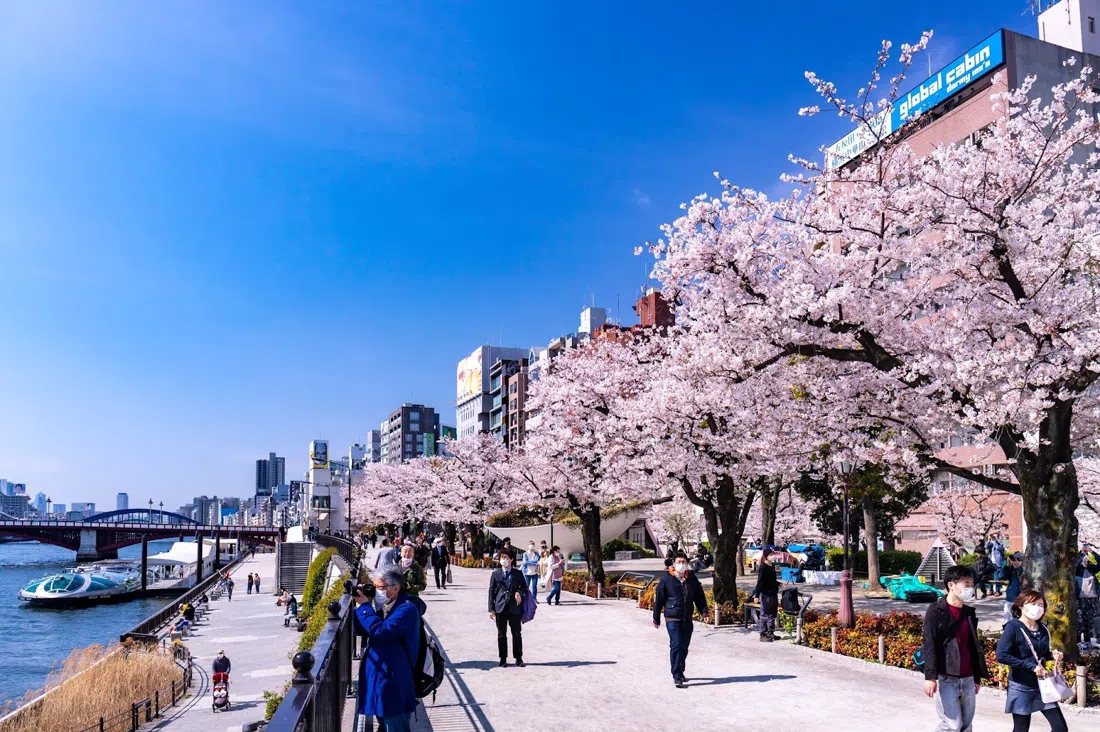
Ten kilometres northeast, Sumida Park (Asakusa) does the opposite trick: instead of a narrow channel, it's open riverside lawn and path on both banks of the Sumida, wide enough that a dozen people can spread out without elbowing joggers. It's also the one spot on this list where old and new Tokyo share a frame — the temple district around Senso-ji sits on one side of the river, Tokyo Skytree rises directly across it on the other. River cruises depart nearby, roughly ¥1,500–4,000 per person; book ahead in season, because sakura-week departures sell out days in advance, not hours.
The Big Group Picnics
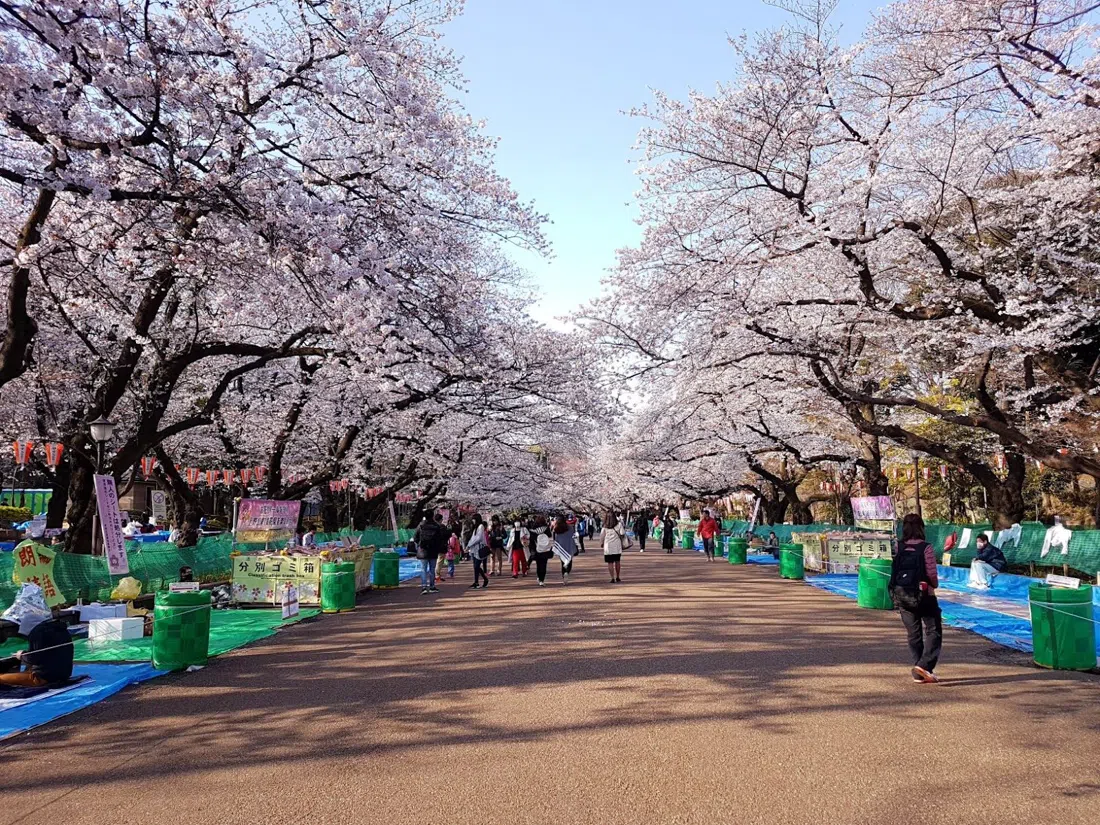
If one park invented the word 'hanami' as most visitors picture it, it's this one. Ueno Park (Ueno) is where tarp-reservation picnic culture as most people know it comes from — arrive early, claim a rectangle of ground with a blue tarp, and hold it for the day while neighbouring groups compare bento boxes and pass drinks around. It's the loudest, most communal version of hanami in the city and, not coincidentally, the most crowded — expect real congestion on any weekend during peak bloom, and don't count on claiming a good tarp spot much past mid-morning. The upside is that it's a genuine full-day destination even past the trees: Ueno Zoo and several of the city's major museums sit inside or beside the park, so a mixed-interest group can split up and reconvene for the picnic later. Entry to the park itself is free; the museums and zoo are ticketed separately.
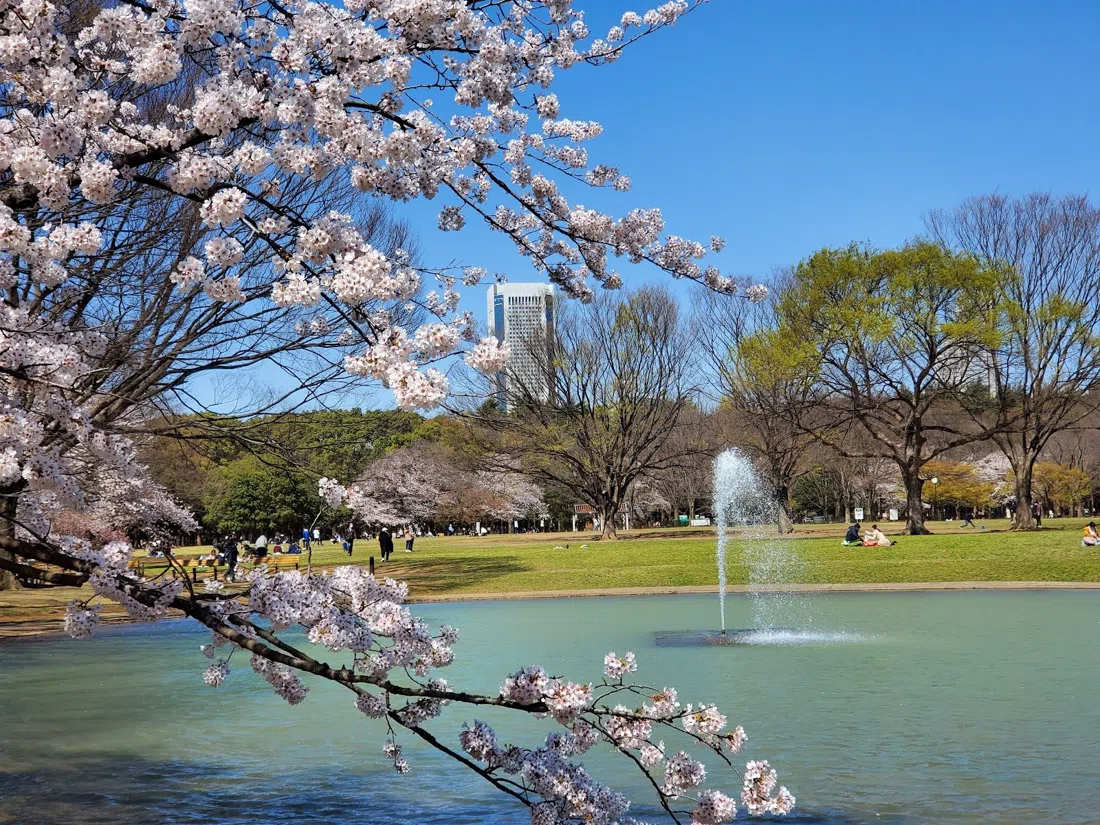
Yoyogi Park (Yoyogi/Harajuku) is the relaxed counterpoint. It has what Ueno and the riverside spots don't: genuinely open lawn, enough of it that a large group can spread a full picnic blanket without negotiating for territory with the group next door. It's free, unticketed, and the closest thing in central Tokyo to a park built for lying down under blossoms rather than filing past them.
The Ticketed, Alcohol-Free Alternative
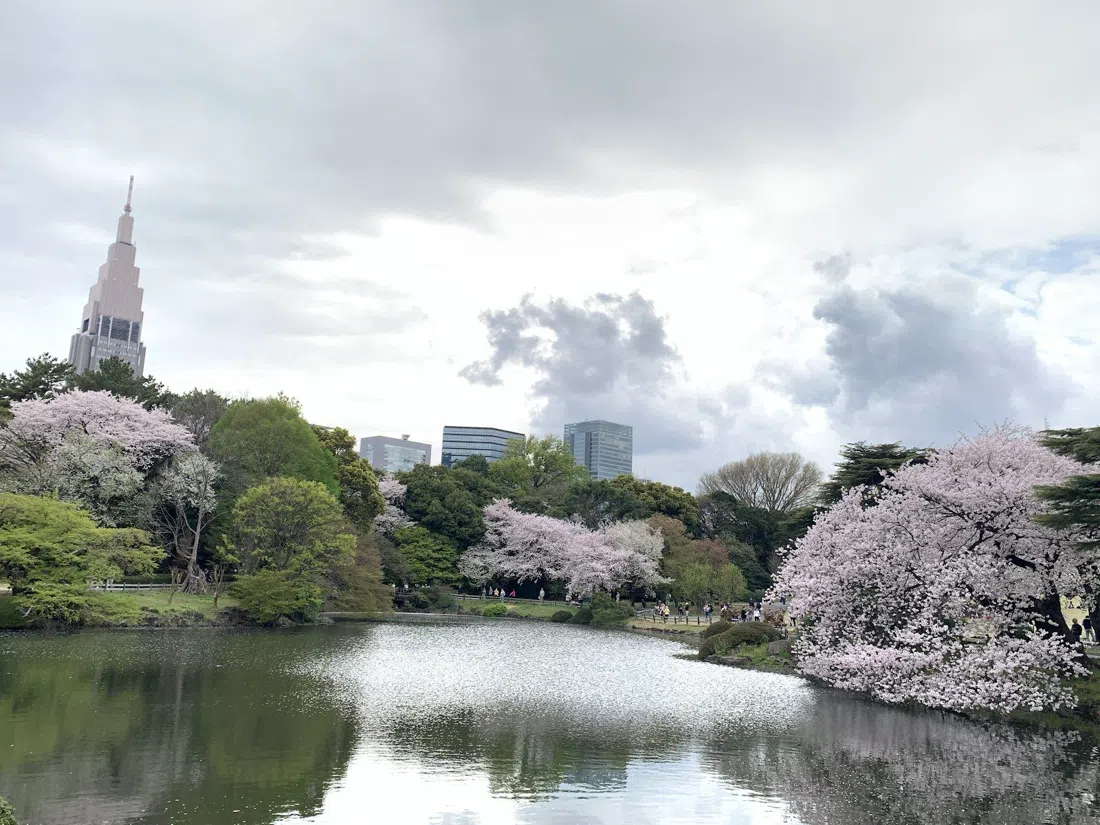
For a group that wants a picnic on real grass without a drinking-party atmosphere setting up next to them, Shinjuku Gyoen National Garden (Shinjuku) is the pick. It's a formal, ticketed garden — ¥500 for adults, ¥250 for seniors and students, free under 15 — and alcohol is banned inside, which filters out the rowdiest crowds by policy rather than luck. The trade-off is logistics: on the four peak weekend dates in 2026 (Mar 28, 29, Apr 4, 5), entry requires an advance timed booking between 10am and 4pm, so this isn't a garden you can decide to visit on a whim during the busiest days of the season — book the slot before you plan the rest of the day around it. Outside those four dates, entry runs on normal walk-up rules, and the garden is large enough that even a full crowd disperses across it rather than pooling at one gate.
On the Water
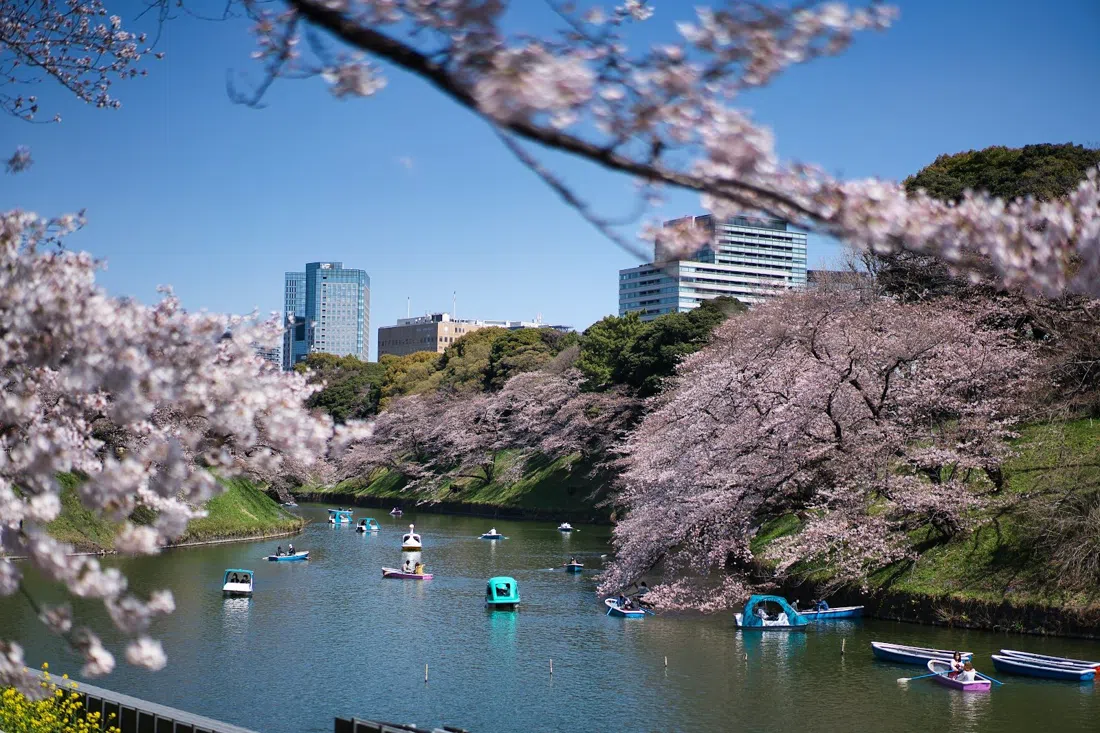
Chidorigafuchi (Kudanshita, a short walk from Yasukuni Shrine) pairs a wide, easily walked moat-side promenade with the best on-water sakura view in central Tokyo — rowboats out on the moat itself, blossoms overhanging both banks. The promenade handles groups fine; the boats don't, since each one seats only two or three people, so a larger group will be splitting into pairs to get on the water. Boats run ¥800 for 30 minutes, same-day tickets or online reservation, and they sell out within the hour of the 9am release during peak bloom — arrive at opening if the boat ride matters to you, not just the walk along the bank.
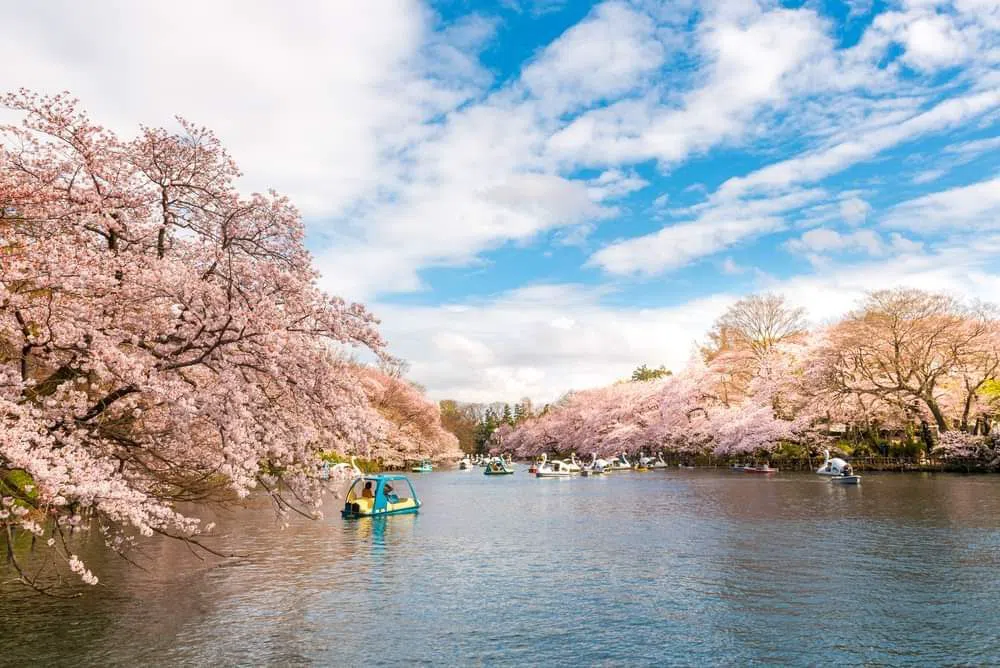
Inokashira Park (Kichijoji), a short train ride west of the centre, offers a quieter version of the same idea: swan boats on the park's central pond, from ¥800 for 30 minutes, fitting small groups of two to four. The surrounding lawns and paths are open enough for a larger group walking together even if the boats themselves aren't. It's worth the extra stop on the train line for the shot alone — swan boats gliding under blossoms is a different picture than anything closer to central Tokyo — and Kichijoji itself is one of the better food neighbourhoods in the city to make a lunch of it, before or after.
The Quiet Corners
Four spots here reward going out of the way specifically to dodge the crowd, and each suits a smaller group better than a large one.
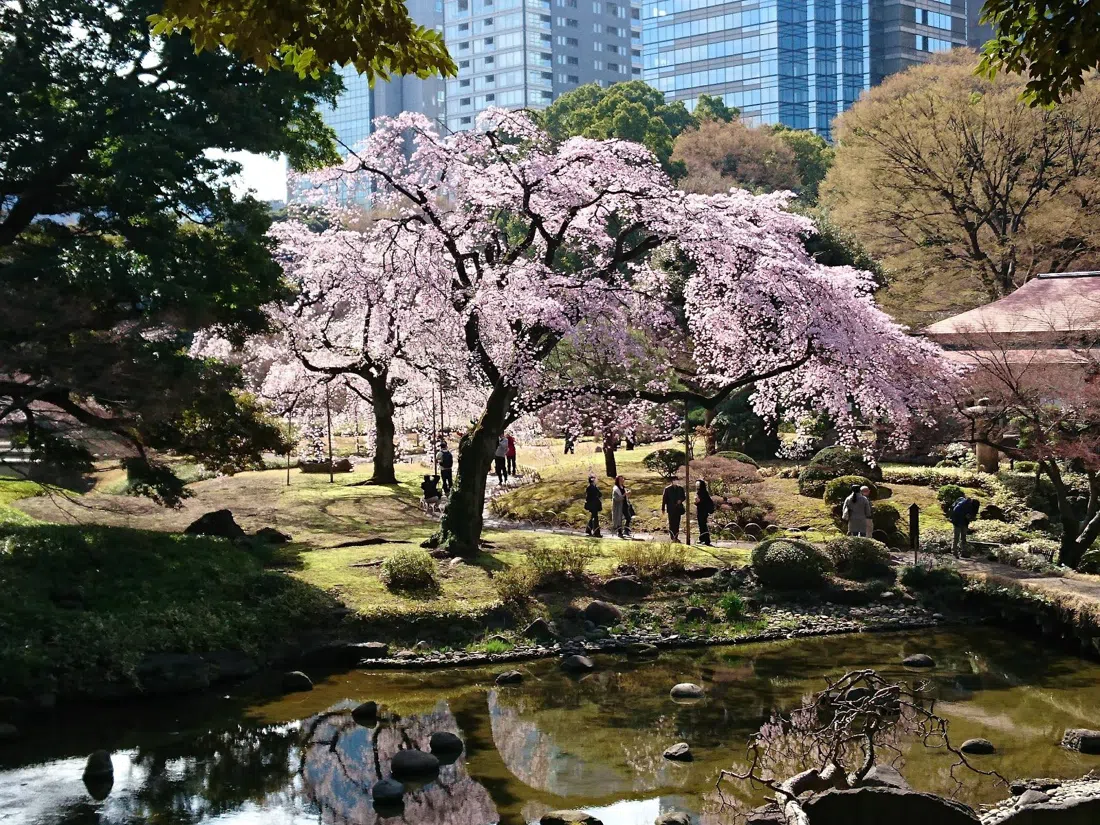
Rikugien Garden (Komagome) is a strolling garden built around a single dramatic weeping cherry tree that does more visual work than a thousand ordinary ones scattered elsewhere. There's no lawn sitting here — it's a contemplative, Edo-period garden meant to be walked in twos and threes, not picnicked in. Entry is ¥300 for adults; the night illumination, which runs mid-to-late March, sometimes carries a separate timed entry, so check the light-up dates specifically if that's the visit you want, since it's a narrower window than the daytime garden.
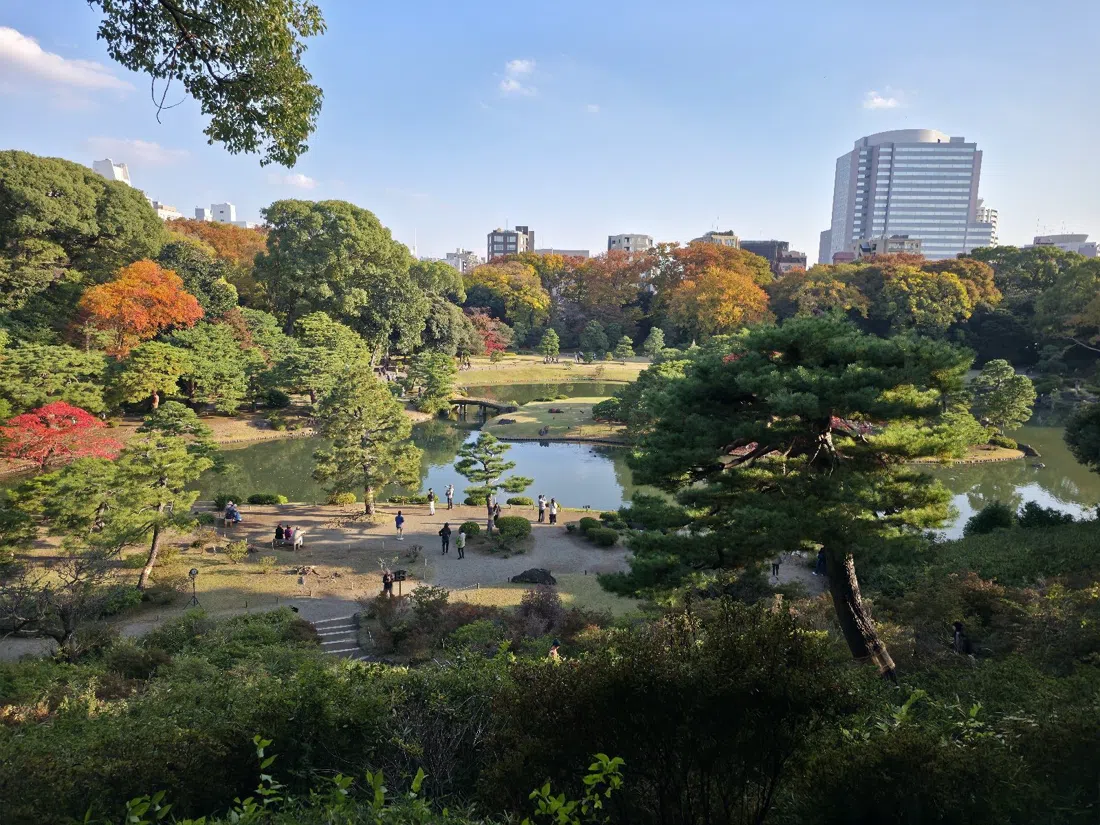
Koishikawa Korakuen (Iidabashi/Suidobashi), a short walk from Tokyo Dome, is a genuinely under-visited classical daimyo garden and the truest hidden corner on this list — most visitors walking toward the Dome never turn in. ¥300 adult entry, no picnic lawns, best appreciated on foot in a small group rather than a crowd.
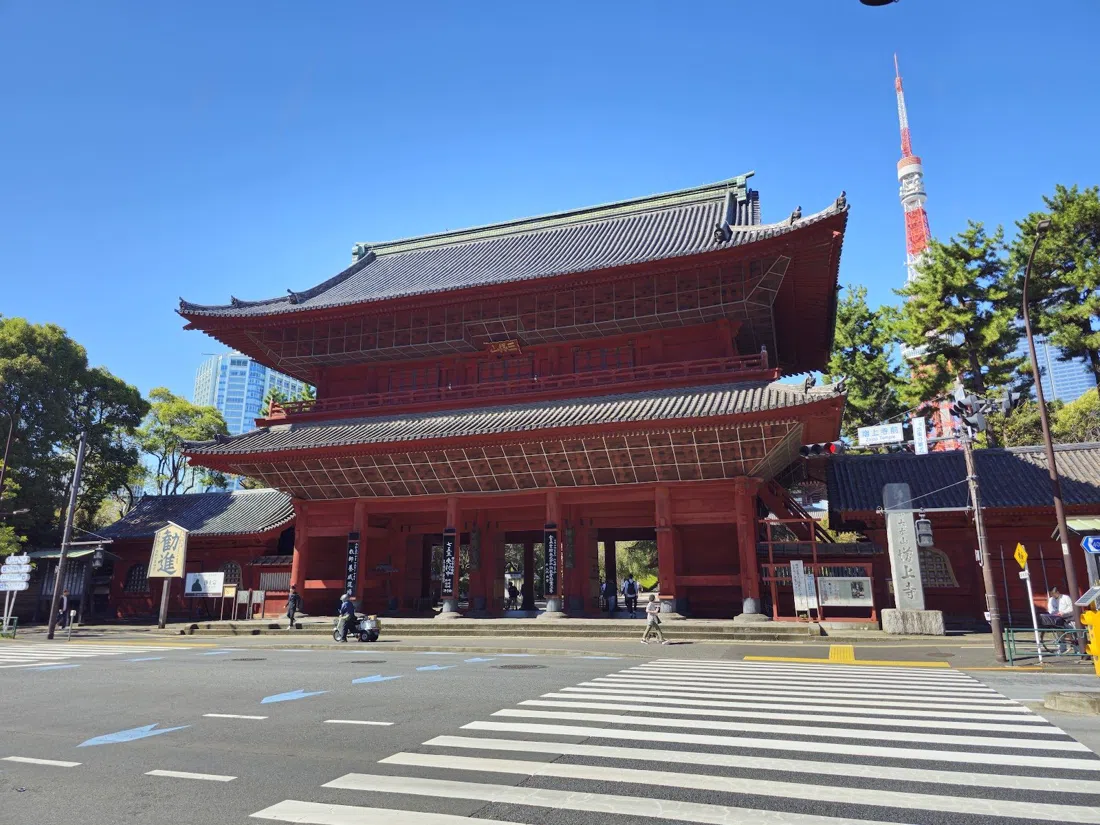
Zojoji Temple & Shiba Park (Shiba/Hamamatsucho) gives the clearest old-meets-new skyline shot in the city: the temple's Edo-era main gate, cherry blossoms in front of it, and Tokyo Tower rising directly behind — all in one frame, no telephoto needed. The grounds and adjacent park lawns are open, unticketed, and handle groups easily; only the temple hall interior is separately ticketed if you want to go inside.
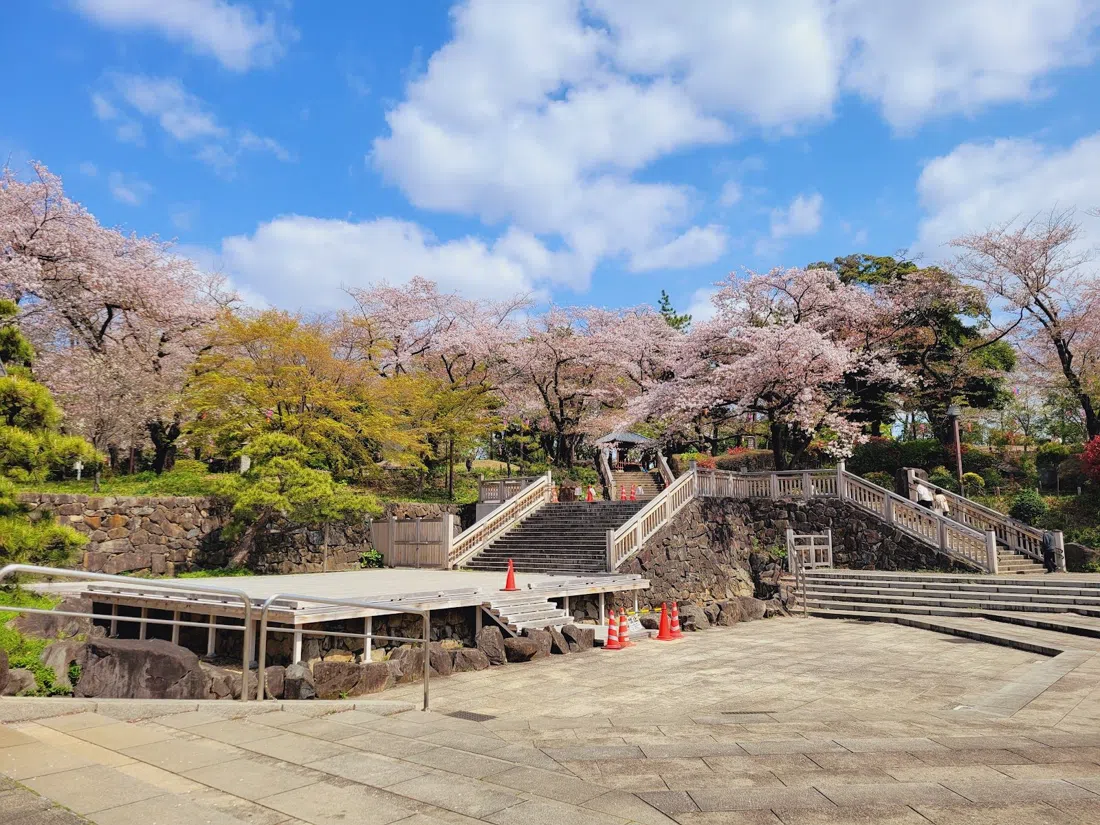
Asukayama Park (Oji, north Tokyo) is the local's answer to Ueno — comparable tree quality, plenty of open ground for tarps, and a fraction of the visitors, largely because it sits one more train stop out than most people bother with. Free, and genuinely group-friendly if what you want is Ueno's tarp culture without Ueno's density.
Getting Around, Timing It Right, and What to Budget
Every spot on this list sits on or within walking distance of a JR or Tokyo Metro station — an IC card (Suica or Pasmo) covers all of it, and there's no reason to book taxis between venues; the trains are faster in sakura-week traffic anyway. Meguro River and Nakameguro Station sit on the Tokyo Metro Hibiya and Tokyu Toyoko lines; Ueno is a JR Yamanote and Keihin-Tohoku stop; Chidorigafuchi and Yasukuni Shrine share Kudanshita Station on the Tozai, Hanzomon and Shinjuku lines; Shinjuku Gyoen is a short walk from Shinjuku-gyoenmae on the Marunouchi line.
Bloom timing moves the whole plan. 2026's window is realistically the last few days of March into the first week of April, but it isn't uniform across the city — the bloom moves outward from the warmer riverside spots over roughly ten days, so Meguro can be past peak the same week Asukayama or Koishikawa Korakuen are just opening. Check a real-time bloom forecast a few days out rather than booking a date months ahead; the gap between 60% open and full canopy is often only two or three days.
Carry cash. Festival food stalls at Meguro River and most of the smaller gardens' ticket booths are cash-first, and while central Tokyo is increasingly card-friendly, a sakura-week stall queue is not where you want to discover a card reader is down.
Budget-wise, this is a cheap week by Tokyo standards if you stick to the free spots: Ueno, Yoyogi, Sumida, Meguro River, Yasukuni and Chidorigafuchi's promenade all cost nothing to enter. The paid gardens (Rikugien, Koishikawa Korakuen, Shinjuku Gyoen) run ¥300–500 each, and the one real splurge is a river cruise from Sumida Park or a rowboat at Chidorigafuchi — both worth booking ahead rather than chancing it on the day. If you're building a multi-day trip around the season, sort accommodation early, since this is peak demand week across the city — start with a Tokyo hotel search, and the full Tokyo guide covers the rest of the city beyond hanami season.