The 08:00 coach out of Tokyo is on the north shore of Lake Kawaguchi by half past ten, and by midday there are four more like it in the same car park. Mount Fuji is either out or it is not, and no itinerary argues with that. The cone tends to clear from the summit down in the first two hours of daylight, then haze in, then sometimes come back after four. What a bus day around the Five Lakes buys you is attempts: six or seven angles on the same mountain in one day instead of one.
What a Five Lakes bus day covers
The lakes (Kawaguchi, Sai, Shoji, Motosu and Yamanaka) sit at around 850 to 900 m along the northern foot of the mountain, roughly two hours from central Tokyo on the Chuo Expressway when the road is moving. Kawaguchiko Station is the hinge of the area: highway coaches from the Shinjuku bus terminal terminate there, and the colour-coded local sightseeing lines leave from the same forecourt, one loop for the Kawaguchi shore, one for Lake Sai, one for the western lakes and the lava forest.
A coach earns its money on the western half. Local buses reach Lake Sai, Narusawa and Lake Motosu only a handful of times a day, and it is about 25 km of Route 139 from one end of the chain to the other. On a self-guided day you will realistically do three stops around Lake Kawaguchi and spend the rest of it reading timetables. A bus day does six to eight, because the driver keeps the timetable for you. If you are building the wider trip, the Tokyo guide covers the city end of it.
What a coach cannot do is enter a site that has no coach apron. Three of the most photographed spots in the region fall into that category, and a tour that promises all of them is promising a walk you should know about in advance.
The three viewpoints that sell the trip
Chureito Pagoda, Arakurayama Sengen Park (Fujiyoshida, above Shimoyoshida) is the angle you have already seen: five-storey pagoda, lake of roofs below, mountain behind. It is free, unticketed and open 24 hours. It is also 398 steps up from the shrine at the bottom, about ten minutes' walk from Shimoyoshida station, and the municipal car parks charge ¥1,000 to ¥1,500 for up to six hours, so coaches drop their party and wait rather than park. The photograph is taken from the purpose-built viewing deck behind the pagoda, added in 2022, not from the pagoda's own terrace; the queue here is for a place on the railing, not for a ticket. Go at first light and you will have both the deck and the clear air. Arrive at eleven and you will wait behind three coachloads for a two-minute slot.
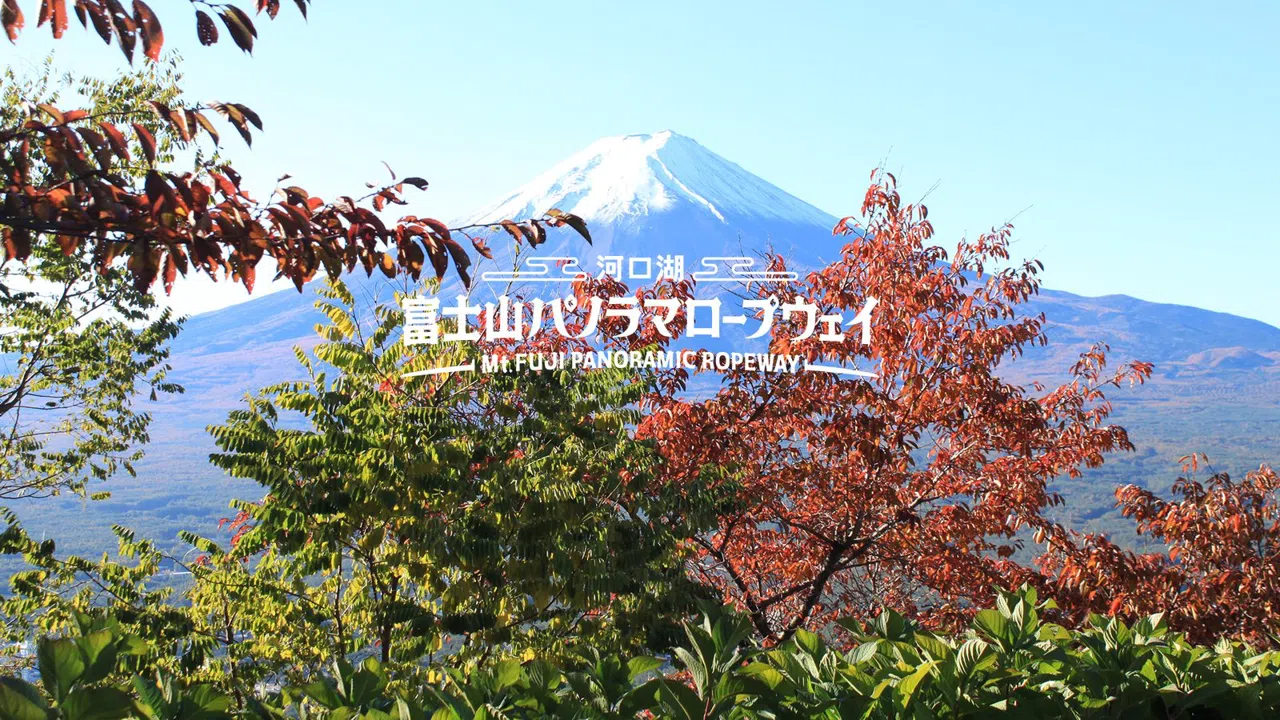
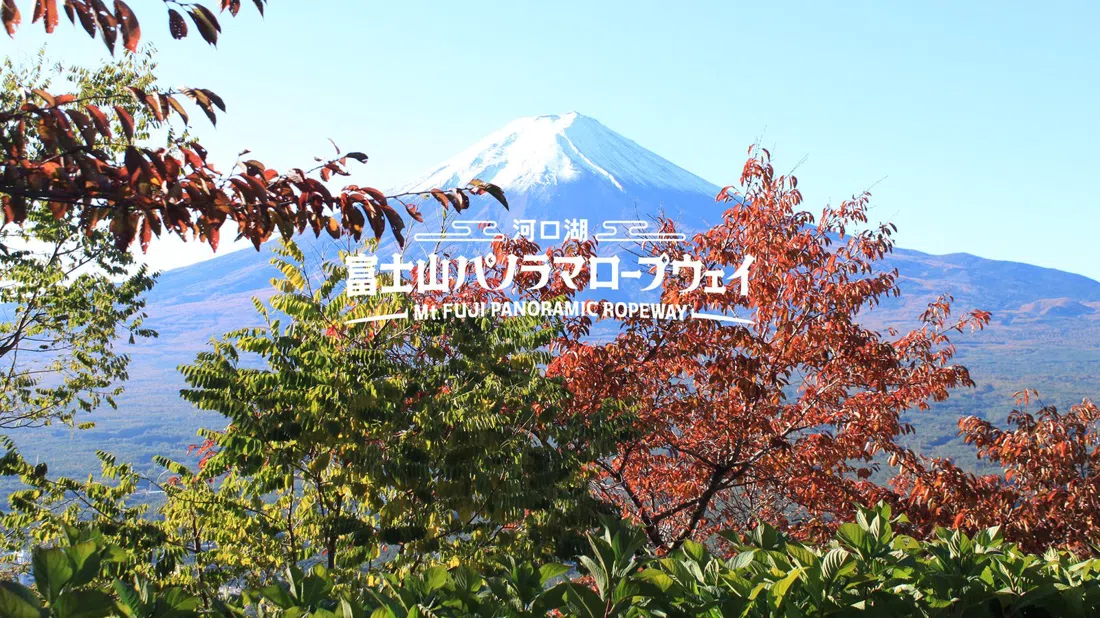
Mt. Fuji Panoramic Ropeway (Mt. Tenjo) (Kawaguchiko south shore) is the best effort-to-view ratio in the whole area: three minutes up, no hiking, the lake below on one side and the mountain filling the other. Adults pay ¥1,000 return or ¥600 one way, children ¥500 and ¥300, under-school-age free with an adult. Groups are welcome in operating hours without advance booking and there are discounted rates for parties of 15 or more and for students. The catch is on the ground: there is no car park or coach drop-off at the base station, so tour buses use the prefectural lot and everyone walks in. The bigger catch is weather. It shuts for high wind, lightning or heavy snow, and it is the first stop a coach itinerary loses on a bad day.
Oishi Park & Kawaguchiko Natural Living Center (Lake Kawaguchi north shore) is the postcard most Fuji bus days are sold on: flower beds in the foreground, the full width of the lake, the mountain straight ahead. It is free and unticketed, with a large free car park, toilets, a shop and a café, and it needs no group booking, which is exactly why it is full of coaches between eleven and two. The Natural Living Center shop runs 09:00 to 17:45, closing at 17:15 from October to February. Since 17 July 2026 the Ensoleillé Oishi Park Line shuttle boat has linked the park to Funatsu-hama, and at midday that is a better way in than the car park.
Three places a coach will never take you
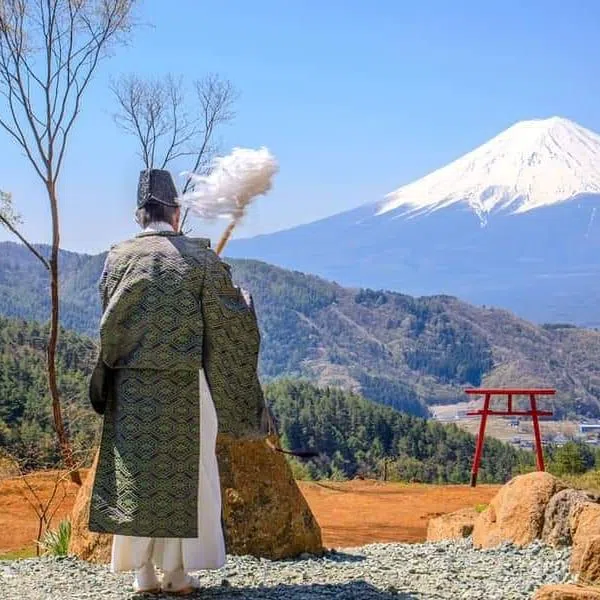
Tenku no Torii, Kawaguchi Asama Shrine (Kawaguchi, north of the lake) is a torii gate erected in 2019 purely as a place to worship the mountain from a distance, and it has become the region's tightest bottleneck. It is thirty minutes uphill on foot from the shrine at the bottom, then a managed photo queue at the top where each group gets about three minutes. There is a ¥100 photo fee per person and a ¥500 permit if you are carrying a DSLR or any interchangeable-lens camera; the site is open roughly 09:00 to 16:00. It is not a coach-friendly stop, and weekends are worse. Couples and solo photographers should do it independently on a weekday morning.
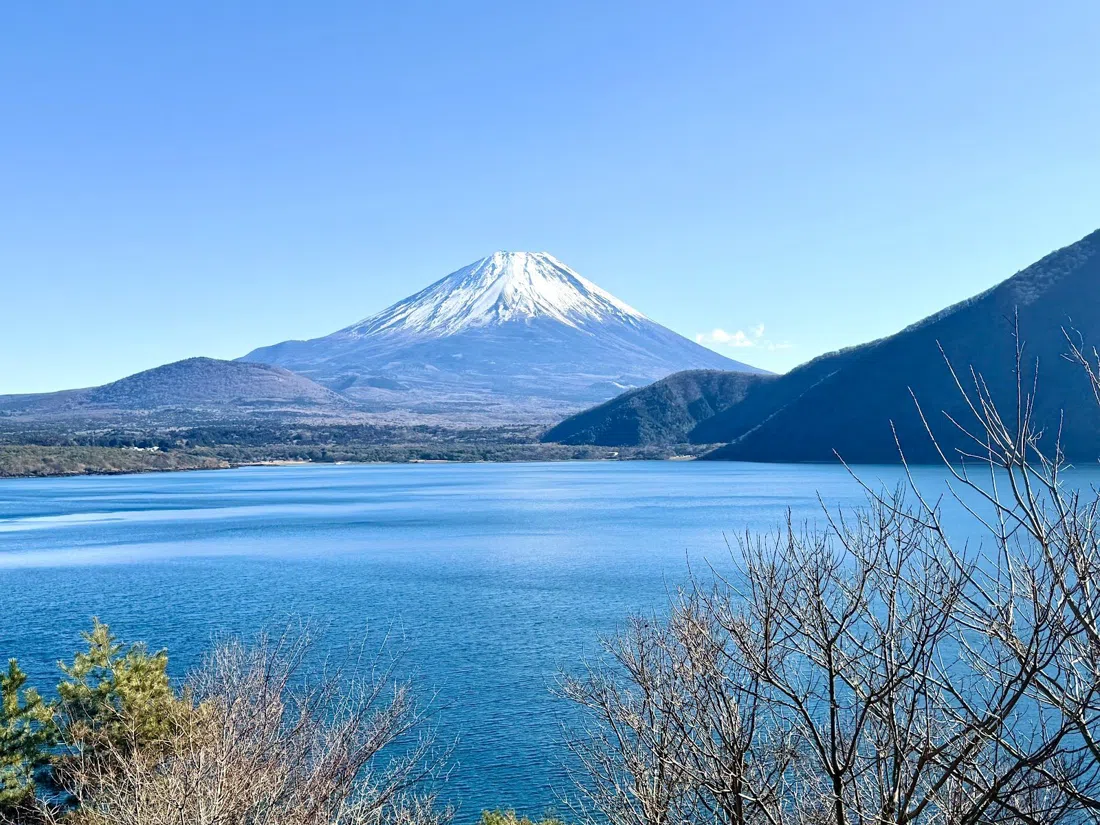
Nakanokura Pass Observation Deck, Lake Motosu (Lake Motosu, western end) is the view printed on the banknote, based on Koyo Okada's photograph Lake Side in Spring. It is free, and it is a 20 to 30 minute uphill walk from the Koan campsite car park with no facilities and limited parking at the trailhead. Public transport barely reaches it, so most people take a taxi from the Motosuko bus stop. On a still morning the reflection is worth the climb. It is not a group stop and no honest coach day includes it.
Honcho Street, Fujiyoshida (Fujiyoshida town centre) is the street-and-mountain shot, and it now needs care. The city restricted tour-bus and vehicle entry to the neighbourhood from 1 April 2026 and put guards on it, so arrive on foot or not at all. Fujiyoshida also cancelled its 2026 cherry blossom festival after residents complained about crowds. The nearby convenience-store viewpoint in Kawaguchiko lost its tall black screen in 2024 and has a low barrier instead, which keeps people out of the road without hiding the mountain. Take the photo, keep off the carriageway, and move on.
The stops built for buses
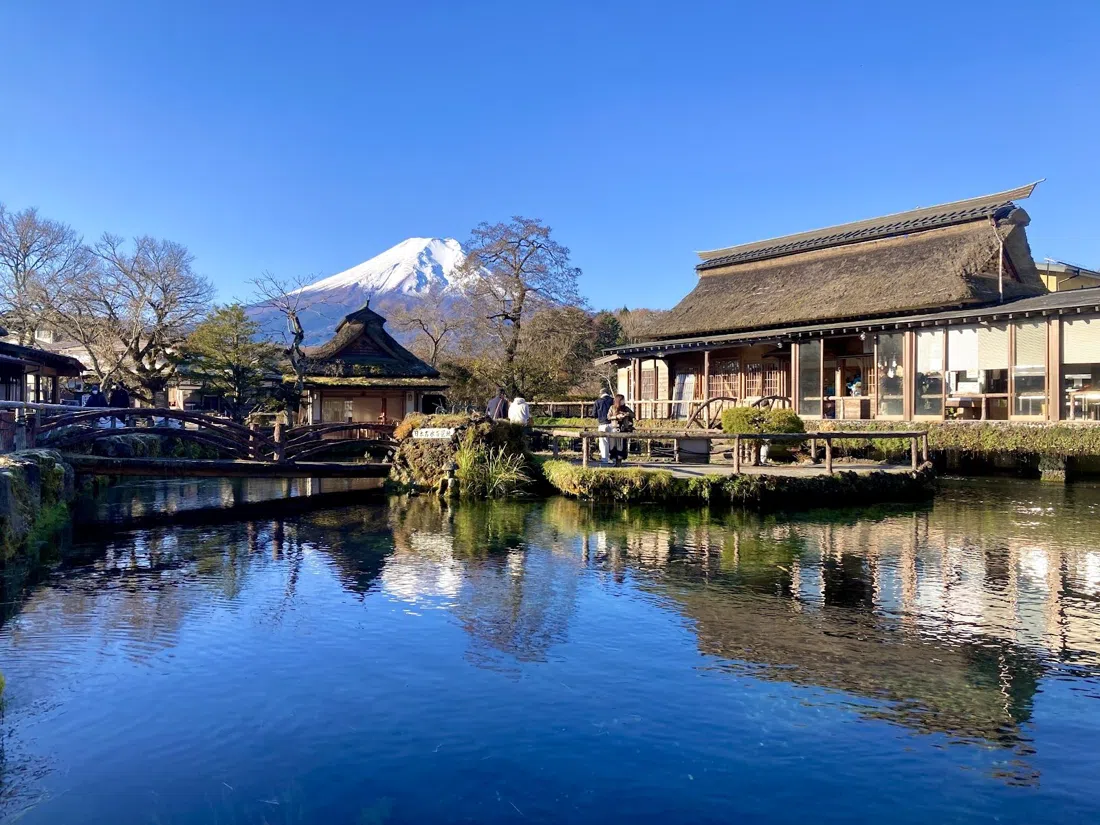
Oshino Hakkai (Oshino village, between Lake Kawaguchi and Lake Yamanaka) is the classic comfort stop: eight spring-fed ponds of meltwater, a heritage village around them, free and open 24 hours. The only ticketed part is the Hannoki Bayashi open-air museum by Sokonashi-ike, ¥300 for adults, roughly 09:00 to 17:00. It is a designated Natural Monument and it disappears under tour groups between about 11:00 and 15:00. Arrive 07:00 to 09:00 or after 15:00 and it is a different, quieter place. Off-season, some food stalls close early.
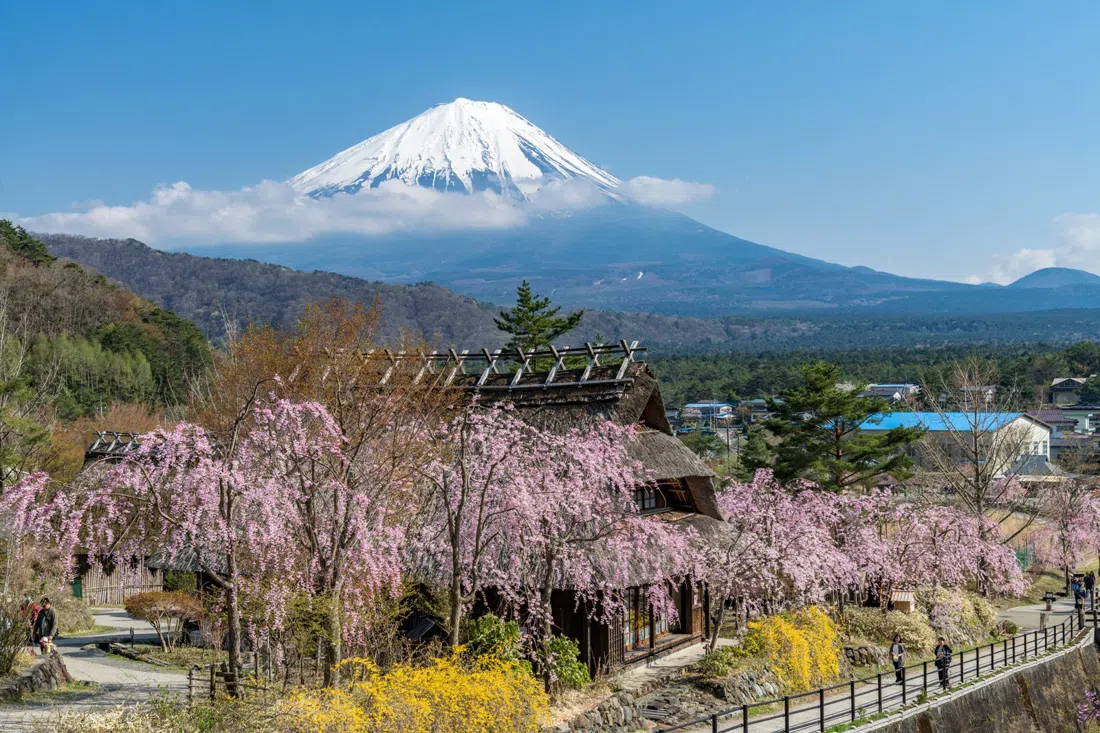
Saiko Iyashi-no-Sato Nenba (Lake Sai west shore) is a reconstructed thatched village on the site of one destroyed by a landslide in 1966, which is why the atmosphere lands. Entry is ¥500, there is ample bus parking, no advance booking is needed and the craft workshops can take a whole party. Open 09:00 to 17:00 March to November, 09:30 to 16:30 December to February. It sits far enough west that most half-day tours never reach it. Whether a day trip includes it tells you if it covers the lakes or circles one of them.
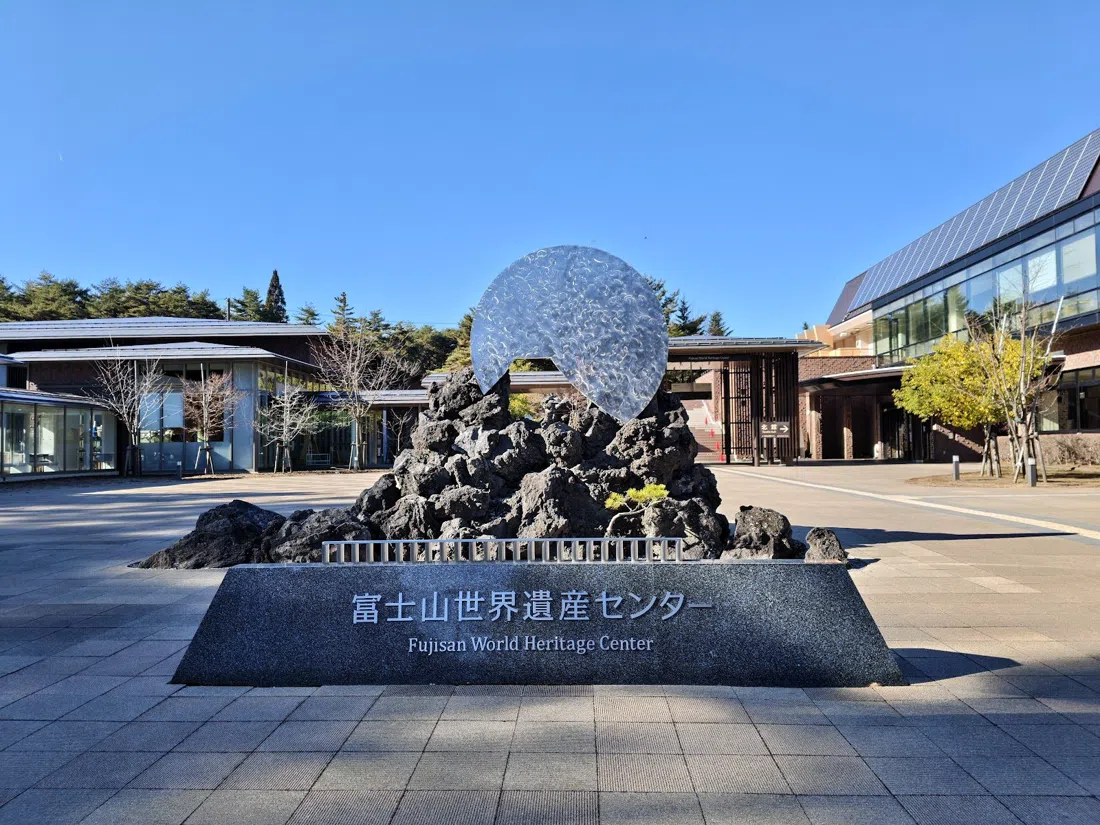
Fujisan World Heritage Center (North Hall) (Funatsu, on Route 139) is free, open every day of the year, and has a dedicated booking channel for travel agents and school groups. It is the only place in the area that explains why Fuji is listed as a cultural World Heritage site rather than a natural one, which reframes everything you see afterwards. Hours are 09:00 to 17:00, longer in July and August at 08:30 to 18:00, shorter from December to February at 09:00 to 16:30, last entry thirty minutes before close. Best free stop in the region.
Narusawa Ice Cave & Fugaku Wind Cave (Narusawa, in the Aokigahara forest) are two lava tubes a 20-minute walk apart, covered by a combined ticket. Each is ¥350 adult and ¥200 child, dropping to ¥250 and ¥100 for groups of 15 or more, open roughly 09:00 to 17:00. They are short, six to fifteen minutes underground at the ice cave and about fifteen at the wind cave, and the year-round cold is the point. The ice cave involves real stooping and is a poor fit for anyone with knee, back or claustrophobia problems; the wind cave is the easier of the two if you only do one.
Kawaguchiko Music Forest Museum (Lake Kawaguchi north shore) has its own parking and runs live automaton performances to a timetable through the day, which suits a fixed group slot. Entry is ¥1,800 on weekdays and ¥2,100 at weekends and on holidays, 10:00 to 17:30 with last entry at 17:00. Antique self-playing orchestras and music boxes are played rather than displayed behind glass. It closes on many Tuesdays, Wednesdays and Thursdays in winter, so check before you build a day around it.
Halfway up the mountain
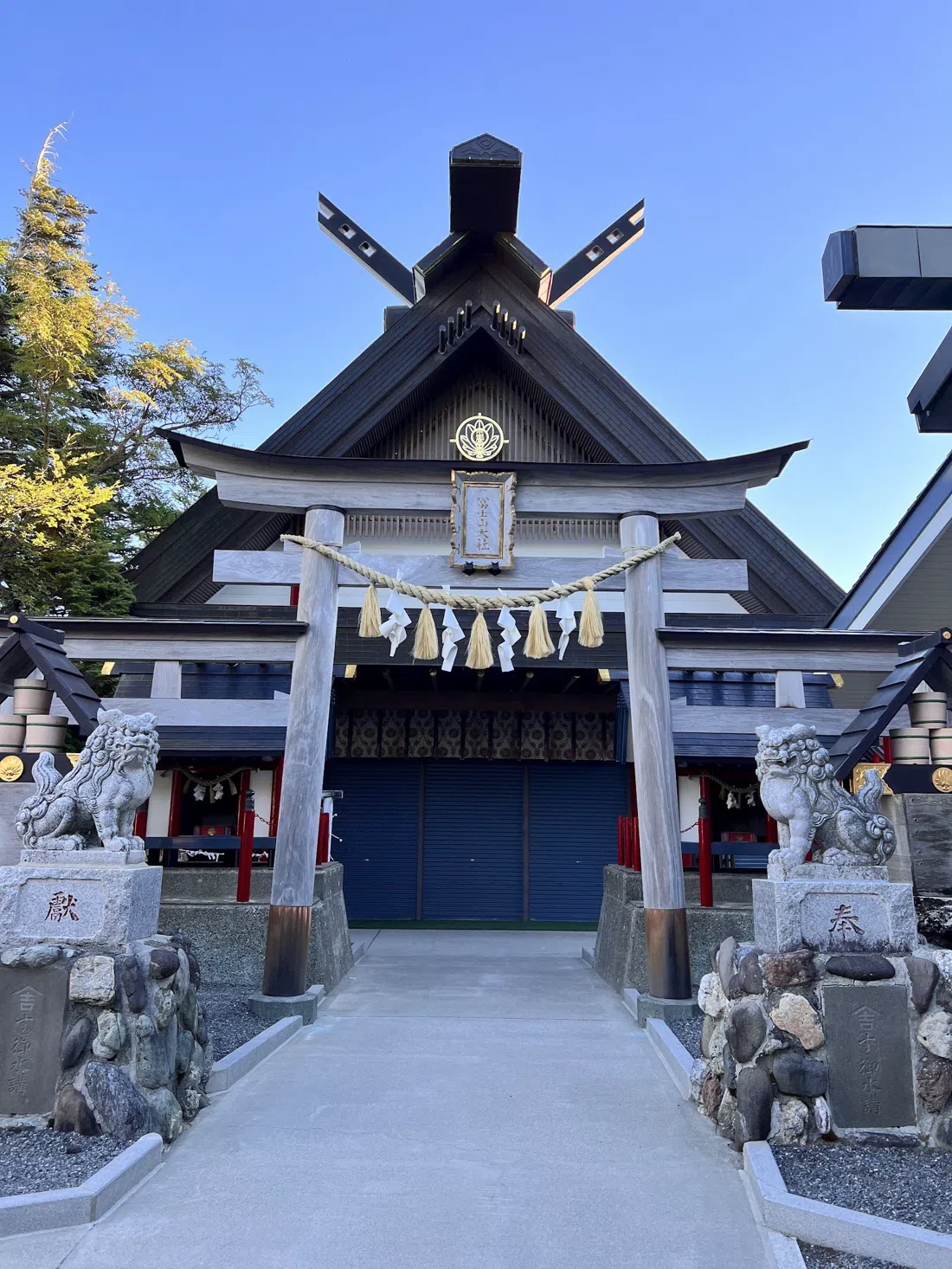
Fuji Subaru Line 5th Station (mid-mountain, 2,300 m) is the standard high point of a Fuji coach day: a huge bus apron, no ticket, and the tree line below you. The bus from Kawaguchiko takes about 50 minutes and costs roughly ¥2,000 one way; by car the toll road is ¥2,800. The ¥4,000 Yoshida Trail gate fee applies only if you walk on past the station towards the summit. Private cars were barred from the road between 3 July and 10 September 2026 with shuttles running instead, and the road can close outright for winter snow. That closure is the usual reason a tour substitutes another stop, so ask what the alternative is before you book a winter date.
Lunch, coffee and the lake itself
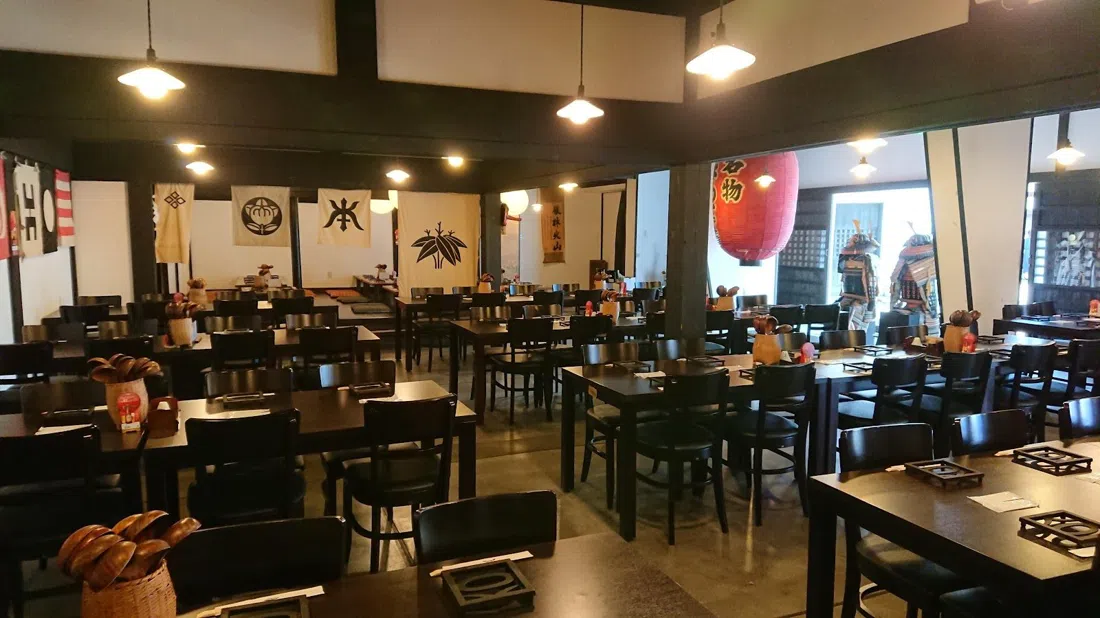
Hoto Fudo Kawaguchiko Kita-honten (Kawaguchiko north) serves hoto (flat noodles and pumpkin in miso broth) in a big communal room designed for turnover, so a coach party is fed fast. A pot runs around ¥1,320. The building, by Takeshi Hosaka, has had international architecture coverage, which makes this the rare tour lunch stop worth arriving at on purpose. If you cannot get out to the main branch, the one by Kawaguchiko Station opens 11:00 to 19:00.
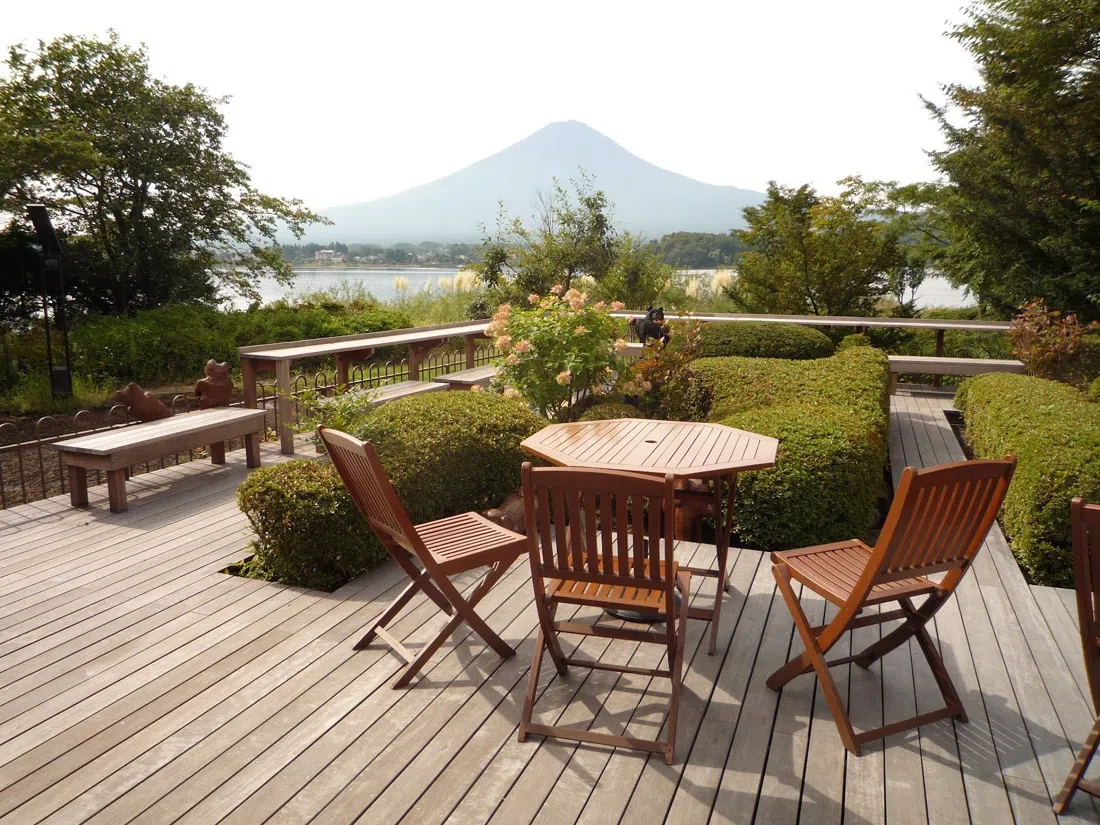
Lake Bake (north shore, five minutes' walk from Oishi Park) is the best coffee-and-view stop on that side of the lake, at ¥500 to ¥1,500 for coffee and a pastry. It is tiny: fine for a handful of people, hopeless for a coachload, and you will wait for a terrace table. It closes Wednesdays and Thursdays and only runs 10:00 to 17:00, which catches people out.
Lake Kawaguchi Sightseeing Boats (Fujigoko Kisen — Appare & Ensoleillé) leave from Funatsuhama pier, ten minutes' walk from Kawaguchiko Station, so they slot into a gap in a tour day. Tickets are ¥1,000 adult and ¥500 child, ¥900 and ¥450 for groups of 15 or more, pre-schoolers free. The Ensoleillé run doubles as transport to Oishi Park in about fifteen minutes. Note the scheduled closing days on certain Tuesdays in June and December 2026.

The rain plan
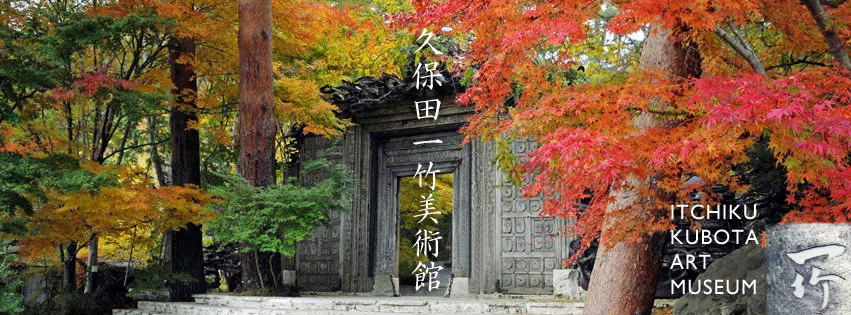
If the mountain is in cloud all day, the honest answer is that the viewpoints are worthless and you should spend the time indoors. Kubota Itchiku Art Museum (Lake Kawaguchi north shore) is the cure: about ¥1,500, open 10:00 to 17:00 April to November and 10:00 to 16:30 December to March, with irregular closed days. The Autumn at Oirase hanging runs to mid-December 2026. Independent visitors need no reservation, but bus parties must reserve in advance. Same-day coach bookings are refused outright, so a driver cannot improvise this stop when the weather turns. If you are on a tour in doubtful weather, ask before departure whether the museum is already booked.
Booking ahead against turning up
Almost nothing here needs a ticket bought in advance. The pagoda, the ponds, the park, the World Heritage Center and the 5th Station are free and unticketed; the ropeway, the caves, the boats and the craft village sell at the door and take groups without notice. The single exception is the art museum, which refuses same-day coach bookings.
So what you are buying with a seat on an organised day is the route, not access. Guided full-day options run seven days a week, and there are 6,263 traveller reviews across the bookable trips from this area, so this is well-trodden ground rather than a gamble. Prices cover a wide span: a private full-day car with a licensed guide starts from 512 USD per person, while a shared coach seat is a fraction of that. Work out first whether you need the western lakes. If you only want the north shore of Lake Kawaguchi, the station, the retro line buses and a day pass will do it for far less.
Best time to go
Time of day matters more than season. Fuji is most often visible in the first two hours after sunrise; by ten the haze usually wins, and there is a second, less reliable window in the last hour of light. That is the argument for a private start over a coach start, because most organised days do not reach the first viewpoint before 09:30.
By season: November to February gives the clearest air and the most snow on the cone, along with shortened winter hours almost everywhere and the risk of the Subaru Line closing. April brings blossom against snow and the heaviest crowds at the pagoda. July and August give you the longest opening hours and the worst visibility, since the mountain hides for days at a time in summer haze, plus the private-vehicle restriction on the mountain road, which in 2026 ran 3 July to 10 September. October and early November are the balance point: clear mornings, autumn colour, everything still open.
By day of week: weekends are worse everywhere and materially worse at the small sites. The photo queue at the torii gate and the terrace at the bakery are both weekday propositions.
Is it worth it
Yes, with one condition: go on a day the forecast gives you a clear morning, and treat the rest as a bonus. A bus day suits first-time visitors, anyone without a car, and families who want the caves, the village and the ropeway without three timetable changes. It suits photographers less well, because the coach reaches the good angles at the wrong hour, and the two best compositions in the region, the torii gate and the Motosu pass, are on foot or not at all.
If you are a couple with a camera, take the early train, stay a night on the lake and do the viewpoints at first light on your own legs. If you are a group of six or more with limited time, the coach is the right answer and the group discounts at the ropeway, the caves and the boats are real money.
Practical notes
Getting there. Highway coach from the Shinjuku bus terminal to Kawaguchiko Station takes about two hours in clear traffic and is the simplest option; the Fujikyuko railway is slower with a change. Book the return leg before you set out, because the last afternoon departures fill.
Getting around. The colour-coded sightseeing lines out of Kawaguchiko Station cover the north shore, Lake Sai and the western lakes; a multi-day pass pays for itself by the third ride. Taxis exist but are thin on the ground west of Lake Sai.
Cash. Carry ¥10,000 to ¥15,000 in notes and coins per person for a full day. The photo fee at the torii gate, the museum at the ponds, the caves and the parking meters are all small-cash transactions, and card acceptance thins out away from Kawaguchiko Station.
Budget. A self-guided day using door prices (ropeway return ¥1,000, boat ¥1,000, caves ¥350 each, craft village ¥500, hoto lunch ¥1,320) lands around ¥6,000 to ¥7,000 plus transport, with the park, the pagoda, the ponds and the World Heritage Center free.
Timing. Allow 20 minutes at the pagoda deck, 45 at the ropeway including the queue, an hour at the ponds if you go early, an hour at the craft village, 90 minutes at the art museum. Anything that claims to do eight stops in a day is not stopping for long.
Staying over. One night on the lake turns a rushed coach day into two clear mornings, and it is the only way to be standing on the pagoda deck at sunrise. Compare rates through Tokyo hotel search before committing to a same-day return.