The Tokyo issue
Tokyo's Akihabara, from radio parts to arcade floors
A street-by-street walk through Akihabara in 2026, with the hours, prices, closures and booking rules that decide the order you do it in.
By Lukas BrandtTokyo on foot, timed to the temple gates
Akihabara Radio Center has traded electronic parts under the elevated rail girders since 1949, when it opened as a post-war radio-parts black market. Six minutes uphill, the black lacquered halls of Yushima Seido sit in near silence. Both are free to walk into.
Electronics at the Electric Town exit
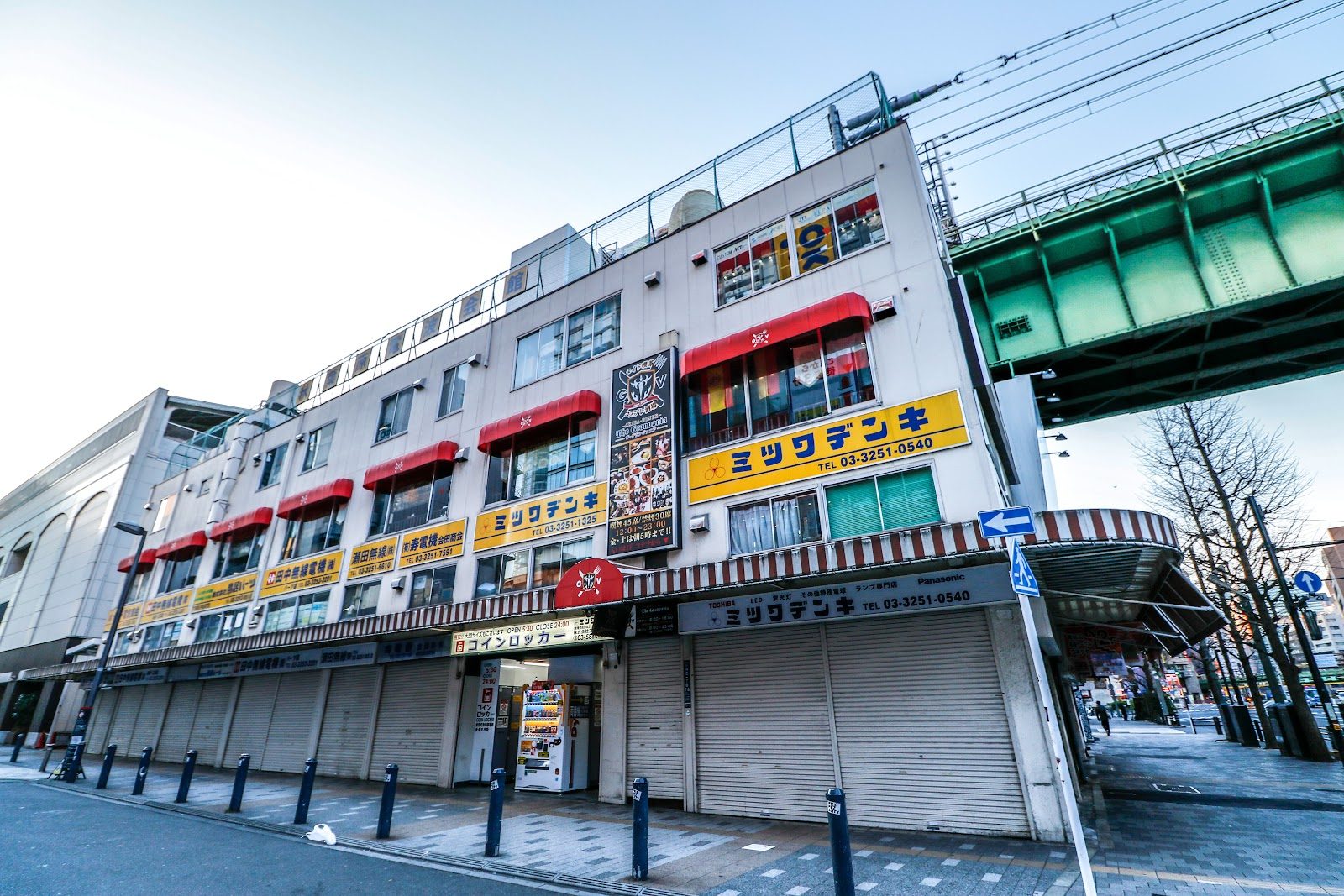
Radio Center is where Electric Town began, and it still works as a market. Around 60 one-metre stalls fill a dim two-storey warren under the girders, lit by bare fluorescent strips, trains rumbling overhead. Walls of labelled drawers hold resistors, switches, connectors and vacuum tubes. Trading runs 10:00 to 19:00, and each stall sets its own hours. The aisles are shoulder-width.
Akihabara Radio Kaikan is a ten-storey glass tower hard against the station's Electric Town exit, with the densest hobby retail in Tokyo. Cabinets of resin figures, doll heads and sealed trading cards are lit on each floor and visible from the street below. More than 40 shops trade inside, among them AmiAmi, Kaiyodo Hobby Lobby and Volks Doll Point. K-Books and Card Labo are here as well, and a Ginza Lion beer hall occupies the basement. It opens daily 10:00 to 20:00, and the lifts and wide floors take a crowd.
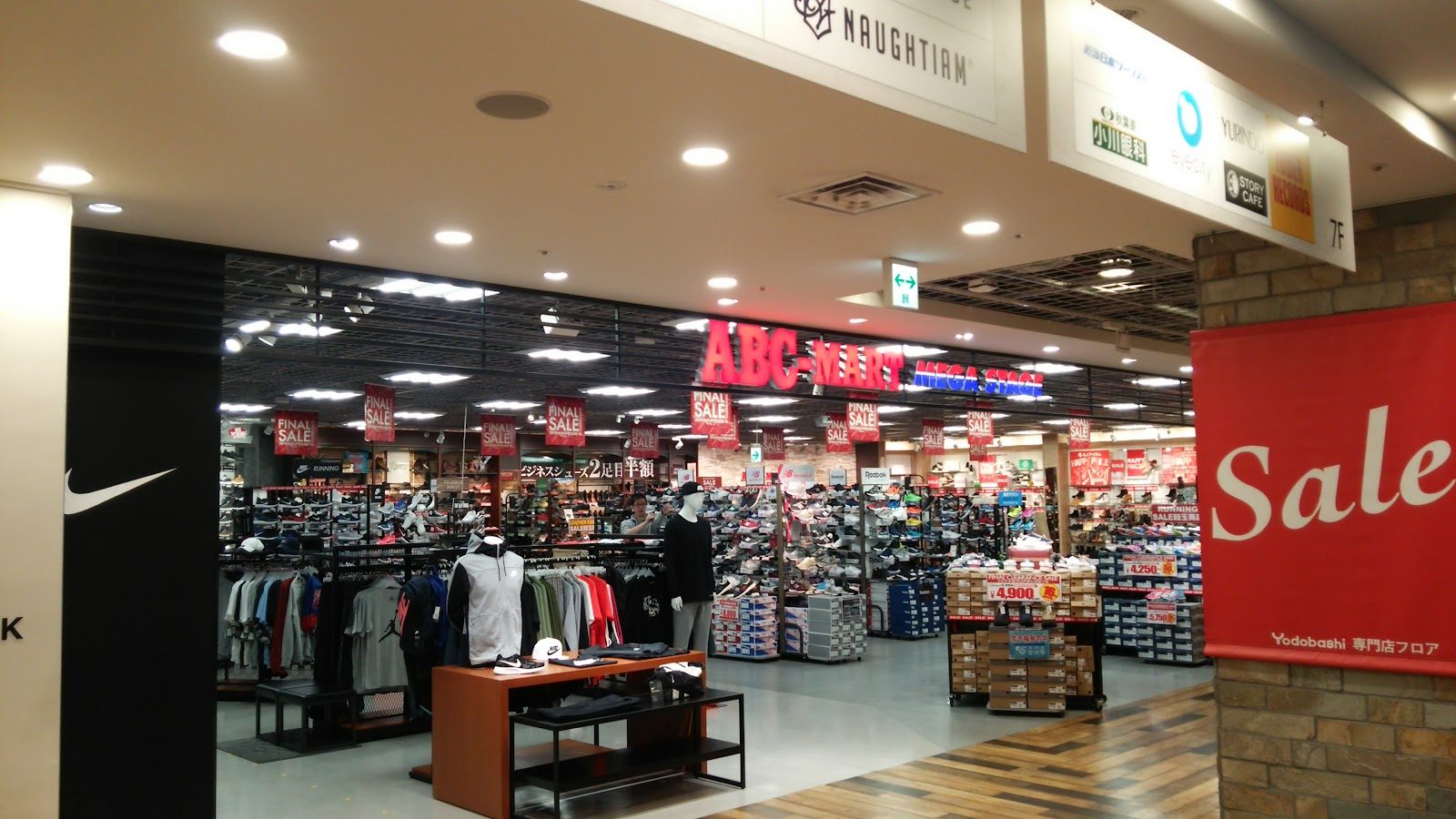
Yodobashi Camera Multimedia Akiba is the nine-floor glass box on the station's east side, and it replaced Akihabara's small electronics shops. Escalators climb through floor after floor of lit camera and appliance walls, with a full upper level of restaurants and a batting cage area at roof level. It is still the one stop for cameras, hobby kit and tax-free shopping, and the multilingual and tax-free counters are built for coach parties. Prices run ¥ to ¥¥¥¥. Japan's tax-free rules changed in November 2026, so check the refund process at the counter. It opens daily 09:30 to 22:00 with no closing days.
Plan your Tokyo trip
Live prices from our booking partners.
Free cancellation on many rooms. We may earn a commission when you book.
Secondhand floors and arcade cabinets
Mandarake Complex is the largest secondhand otaku store in Akihabara, eight floors in a narrow tower under black-and-yellow signage. Vintage toys and cels fill the lower floors, where glass cases hold 1970s tin robots and animation cels and serious collectors dig. Above that come wall-to-wall secondhand manga spines, then doujinshi, then rows of ball-jointed dolls under spotlights. The lift is tiny and the floors are tight. It opens 365 days a year, 12:00 to 20:00, and prices run ¥ to ¥¥¥. A sister Complex 2 nearby carries cards and discs.
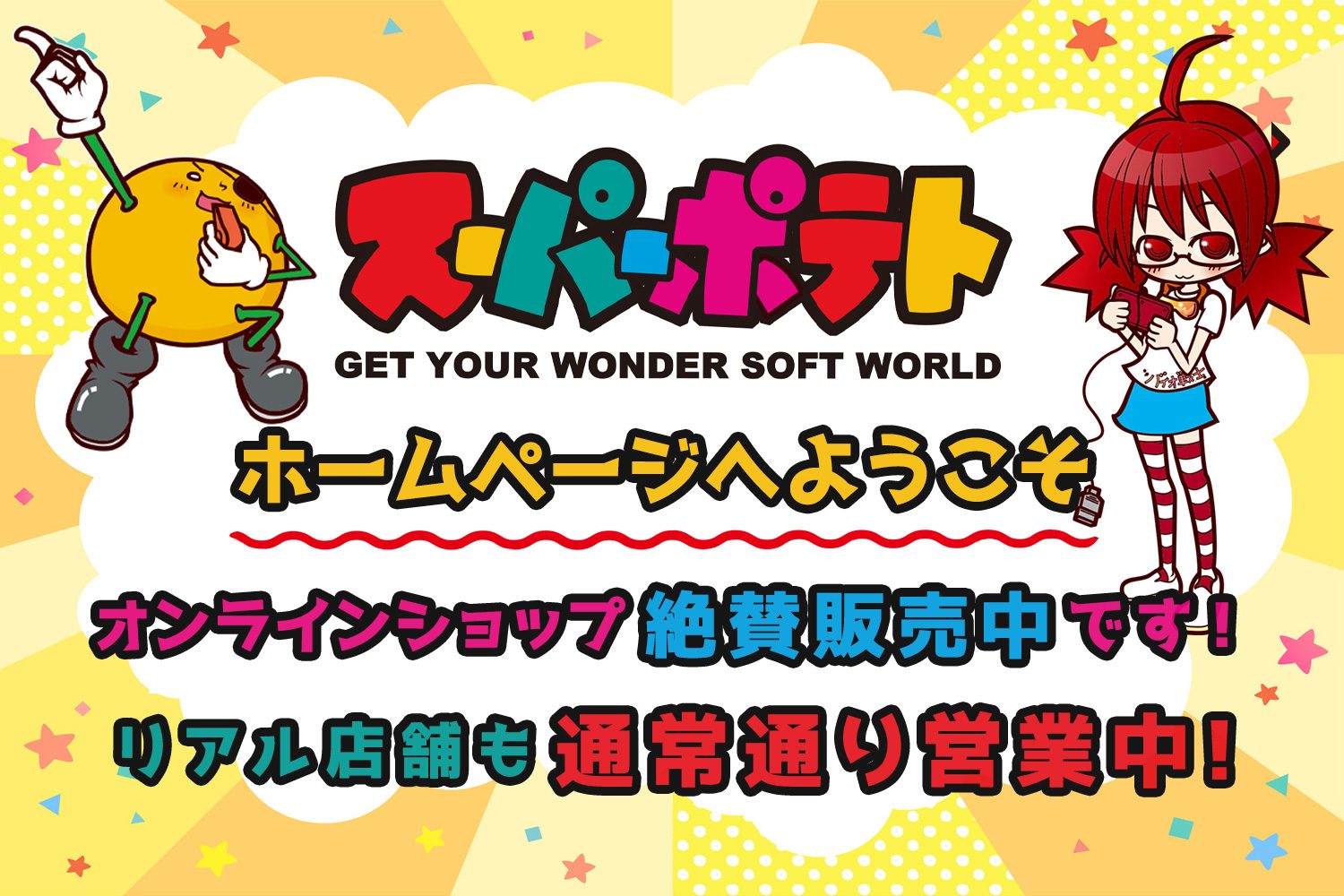
Super Potato Akihabara is Japan's most famous retro game store, three cramped upper floors reached by a back-alley stairwell plastered in Famicom cartridge labels. Shelves hold loose cartridges and boxed consoles, and prices on grail titles have climbed hard. The fifth floor is a Showa penny-sweet shop with glass-bottled drinks and a handful of lit arcade cabinets at ¥100 a play. Buy the hardware downstairs, then go up and play it. Hours are 11:00 to 20:00 on weekdays and from 10:00 at weekends, and the aisles are narrow enough to jam.
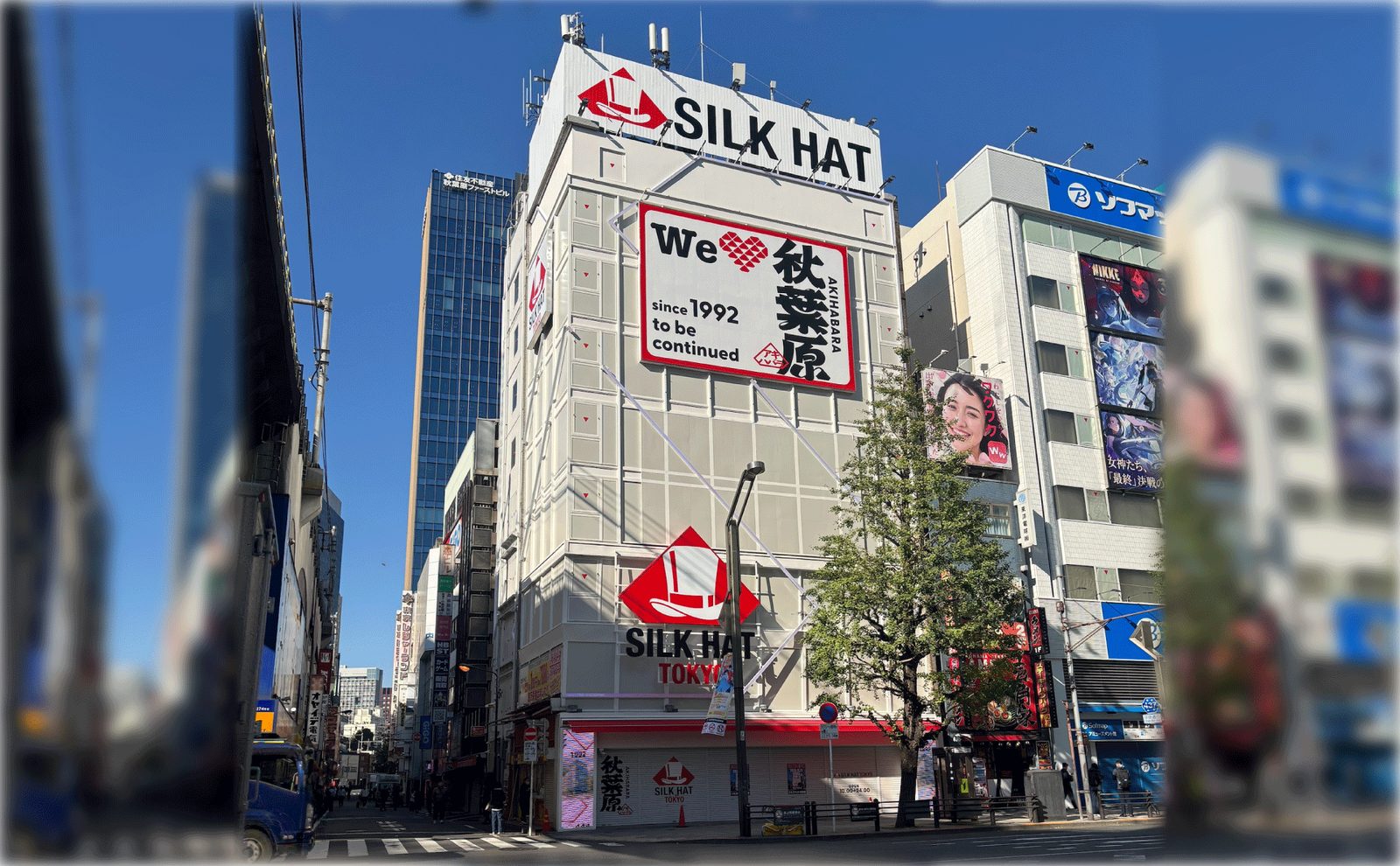
Silk Hat Akihabara is the bright-red nine-storey block beside the station's Electric Town exit. Floors one to four glow with ranks of UFO-catcher crane cabinets, and the basement packs in 58 Gundam EXVS2 cabinets under blue cabinet light. Plays cost ¥100 to ¥200, and the doors are open 10:00 to 24:00 with no walk-in restrictions. The building ran as Club SEGA and then as GiGO Building 1 across 32 years, closed in August 2025 and reopened under Silk Hat in November 2025, so older guides and some street signage still say GiGO.
Booking the maid café
maidreamin Akihabara Head Store opened in 2008 as the chain's first branch, the one that made maid cafés legible to foreign visitors. The sixth-floor room is pastel pink and white with heart motifs, fairy lights and a tiny stage, and maids in frilled aprons draw cat faces in ketchup on omurice under coloured spotlights. Menus are in English, reservations run from one person to 20, and group photo options are sold at the table. Photography is limited to those paid options, and a table charge comes on top of the food. The room seats 42 and stays open to 23:00. Book ahead for a big party rather than following a street tout.

Eating on Chuo-dori and the Sotokanda backstreets
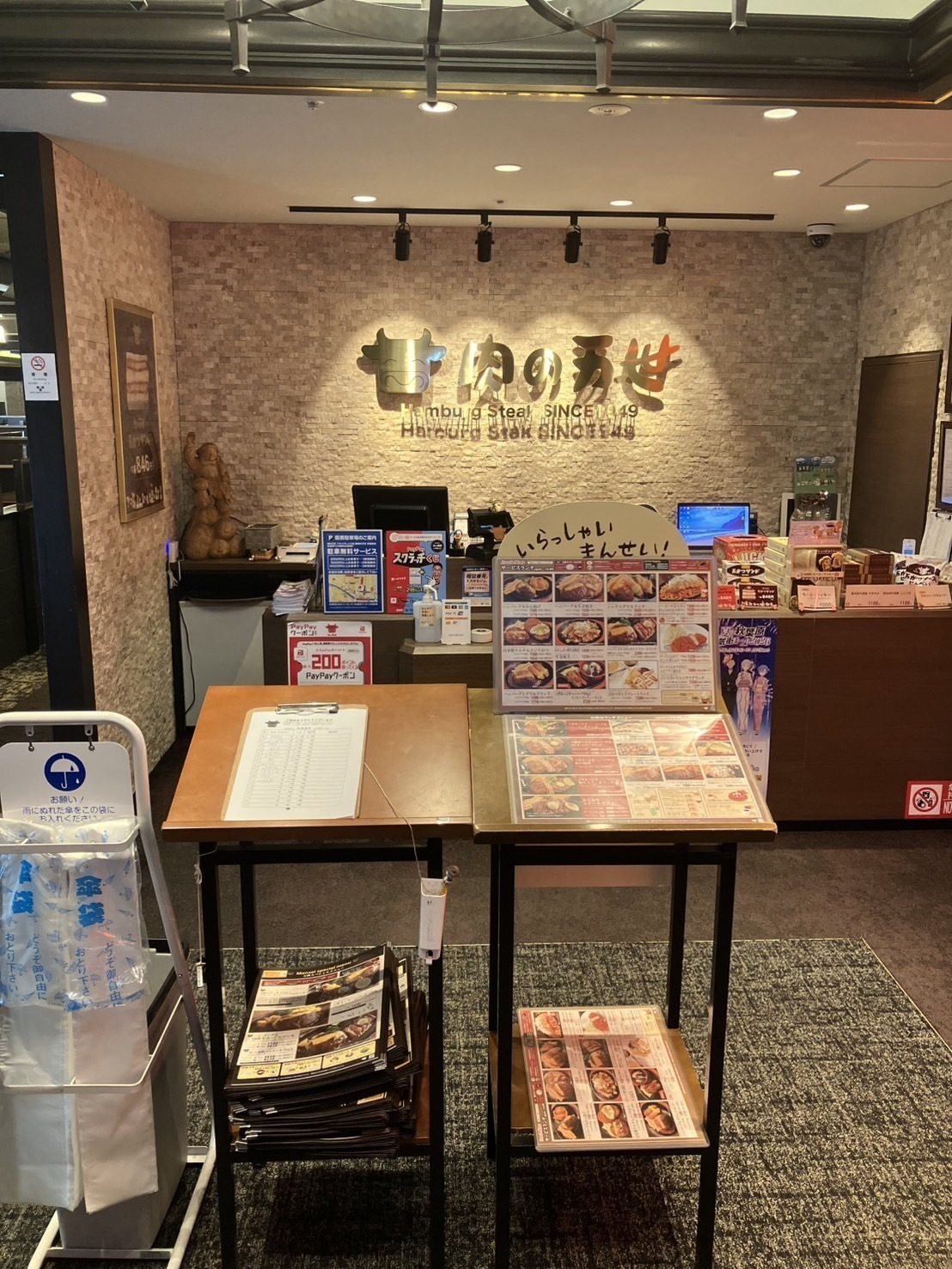
Niku no Mansei Akiba Place (Chuo-dori) serves steak and katsu from a third-floor dining room with wide windows over the neon street. Hamburg steak arrives on cast-iron plates, and the house pork katsu sandwich comes stacked on white bread. The address matters: the ten-floor Meat Building at Manseibashi closed in March 2024 and was demolished, and the brand continues at this branch, five minutes from the station. Table service runs 11:00 to 21:30 at last order, year-round.
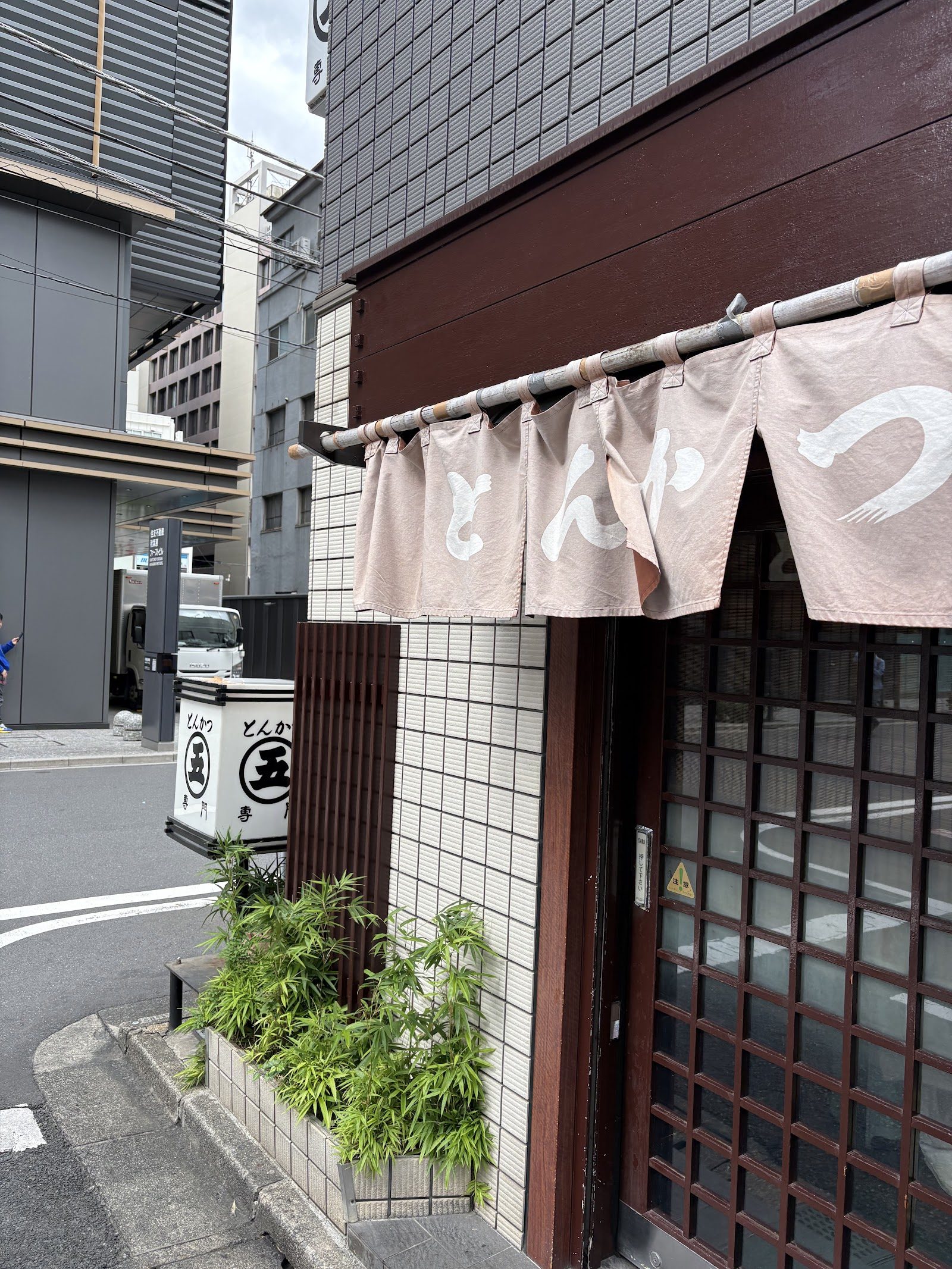
Tonkatsu Marugo (Sotokanda) is the best meal within walking distance of the arcades, a tiny old wooden shopfront with a queue down the pavement. The cutlet comes thick and dome-shaped, cut to show a pale pink centre, with shredded cabbage alongside. It holds a Michelin Bib Gourmand and a Tabelog 100 place for 2026. There are no reservations and it is cash only, and seating is a counter plus a few small tables, so four is the practical maximum. Arrive 30 to 45 minutes before opening or accept an hour in line. It closes Mondays and Tuesdays.
North under the Akihabara to Okachimachi viaduct
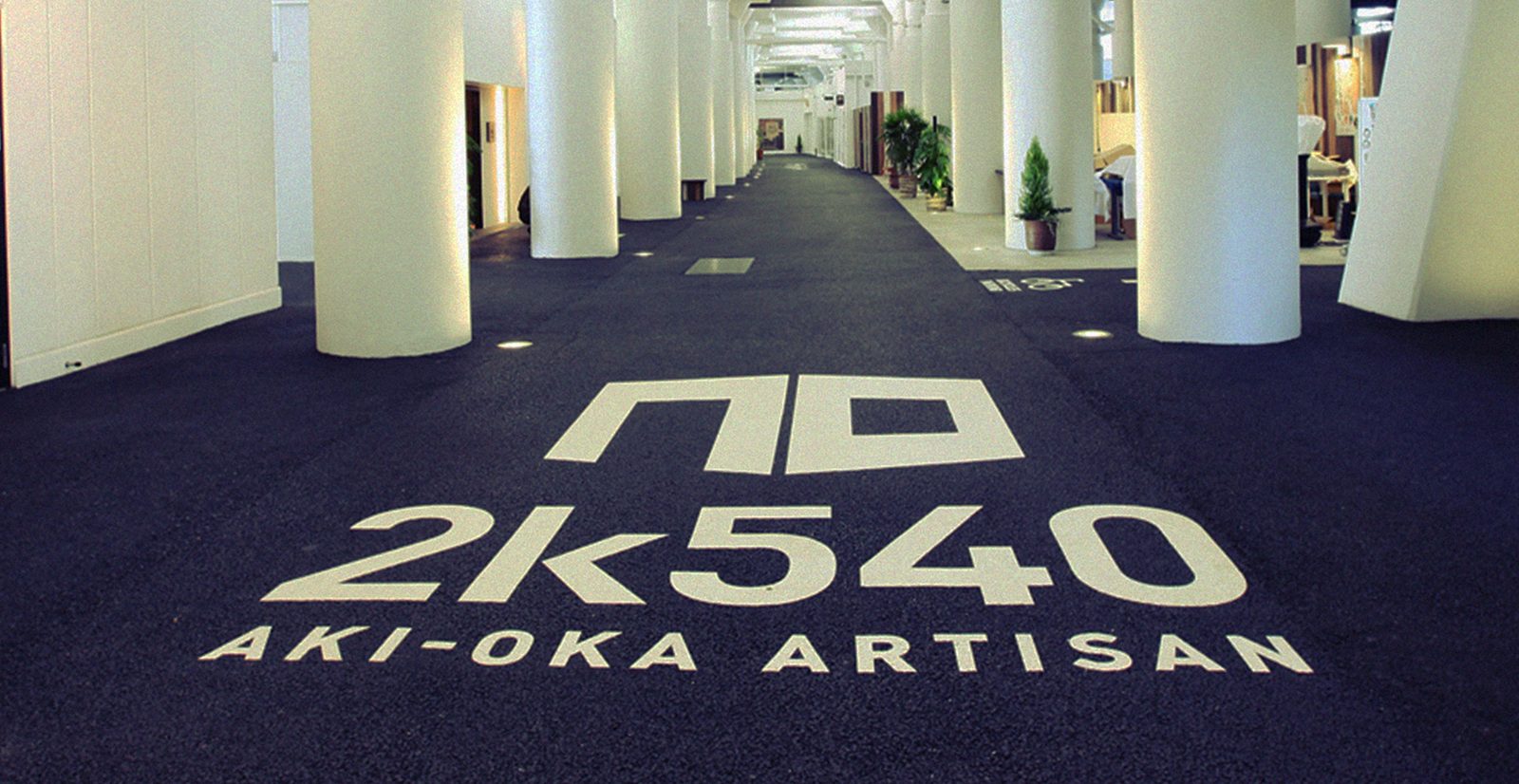
2k540 AKI-OKA ARTISAN is quiet, five minutes north of the arcades, a long white-painted corridor of fat concrete railway pillars beneath the viaduct. The bays hold 50 artisan studios and cafés, among them leather workers, potters and indigo dyers, with polished floors and daylight at both ends. It turned 15 in 2026. Opening is 11:00 to 19:00, closed Wednesdays, and wandering through costs nothing. Several studios run hands-on workshops that take bookings, so arrange one before you arrive.
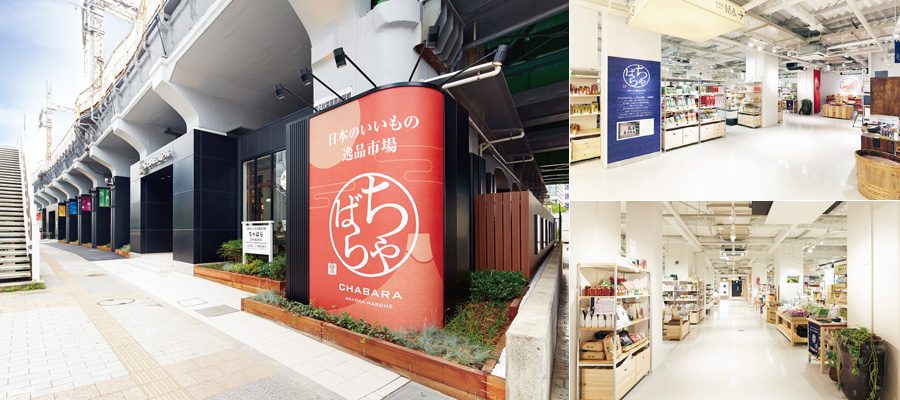
CHABARA AKI-OKA MARCHE was built on the old Kanda produce market site and is the best edible-souvenir stop in the district. The hall is a single bright space under the rail viaduct, where Nippon Hyakkaten's long low wooden shelving carries 6,000 regional Japanese products in printed paper and tin packaging. Yanaka Coffee keeps its bean hoppers along one wall. Komaki Shokudo cooks Buddhist vegetarian food here in a small room, and parties of more than four need a booking. The hall trades 11:00 to 20:00 and is free to browse.
Uphill to Kanda Myojin and Yushima Seido
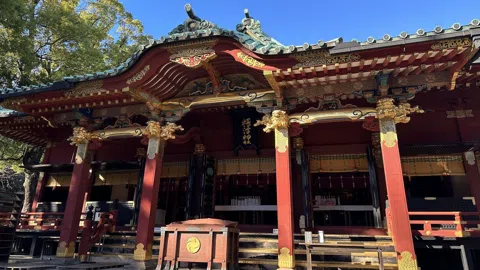
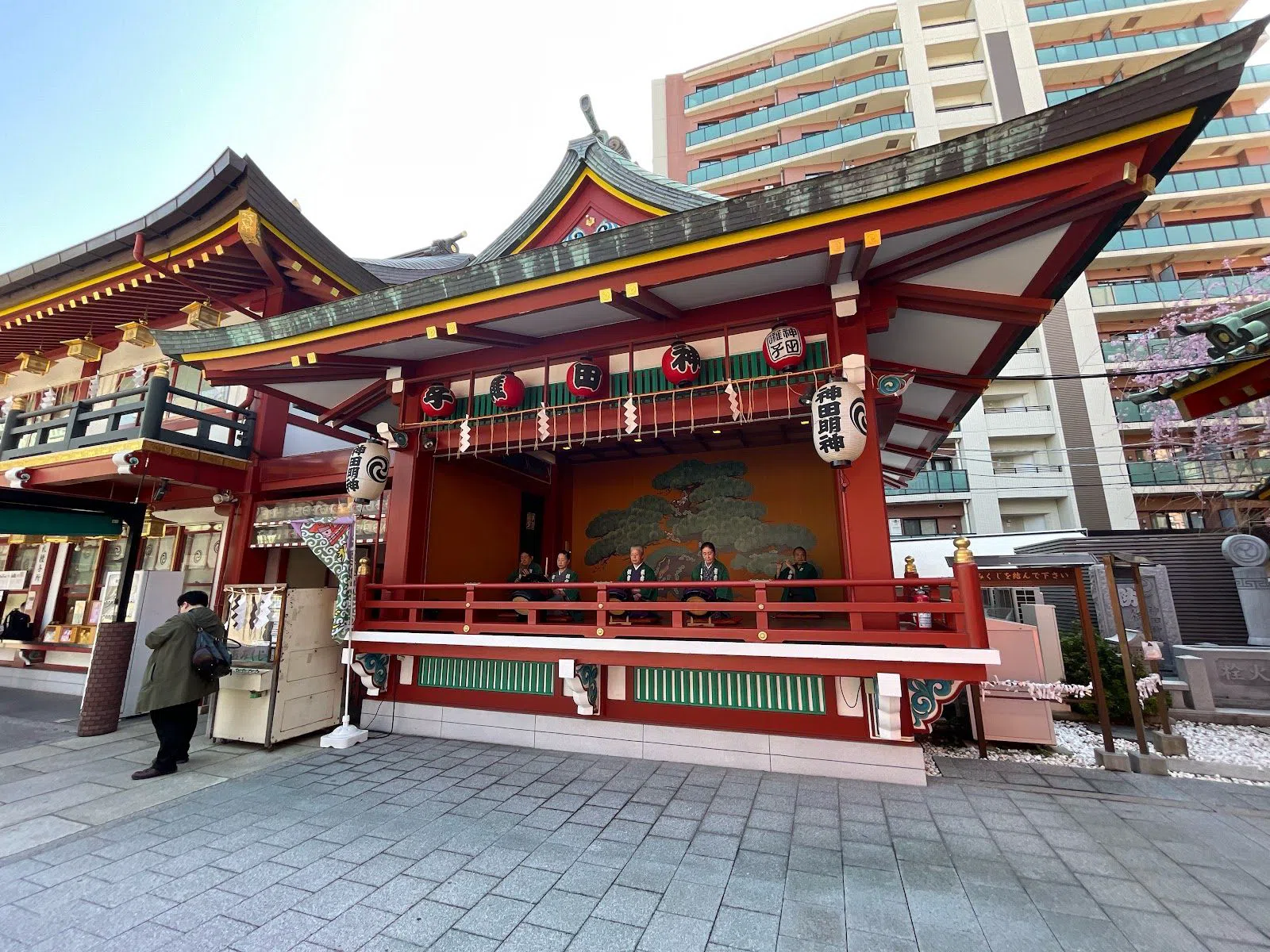
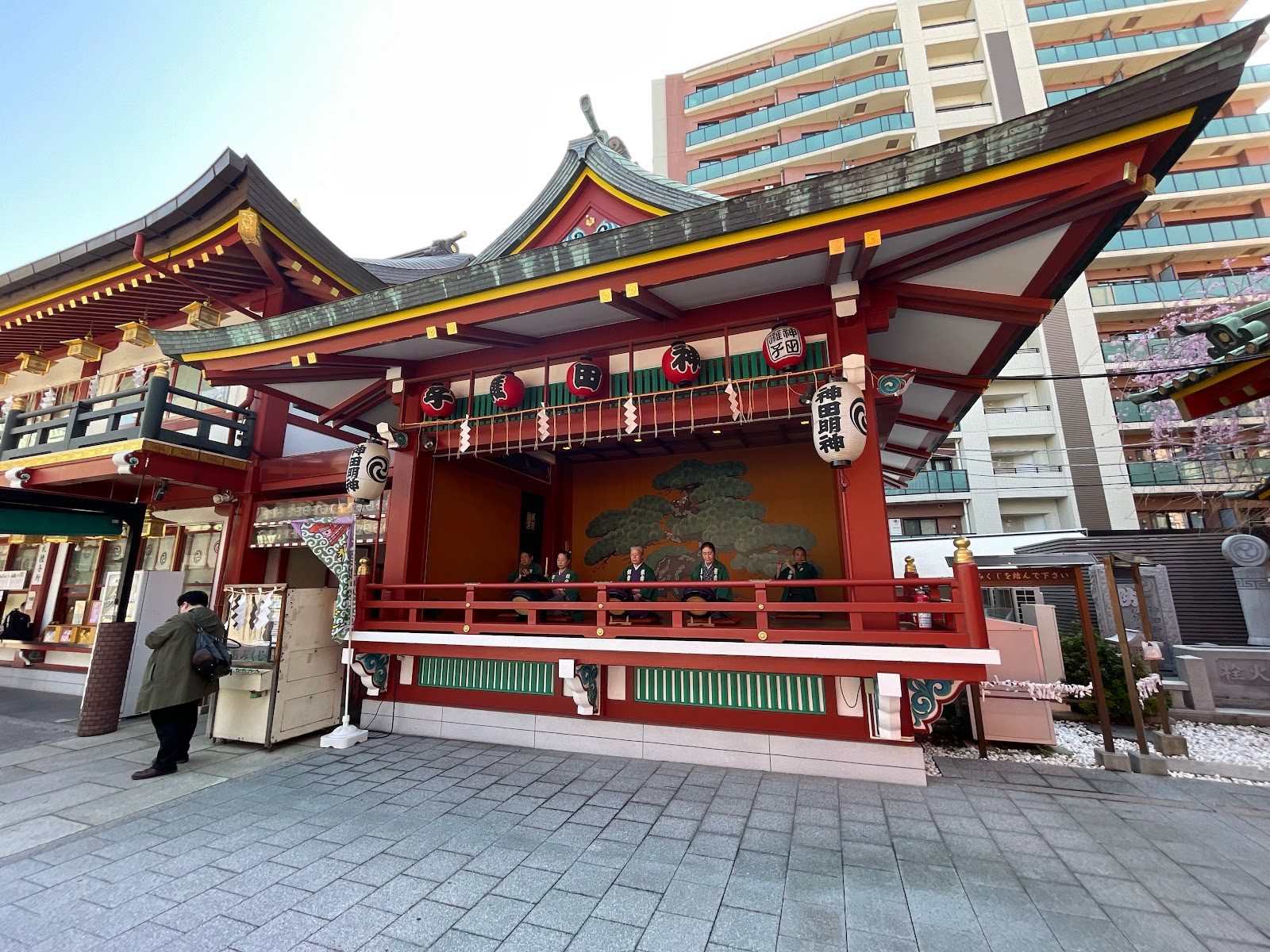
Kanda Myojin Shrine (Kanda Jinja) has been Akihabara's guardian shrine since 1616, and every local guide leads with it. The vermilion-and-gold Zuishinmon gate opens onto a green copper-roofed main hall on a raised walled terrace, with concrete office blocks standing directly behind the roofline. Racks of wooden ema plaques hang hand-painted with anime characters, and circuit-board amulets sit beside Edo-era rites. The grounds are free and open round the clock, with no door policy, and the amulet office works 09:00 to 18:00. Tour groups and school parties come through constantly. The shrine office takes bookings for paid IT and business blessings.
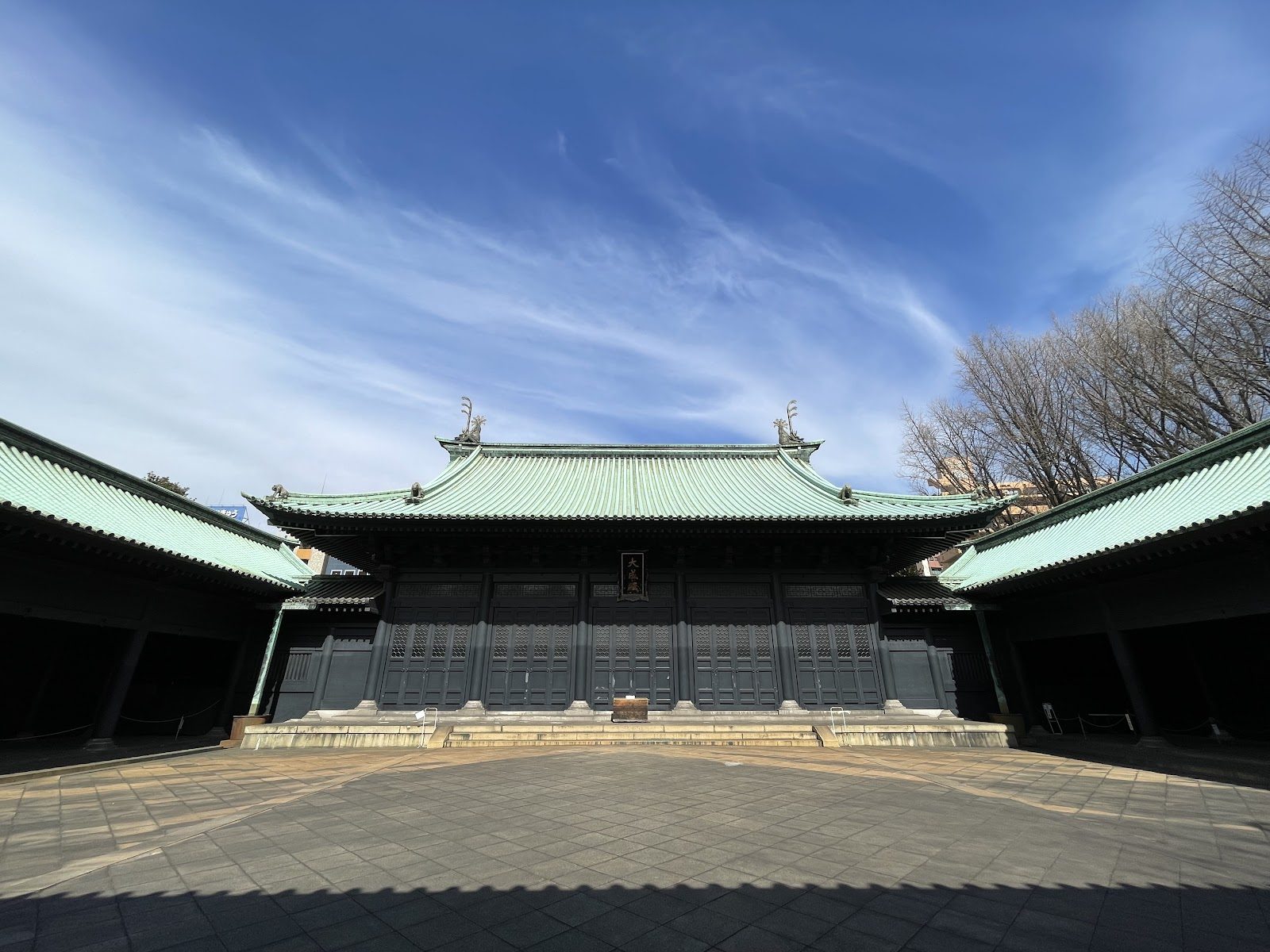
Yushima Seido was founded in 1690 as Japan's Confucian academy and is the strangest contrast in the district. Dark stone steps climb between tall trees inside a high walled compound to all-black lacquered timber halls with sweeping tiled roofs and bronze kirin finials, and almost no colour appears anywhere. The walled grounds are free, open 09:30 to 17:00 and 16:00 in winter. The Taiseiden hall interior is small, costs ¥200 and opens at weekends and on holidays. Nikolai-do, the Russian Orthodox cathedral, stands a further four minutes west.
Red-brick arches at Manseibashi
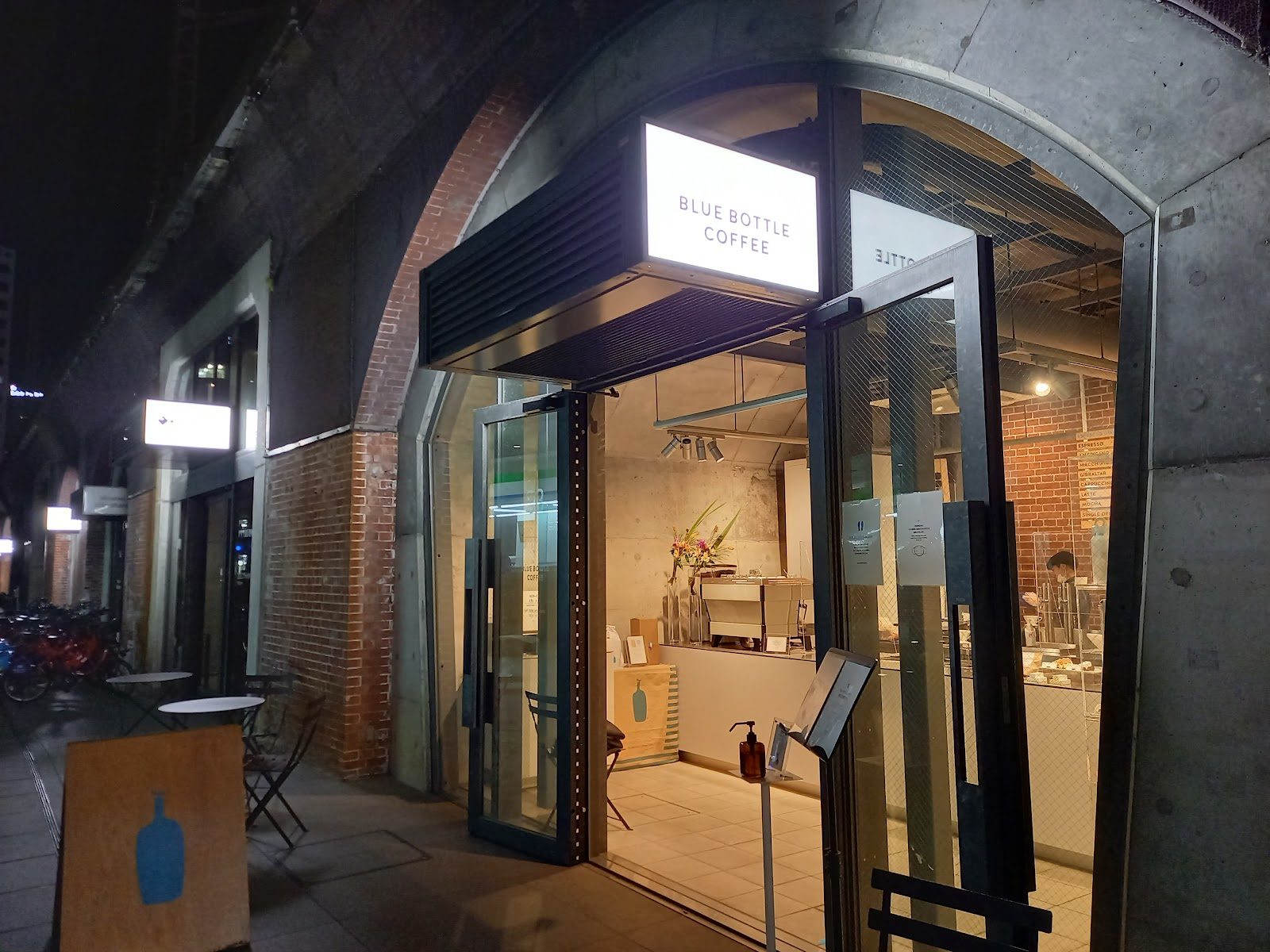
mAAch ecute Kanda Manseibashi is the best piece of architecture in the neighbourhood, built into the 1912 red-brick viaduct arches of the demolished Manseibashi Station. Nine tenants trade behind glass fronts, the original tiled staircases from 1912 and 1935 survive, and a glazed platform deck sits between the running lines where JR trains pass at eye level on either side. Entry is free, and the deck is open to 22:30 on weekdays and Saturdays, 20:30 on Sundays and holidays. The Kanda River walk starts here.
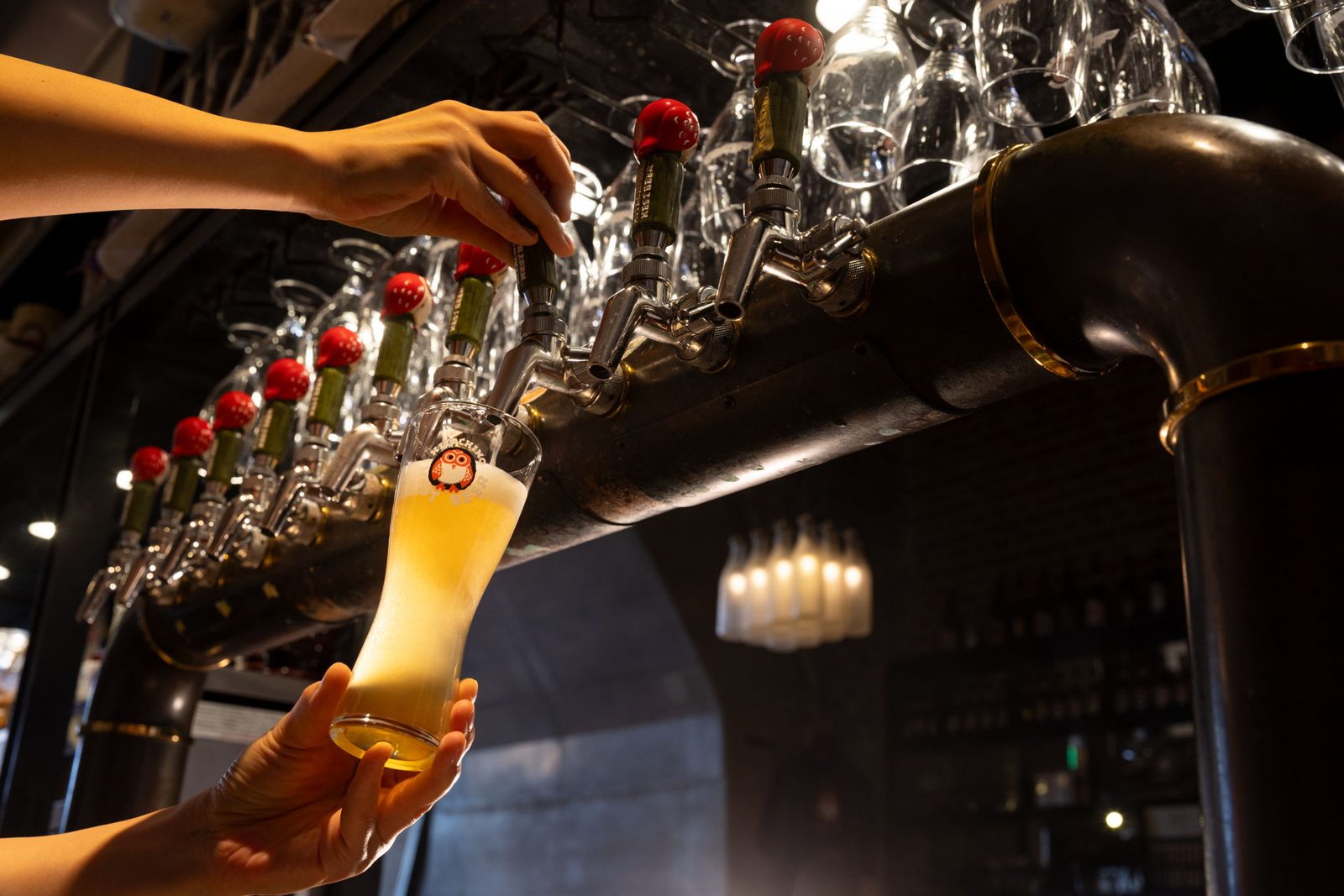
Hitachino Brewing Lab is Kiuchi Brewery's own taproom in one of the arches, the red owl logo above the door and a glass frontage onto the river walkway. The tap wall pours the Hitachino Nest beers the brewery exports to more than 40 countries, and this is the one properly good drink in Akihabara. The interior is small, with standing room and an outdoor deck. Hours are 11:00 to 22:00 Monday to Saturday, to 21:00 on Sundays and holidays. The lab also runs hands-on brewing sessions.
Sleeping inside the station
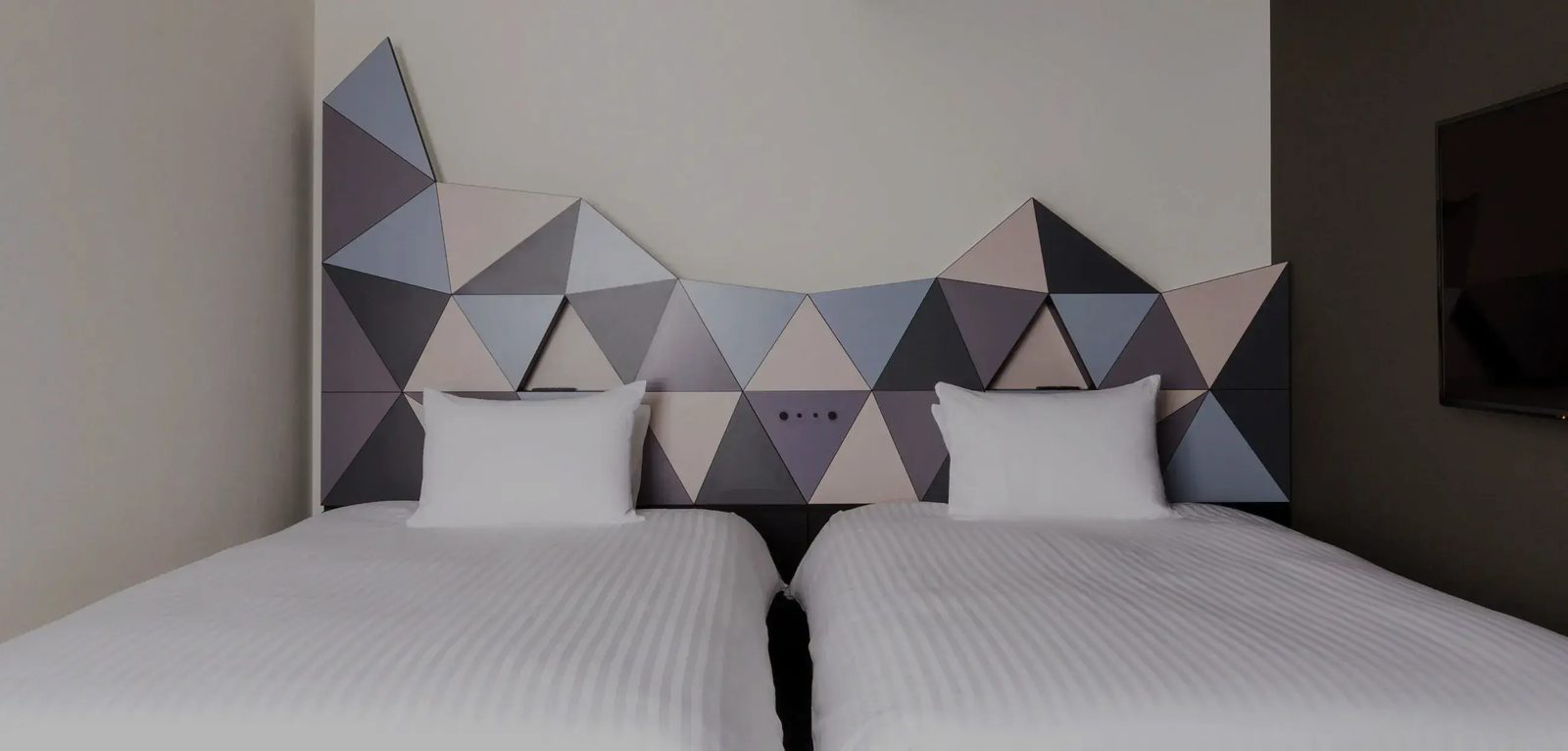
JR-East Hotel Mets Premier Akihabara is the best-placed base in the district, built into the JR Akihabara station block itself, one minute from the South Exit and on the Yamanote line. Rooms look straight down onto the elevated tracks and the lit Electric Town signage, and they stay quiet. Advance plans start at ¥10,000 to ¥11,000 a night. remm Akihabara sits in the same station complex if the Mets is full.
Opening days and what to book
2k540 closes on Wednesdays, Tonkatsu Marugo closes on Mondays and Tuesdays, and the Taiseiden hall at Yushima Seido opens only at weekends and on holidays. Book a 2k540 workshop, a Komaki Shokudo table for a larger party and a maidreamin seat before you go.
See the Tokyo guide and the Tokyo hotel search.
Gallery
Akihabara in pictures
Akihabara — your questions
Is Akihabara Radio Center still open?
Yes. The parts market that started Electric Town in 1949 still trades: about 60 one-metre stalls under the elevated rail girders. Entry is free and trading runs 10:00 to 19:00, though each stall keeps its own hours.
Is the GiGO building in Akihabara still called GiGO?
No. The bright-red nine-storey block by the station's Electric Town exit was Club SEGA and then GiGO Building 1 for 32 years. It closed in August 2025 and reopened in November 2025 as Silk Hat Akihabara, open 10:00 to 24:00, with plays at ¥100 to ¥200.
Do I need to book a maid café in Akihabara?
Book if you are more than a couple of people. maidreamin Akihabara Head Store has 42 seats and takes reservations for one person up to 20. There is a table charge on top of the food, and photographs are the paid extra. It closes at 23:00.
Where is Niku no Mansei now that the Meat Building has gone?
The ten-floor Meat Building at Manseibashi closed in March 2024 and has been demolished. The brand now trades at the Akiba Place branch on Chuo-dori, five minutes from the station. Table service runs 11:00 to 21:30 at last order, all year.
Can I eat at Tonkatsu Marugo as a group?
Four is the practical maximum. There is a counter and a few small tables, no reservations, and cash only. It shuts Mondays and Tuesdays. Turn up 30 to 45 minutes before opening and you save about an hour in the queue.